| Yotta Spark: What’s Powering March | ||||||||||||||
March really felt like a turning point for India’s AI journey. The conversation is clearly moving beyond ambition to real, large-scale execution - whether it’s infrastructure getting built out, meaningful partnerships taking shape, or AI starting to see real-world use across sectors. Enterprises, academia, and government bodies are no longer just exploring possibilities; they’re actively working to operationalise AI at scale, with a strong focus on building resilient, sovereign, and production-ready digital infrastructure. In the middle of all this, Yotta continues to play a key role - expanding hyperscale AI capacity, supporting next-generation workloads, contributing to policy discussions, and driving conversations across boardrooms and global platforms. |
||||||||||||||
| Gorilla–Yotta Partnership to Deploy 5,000+ GPUs | ||||||||||||||
| Gorilla Technology has signed agreements with Yotta to deploy ~640 NVIDIA HGX B200 servers (5,000+ GPUs) in India for large-scale AI workloads. The deployment positions Gorilla as a key infrastructure partner. Yotta will operate the infrastructure at its Tier IV Navi Mumbai data center, delivering advanced AI compute services to enterprises and governments. With strong hyperscale capacity and IndiaAI Mission backing, Yotta is scaling toward a million-GPU platform. The partnership aligns with India’s rapidly growing AI market and national push for sovereign AI infrastructure. |
||||||||||||||
| The Round Up | ||||||||||||||
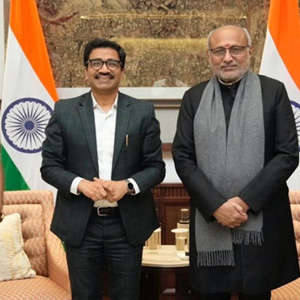
| Conversations around Artificial Intelligence are in full swing across the country, but moving from dialogue to decisive action took center stage when Sunil Gupta, Co-founder, MD & CEO, Yotta, met the Vice President of India, Shri C. P. Radhakrishnan, to outline a concrete roadmap for AI-led transformation in higher education. The discussion spotlighted Guru Gobind Singh Indraprastha University’s plan to convert 40 courses into AI-enabled formats and roll out online AI-driven programmes to boost the Gross Enrolment Ratio.
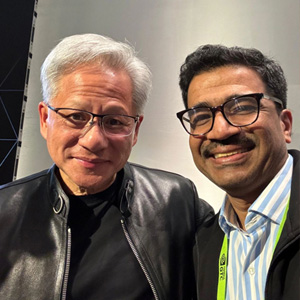
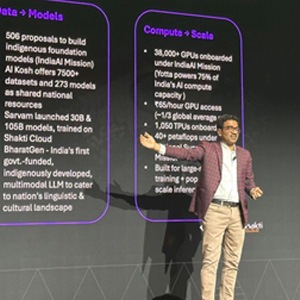
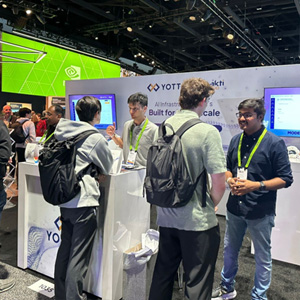
On the global stage, Yotta reinforced its leadership at NVIDIA GTC 2026 in San Jose. The biggest takeaway from the event was that AI is rapidly evolving from a model-training tool into an industrial-scale engine powering agentic, physical, and generative inference. Aligned with this shift, Yotta delivered a session titled “Building the Next Frontier for the World’s Largest Sovereign AI Factories,” showcasing how India is positioning itself at the forefront of this transformation. With $240 billion in commitments, the country is accelerating the development of sovereign AI factories, high-density infrastructure, and production-ready inference platform -enabling enterprises to build, deploy, and scale AI in real-world, inference-driven environments. Closer home, Yotta also contributed to shaping policy by participating in consultations on the Karnataka Data Centre Policy (2022–2027) and engaging at the India Investment Summit organized by Mint. |
||||||||||||||
|
||||||||||||||
| Industry & Market Watch | ||||||||||||||
|
||||||||||||||
| The Spotlight | ||||||||||||||
| The Need for an AI-Driven, Cloud-Native Surveillance Solution | ||||||||||||||
Celebrating Our People & Culture |
||||||||||||||
|
||||||||||||||
|
||||||||||||||







| Follow us on: LinkedIn | X | Website |
Copyright © 2026 Yotta Data Services Pvt Ltd. All rights reserved |