











SAP
Jan 07, 2025
Optimising Customer Relationship Management with SAP Business One
Customer relationships are the cornerstone of long-term success. Building and maintaining strong customer relationships is about providing quality products or…
SAP
Published on October 13, 2021
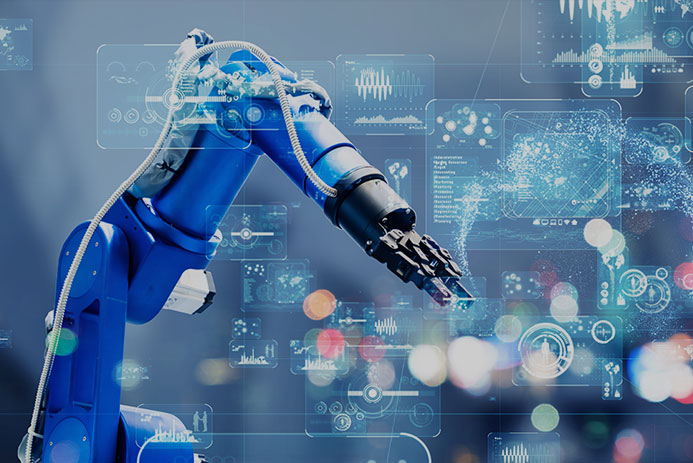
The term Industry 4.0 has been quite a buzzword over the last couple of years. Used to describe the fourth industrial revolution, Industry 4.0 is the ultimate expression of the convergence between the physical and the digital worlds. Enabled by the internet and technology, it has the potential to transform the manufacturing sector. It leverages the power of data and analytics as well as automation facilitated by the democratisation of smart devices that can communicate with one another.
In many ways, Industry 4.0 is a natural progression from the third industrial revolution that was powered by electronics and information technology. As computing evolved through the 1980s and became accessible in the 1990s, organisations started realising the value of connecting disparate systems and functions. This integration led to the emergence of Enterprise Resource Planning (ERP) as a business-critical and strategic pillar for businesses.
Cut to 2021. The first two decades of the 21st Century have witnessed the meteoric rise of the internet and hardware advancement at a breakneck speed. This brings us to Industry 4.0, and the technology landscape of today looks nothing like what it did during the third industrial revolution. And while the fundamentals and strategic relevance of ERP remain unchanged, the technological innovation and changing business landscape have opened up new applications and avenues. However, for enterprises to tap new opportunities in the era of Industry 4.0, they also need to revisit their approach to ERP. What does this involve and what are the implications for traditional sectors like manufacturing?
At the end of the day, the success of a business or its ability to respond to an evolving operational landscape depends on the quality and pace of decision-making. With large variables to balance and external dependencies, this becomes even more critical for the manufacturing sector.
Upgrading the ERP for an Industry 4.0 environment helps organisations gain better and real-time visibility into the various operational aspects of their operations. This enables a more informed analysis and well-timed decision-making across the organisation and the value chain from the top floor to the shop floor, and from supply chain vendors to customers.



SAP
Jan 07, 2025
Customer relationships are the cornerstone of long-term success. Building and maintaining strong customer relationships is about providing quality products or…
SAP
Sep 16, 2024
In today’s always-on, digital-first business landscape, downtime is no longer an option. Enterprises that rely on SAP for their critical…
SAP
May 10, 2024
Having a robust Enterprise Resource Planning (ERP) system is no longer a luxury, it’s a necessity. An ERP streamlines critical…