The Role of ITSM in Digital Transformation

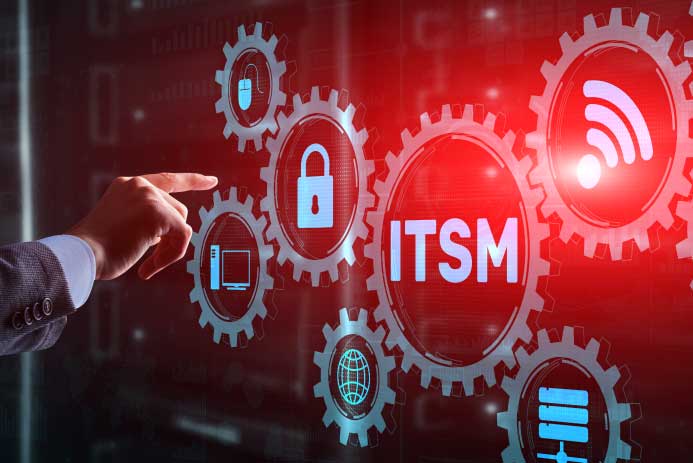
Businesses are constantly seeking means to improve efficiency, enhance customer experiences, and stay competitive. Digital transformation is at the heart of these efforts, enabling businesses to leverage technology to innovate and adapt. IT Service Management (ITSM) plays a crucial role in this transformation, serving as the backbone of an organisation’s IT infrastructure.

Understanding ITSM

IT Service Management (ITSM) focuses on the implementation and management of IT services that align with an organisation’s goals and objectives. It includes the processes and activities necessary to design, deliver, manage, and enhance IT services. As digital transformation accelerates, ITSM’s role becomes increasingly necessary for several reasons:

  • Efficiency and Automation: ITSM frameworks like ITIL (Information Technology Infrastructure Library) are crafted to streamline IT processes by automating routine tasks and integrating service management with business operations. This approach minimises manual intervention and errors. Automated service requests and proactive issue resolution further enhance agility, preventing costly bottlenecks and ensuring smooth operations across all departments. By addressing potential disruptions before they impact other services, ITSM helps maintain a consistent and uninterrupted workflow.
  • Enhanced Service Delivery: Effective ITSM ensures that IT services are delivered reliably and consistently. This consistency is crucial in the context of digital transformation, which frequently involves integrating new technologies and systems. Well-defined processes for incident management, problem management, and request fulfillment allow organisations to offer high-quality services that meet or exceed user expectations, fostering a flexible and responsive IT ecosystem.
  • Customer-Centric Approach: ITSM frameworks prioritise aligning IT services with the needs of end-users. This customer-centric approach involves understanding user requirements, addressing pain points, and continuously improving service delivery. By focusing on customer satisfaction and service quality, organizations can successfully drive their digital transformation initiatives and adapt to changing demands effectively.
  • Data-Driven Decision Making: ITSM provides valuable insights through comprehensive reporting and analytics. These insights enable organizations to make informed decisions about their IT infrastructure and services. By leveraging data, businesses can identify trends, predict potential issues, and optimize IT operations to better support their digital transformation goals.

 S-Cube by Yotta: Customising ITSM for Your Business Needs

While traditional ITSM solutions offer standardised approaches, they often fall short of meeting the unique requirements of individual organisations. This is where Yotta’s S-Cube comes into play. S-Cube is a cloud-based, full-stack platform designed to provide customised ITSM and helpdesk solutions tailored to your business needs.

  • Customisable ITSM Solutions: Unlike cookie-cutter platforms, S-Cube allows businesses to design workflows that resolve customer issues and tickets in a manner that suits their specific processes. The platform’s flexibility ensures that you can tailor ITSM applications to align with your organizational requirements without incurring excessive costs.
  • Actionable Insights and Interactive Reports: S-Cube provides interactive dashboards and customizable reports that offer actionable insights into IT service performance. These insights help organizations monitor, manage, and maintain their IT operations effectively, supporting informed decision-making and continuous improvement.
  • Efficient Ticket Management: With S-Cube, ticket logging is streamlined across multiple channels, including desktop, mobile, voice, and text. This enables quick, automated resolution of issues and ensures that tickets are managed efficiently through connected digital workflows.
  • Tailor-Made Helpdesk Management: S-Cube offers comprehensive helpdesk management features, including incident management, problem management, request management, knowledge management, workflow management, and AI-based chatbots. These features collectively enhance customer support, streamline workflows, and improve overall service delivery.
  • AI-Based Chatbot Integration: The platform includes context-based AI chatbots that accelerate IT service delivery by providing users with instant support and assistance. This integration enhances the efficiency of helpdesk operations and ensures that users receive timely responses to their queries.
  • Asset Management: As an add-on feature, S-Cube’s IT Asset Management module provides visibility and control over IT assets. It includes asset provisioning, purchase management, bar/QR code generation, and detailed reporting and analytics. This helps organizations track asset depreciation, manage costs, and optimize asset utilization.

Streamlining and Optimising IT Service Management

S-Cube by Yotta stands out as a powerful tool for organizations seeking to streamline and optimize their IT service management and asset management processes. With S-Cube, businesses can achieve seamless customer service, improve operational efficiency, and support their digital transformation initiatives effectively.

In summary, ITSM is a critical component of digital transformation, enabling organizations to manage and enhance their IT services in alignment with business goals. With S-Cube by Yotta, businesses can customize their ITSM solutions, automate processes, and gain valuable insights to drive success in an increasingly digital world.

Say Goodbye To Downtime With SAP Certified Solution from Yotta

In today’s always-on, digital-first business landscape, downtime is no longer an option. Enterprises that rely on SAP for their critical operations cannot afford system disruptions, as these can result in lost revenue, productivity setbacks, and damaged reputations. Yotta, a leader in IT infrastructure and cloud services, offers a cutting-edge, SAP-certified solution designed to eliminate downtime, maximise system performance, and enhance operational resilience.

The Business Challenge of Downtime
In the modern business environment, downtime translates directly into financial losses, missed opportunities, and operational inefficiencies. Companies running critical applications like SAP cannot afford prolonged outages, as they disrupt everything from supply chain management to customer relationship management (CRM), and from financial accounting to human capital management.

A recent study revealed that the average cost of IT downtime can be as high as Rs. 4.7 lacs per minute, depending on the size of the organisation. For businesses reliant on SAP, system disruptions can have even more severe implications, halting essential workflows and delaying decision-making processes.

This makes it crucial for organisations to deploy an infrastructure that guarantees high availability, optimal performance, and the ability to recover quickly in case of unforeseen disruptions. Yotta’s SAP-certified solution addresses these challenges by providing an environment where downtime is minimised, operational continuity is ensured, and performance is optimised.

Yotta’s SAP Certified Solution: Overview
Yotta’s SAP-certified solution offers an integrated platform designed to support mission-critical SAP applications with the highest standards of reliability, availability, and performance. The certification from SAP ensures that the solution meets SAP’s rigorous criteria for security, interoperability, and scalability, giving businesses confidence in its capabilities.

Key Features:

  • High-Availability Architecture: Yotta’s infrastructure is designed to provide near-zero downtime, ensuring 24/7 operations for your SAP systems.
  • Proactive Monitoring and AI-Driven Maintenance: Yotta leverages AI-driven monitoring systems to proactively identify potential risks and resolve issues before they lead to system failures.
  • Disaster Recovery and Backup: Built-in disaster recovery mechanisms ensure that data is backed up and that businesses can resume operations quickly after any disruption.
  • Flexible Cloud Integration: Seamlessly integrates with public, private, or hybrid cloud environments, offering businesses the flexibility to scale resources based on demand without compromising performance.

How Yotta Reduces Downtime
Downtime can arise from a variety of factors, including hardware failures, system overload, network issues, or software bugs. Yotta’s SAP-certified solution tackles these challenges through a comprehensive approach that combines architectural resilience, real-time monitoring, and advanced automation. Here’s how Yotta minimises downtime:

  • Resilience Through Redundancy
    Yotta’s infrastructure employs a high-availability architecture, which includes redundant hardware and failover mechanisms. This means that even if one component fails, another will take over immediately, minimizing service disruptions. Critical workloads are distributed across multiple nodes, ensuring that no single point of failure can halt operations.
  • Proactive Monitoring and Maintenance
    Yotta employs AI-driven monitoring systems that continuously analyse system performance, looking for early signs of potential issues. Whether it’s a spike in resource usage or a network latency issue, Yotta’s predictive analytics tools can alert administrators and even initiate automated responses to prevent downtime. This proactive maintenance ensures that minor issues don’t escalate into major outages.
  • Seamless Disaster Recovery
    In the event of a major disruption, such as a natural disaster or significant hardware failure, Yotta’s disaster recovery mechanisms kick in. The solution includes geographically dispersed backup sites that ensure your SAP environment can be restored quickly, minimizing downtime and data loss.
  • Scalable Cloud Infrastructure
    Yotta’s solution is cloud-agnostic, meaning it can easily integrate with public, private, or hybrid cloud platforms. This enables businesses to scale their SAP systems according to demand, ensuring that performance is maintained even during peak operational periods. By distributing workloads across the cloud, Yotta ensures that businesses can handle spikes in demand without experiencing system slowdowns or outages.

Business Benefits of Yotta’s SAP Certified Solution
Yotta’s SAP-certified solution provides several key benefits that directly address the needs of modern enterprises:

  • Cost Savings
    Reducing downtime directly translates into cost savings. By preventing outages and ensuring smooth operations, businesses can avoid the financial losses associated with downtime. Additionally, Yotta’s efficient resource management and cloud integration reduce IT overhead costs by allowing businesses to pay only for the resources they need.
  • Enhanced Business Continuity
    The solution’s high-availability design ensures that critical business operations remain uninterrupted. Whether it’s managing supply chains, processing customer orders, or generating financial reports, Yotta’s solution ensures that SAP systems remain operational, providing businesses with the confidence to operate continuously.
  • Optimised Performance
    Performance bottlenecks are a common issue in large SAP environments, particularly during periods of peak demand. Yotta’s solution optimises performance through dynamic resource allocation, ensuring that your SAP systems run efficiently and at maximum capacity, even during high-demand periods.
  • Scalability for Future Growth
    As businesses grow, their IT requirements increase. Yotta’s solution offers scalable infrastructure, allowing businesses to expand their SAP environment as needed without incurring downtime. This flexibility is crucial for businesses that are rapidly expanding or experiencing seasonal fluctuations in demand.

Yotta’s SAP-certified solution is trusted by businesses across industries for its reliability, scalability, and security.

SAP certification is more than just a seal of approval. It guarantees that Yotta’s solution has undergone rigorous testing and meets SAP’s stringent performance and security standards. This certification gives businesses peace of mind, knowing that their SAP services are supported by a robust, compliant, and fully optimized infrastructure.

Case Studies: Real-World Success

Case Study 1: Manufacturing Company
A global manufacturing company was experiencing frequent system downtimes due to overloaded legacy infrastructure. By migrating to Yotta’s SAP-certified solution, the company saw a 99.9% increase in system uptime and a 20% reduction in operational costs.

Case Study 2: Financial Services Firm
A financial services firm struggling with data security and disaster recovery implemented Yotta’s solution, gaining seamless cloud integration and high availability. The firm reported zero downtime during peak financial reporting periods, along with improved compliance with industry regulations.

Conclusion

Yotta’s SAP-certified solution is a game-changer for businesses that rely on SAP for their critical operations. By eliminating downtime, enhancing performance, and ensuring business continuity, Yotta enables organisations to focus on growth and innovation without worrying about system disruptions. Whether you’re looking to migrate to the cloud or optimize your existing infrastructure, Yotta’s solution offers the flexibility, reliability, and scalability that modern enterprises demand.

Don’t let downtime slow your business down. Contact Yotta today to learn how our SAP-certified solution can help you maximise uptime, reduce costs, and drive business success.

Leveraging Interconnectivity Solutions to Enhance Access to Global Cloud Providers

Multi Cloud computing has transformed the way businesses operate, offering scalable resources, cost efficiency, and flexibility. Major global cloud providers have established extensive data centers worldwide to cater to the growing demand for cloud services. However, despite their vast infrastructure, connecting to these providers can sometimes be challenging. The quality of this connection can impact everything from application performance to data security.

What Are Interconnectivity Solutions?

Interconnectivity solutions refer to various technologies and services designed to enhance the connectivity between different networks and systems. These solutions aim to provide direct, efficient, and reliable connections, often bypassing traditional internet pathways to reduce latency and improve performance.

  • Direct Connect Services: These services, offered by cloud providers, allow businesses to establish private connections between their on-premises infrastructure and cloud environments. Cloud Interconnect provide dedicated connections that bypass the public internet, ensuring better performance and security.
  • Network Exchanges: Internet Exchange Points (IXPs) and carrier-neutral data centers facilitate peering between Telco’s, networks, enabling faster and more reliable data transfer. These exchanges can significantly reduce latency and enhance overall network performance.
  • SD-WAN (Software-Defined Wide Area Network): SD-WAN technology provides a more flexible and cost-effective way to manage wide area networks. It allows businesses to optimize their cloud connections by dynamically routing traffic based on real-time network conditions.
  • Hybrid Cloud Solutions: These multi cloud solutions combine on-premises infrastructure with cloud services, allowing businesses to leverage both environments, connectivity plays a very vital role in Hybrid / multi-cloud solutions.  Without robust connectivity there is no success for Hybrid / multi-cloud solutions.  Hybrid cloud strategies can benefit from interconnectivity solutions that link different cloud environments and on-premises systems.

Enhancing Access to Global Cloud Providers

Interconnectivity solutions play a critical role in overcoming several challenges associated with accessing global cloud providers:

  • Improved Performance: Traditional internet connections can be unpredictable, with fluctuating speeds and latency. Direct connect services and network exchanges provide more consistent performance by reducing the number of hops data needs to make. This is particularly beneficial for applications requiring real-time processing and low latency, such as live video streaming or financial transactions.
  • Ease of consumption: Hyperscale cloud providers offer their services over internet. Internet has its own challenges and limitations from enterprise point of view. Getting the private connectivity with hyperscale cloud provider is not only time consuming but it involves multiple service providers. Interconnectivity services solve this problem by combining all the required services in bucket and offer it as a single product.
  • Enhanced Security: Security is a major concern for businesses when transferring sensitive data to and from the cloud. Interconnectivity solutions like direct connections offer a private path that is less susceptible to cyber threats compared to public internet connections. Additionally, with Yotta ‘s Global Cloud Konnect, network exchanges and SD-WAN can provide enhanced security features such as encryption and traffic monitoring.
  • Scalability and Flexibility: As businesses grow, their connectivity needs evolve. Interconnectivity solutions offer scalable options that can easily adapt to changing requirements. For instance, SD-WAN allows businesses to add or remove network resources without significant disruptions, ensuring that their cloud connections remain efficient and cost-effective.
  • Cost Efficiency: While setting up direct connections and network exchanges may involve an initial investment, they can lead to cost savings in the long run. By reducing latency and optimising network traffic, businesses can lower their data transfer costs and improve their return on investment.
  • Global Reach: For multinational companies, accessing cloud services from various geographic locations is essential. Interconnectivity solutions facilitate global reach by enabling seamless connections across different regions. This ensures that businesses can access their cloud resources regardless of where their operations are based.

Real-World Applications and Benefits
To illustrate the impact of interconnectivity solutions, consider a multinational corporation with data centers in North America, Europe, and Asia. By leveraging direct connect services and network exchanges, this corporation can ensure that its global offices have reliable and fast access to its cloud resources. This setup not only enhances operational efficiency but also provides a better user experience for employees and customers worldwide. Similarly, a financial services firm relying on real-time trading applications can benefit from reduced latency and improved performance by using SD-WAN and direct connect solutions. This ensures that their transactions are processed quickly and securely, maintaining their competitive edge in the market.

Future Trends and Considerations
As cloud technology continues to evolve, interconnectivity solutions will become even more advanced. Emerging trends such as edge computing, which involves processing data closer to the source, will further highlight the need for efficient and reliable connectivity solutions. Businesses should stay informed about these trends and consider how they can integrate new technologies into their interconnectivity strategies. Moreover, the rise of hybrid and multi-cloud environments will necessitate even more sophisticated interconnectivity solutions. Businesses will need to manage connections across various cloud providers and on-premises systems, making it essential to choose solutions that offer flexibility and scalability.

Conclusion
Leveraging Yotta’s Global Cloud Konnect solutions is key to enhancing access to global cloud providers. By improving performance, security, scalability, and cost efficiency, these solutions enable businesses to fully harness the potential of cloud computing. It offers effortless connectivity to leading global cloud services like Microsoft Azure, AWS, Google Cloud, and Oracle Cloud through a unified link between your data center and the DE-CIX location.

Staying ahead of connectivity trends will be crucial for maintaining a competitive edge and ensuring seamless access to global cloud resources. Investing in the right interconnectivity solutions today can pave the way for a more connected and efficient future.