











Category: Cloud

Why Are Enterprises Adopting Hybrid, Multi-Cloud Strategies?

Cloud computing has become crucial for business operations in the present digital age. Cloud infrastructure offers scalability and flexibility, given that it can manage a wide range of requirements, such as storage, networking, and application development. Now, it’s important to note that a one-size-fits-all approach may not be the most ideal for organisations with a range of workloads. Hybrid, multi-cloud strategies can aid in tackling this dilemma – helping an organisation increase the flexibility and resilience of its IT infrastructure. What this essentially means is that companies’ unique workloads and applications get the most suitable infrastructure environment. But its benefits go much beyond that. Here’s how.
- Higher Application Performance
A well-implemented hybrid, multi-cloud strategy provides enterprises with the flexibility to effortlessly distribute workloads among multiple cloud platforms, along with a primary data center. This enables them to benefit from each infrastructure’s strengths. This approach can prove helpful in improving application performance by selecting the infrastructure geographically closest to end-users, or best suited for specific applications. Hybrid multi-cloud strategies help enterprises optimise their resource utilisation by distributing workloads across infrastructure platforms, reducing the risk of downtime, and improving overall system resilience. - Supports Business Dynamics
In recent years, there has been a surge in mergers and acquisitions, and this trend is expected to persist. Hybrid, multi-cloud strategies offer a flexible IT infrastructure that supports the integration of diverse systems across different enterprises. Hybrid, multi-cloud strategies allow enterprises to integrate applications from different clouds and data center environments. - Avoids Vendor Lock-in
When organisations are dependent on a single infrastructure platform, it may be challenging to transition to another provider if the service or cost is unsatisfactory. Adopting a hybrid, multi-cloud strategy enables companies to take advantage of the most competitive pricing, cutting-edge capabilities, and infrastructure components of many providers while also avoiding vendor lock-in. Making sure that applications and data can move smoothly between cloud platforms, data center, and applications is crucial for the success of this strategy. - Cost Savings
By adopting a hybrid multi-cloud approach, enterprises leverage each infrastructure platform as per their consumption requirements, thereby helping them take advantage of price differentials while optimising performance. For instance, they can use a low-cost infrastructure platform for storing data and a high-performance platform to run compute-intensive workloads, based on the industry and risk appetite. Organisations can choose the most cost-effective option for each workload and avoid paying for services they may not need. - Increased Agility & Innovation
Adopting a hybrid multi-cloud strategy can improve an organisation’s agility and innovation capabilities. Enterprises can select the best platform for each unique application or workload by combining the various qualities of several cloud service providers. This shortens the time to market and promotes quicker innovation by enabling them to build and deploy applications more quickly and effectively. Furthermore, hybrid multi-cloud solutions free companies from the restrictions and needs of a single platform, allowing them to test and experiment with new technologies, tools, and services. This adaptability can assist businesses in staying one step ahead of the competition and responding promptly to shifting business requirements.Businesses stand to benefit from a hybrid, multi-cloud strategy since it simplifies the management of the infrastructure and promotes flexibility, scalability, and cost-effectiveness. A strong governance framework and centralised management tools to maximise resource usage are necessary to manage a multi-cloud system. Yotta federated cloud service simplifies multi-cloud complexity by offering a single-window cloud solution that optimises resources across private cloud, public cloud, hybrid cloud, or multi-cloud environments.
Stay One Step Ahead With Yotta Cloud Services
Cloud solutions have become increasingly popular in recent years due to the many benefits they offer businesses. Yotta offers a range of cloud infrastructure solutions to businesses of all sizes. Yotta Enterprise Cloud services provide cost-effective and dependable public cloud services, including compute, storage, connectivity, and business continuity. It is backed by an uptime SLA of 99.95%. The services offered by Yotta Enterprise Cloud are not restricted solely to Compute as a Service (CaaS). They encompass storage, backup and recovery, and security, among others.
For businesses looking to maximise their cloud infrastructure, multi-cloud strategies have become a viable option; they can gain from more flexibility, scalability, and cost-effectiveness. Organisations can avoid vendor lock-in, enable mergers and acquisitions, and manage workloads seamlessly with the use of hybrid, multi-cloud solutions. However, managing this infrastructure environment can be complex, and it requires a robust governance framework and centralised management tools. Yotta federated cloud service simplifies hybrid, multi-cloud complexities by offering a single-window cloud solution that optimises resources across private, public, hybrid, or multi-cloud environments.
Striking the Right Balance: Hybrid Infrastructure Optimises Cost, Performance, and Security

Cloud technology is a force to reckon with. It provides companies with the flexibility to scale their computing and storage capabilities as needed. Organisations in almost every industry are migrating applications and data to the cloud. However, not all of them can move entirely to the cloud, for reasons that include specific regulatory requirements, owning legacy systems, etc. With hybrid IT infrastructure, businesses can reap the benefit of cloud services, without migrating completely.
What Is Hybrid Infrastructure?
Hybrid infrastructure is a digital infrastructure platform that blends the company’s on-premises data center and one or more private and/or public clouds. Many companies utilise this infrastructure to store sensitive or critical data on their on-premises servers, colocation facility, and/or private cloud while hosting key applications on the public cloud.
Hybrid IT infrastructure can look like any of the following:
| On-premises infrastructure with cloud | An enterprise will have its data center with servers, storage, and networking on-premises and use cloud solutions for email, file storage, customer relationship management, etc. |
| On-premises infrastructure with colocation | An enterprise will have a captive data center and use colocation facilities at a secondary site for disaster recovery and redundancy. |
| Multi-cloud with colocation | An enterprise will use different cloud providers for other services, and a colocation facility for its equipment. |
| Hybrid cloud with colocation | An enterprise will use public cloud, private cloud, and colocation facilities. The public cloud may be used for non-sensitive data, the private cloud for critical data, and colocation for its own equipment. |
| Edge | An enterprise will use edge computing to process data closer to the source and a combination of cloud-based and on-premises infrastructure to collect, process, and analyse data in real-time. |
Hybrid Infrastructure: Optimal Balance Of Cost, Performance, And Security
Reduce Cost With Hybrid Infrastructure
- Pay-as-you-go pricing – Enterprises that have implemented a Hybrid IT infrastructure can take advantage of the pay-as-you-go model offered by cloud providers. They pay only for the computing power they use, thereby reducing the need for large capital expenditures. When a company experiences peak demand for computing resources, it can use cloud solutions to scale up its infrastructure, and then scale back down when demand subsides. Moving certain specific applications to the cloud can avoid the cost of maintaining a large and extensive internal on-premises infrastructure. The pay-as-you-go pricing model especially benefits enterprises with fluctuating IT resource needs.
- Lower capital expense – On-premises systems often require significant capital expenditure for hardware and software. By setting up hybrid IT, enterprises can lower their capital expenditure by outsourcing some IT operations to cloud providers.
- Cost-efficient resource allocation – Hybrid infrastructure benefits enterprises from cost-effective resource allocation. They can use on-premises infrastructure for workloads requiring high levels of security or peak workload and cloud resources for a more stable workload. This is more cost-effective than maintaining on-premises infrastructure for both types of workloads.
Enhance Performance With Hybrid Infrastructure
- Load balancing – A key feature of hybrid IT, load balancing helps enhance performance by distributing workloads across cloud and on-premises resources, thereby preventing overburdening of a single server. By distributing traffic, the resilience of IT infrastructure is improved. This helps to prevent downtime and maintain service continuity.
- Improved agility: Hybrid infrastructure enables enterprises to be more agile in responding to changing market demands. Cloud offers the benefit of flexibility and agility, while on-premises infrastructure provides better control and security. When the two are combined, enterprises are better positioned to respond swiftly to changes in the business environment.
Improve Security With Hybrid Infrastructure
- More control over data: Enterprises can separate sensitive data and critical applications from less critical ones with hybrid IT. This makes it easier to apply appropriate security controls to different parts of the infrastructure.
- Enhanced monitoring: With cloud-based services that are purpose-built for security, companies can monitor on a real-time basis, thus helping them detect and mitigate security incidents.
Implementing A Hybrid IT Infrastructure
Before building a hybrid IT environment, an enterprise must assess the costs of its on-premises data center in order to get an understanding of the return on investment. Next, the enterprise must consider what approach to take in determining which applications move to the cloud. For instance, it could move operations of specific business departments to the cloud or consider the age of the hardware and accordingly shift parts of the infrastructure to the cloud.
While devising the strategy to move to hybrid IT, the focus should be on reducing costs, increasing agility, improving scalability, and enhancing security. Colocation services allow enterprises to take advantage of scalability without taking on capital expenditures. This can be more reliable than a captive data center, which may be more susceptible to power outages, security breaches, and equipment failures. Combining colocation with cloud services makes for the perfect hybrid IT strategy since it is cost-effective and provides high-performance connectivity between servers and cloud resources, thereby reducing latency.
If the data and applications are highly sensitive or the organisation operates in a heavily regulated industry, then private cloud and/or colocation services may be suitable options. Public cloud, on the other hand, is more cost-effective, as enterprises only pay for the resources they use. A migration plan must be devised outlining how the workloads will be moved to the cloud. This should include a timeline, and risk management strategies. To avoid any disaster, it is vital to have data backup and recovery solutions in place to minimise downtime and risks in data migration.
Hybrid Infrastructure: A Winning Solution
There are many benefits to adopting a hybrid IT infrastructure when compared with 100% cloud or 100% on-premises infrastructure. Organizations can optimise their IT resources, enhance security, and ensure business continuity through this infrastructure. It creates a well-built IT environment where public cloud, private cloud colocation, edge, etc. can be used together in harmony, each for the use cases they are best suited for.
The biggest myths to debunk in 2022 to take cloud computing to the skies

The need for cloud computing became more evident than ever in recent times. In a way, the pandemic was a watershed moment for cloud as it formed the center of every organisation’s digital transformation journey. And, even as we seem to be approaching the endgame with the pandemic, the appetite for cloud adoption shows no signs of abating.
For years, cloud adoption was hampered by myths and falsely held notions, many of which continue to persist in 2022. As more and more IT professionals and developers consider a migration to the cloud, it is important that we address and root out such myths that stymie not just cloud adoption, but overall technological progress. Over the course of 2022, here are the pervasive myths that need debunking.
Cloud is less secure than on-premises: While there have been highly reported breaches into the public cloud, the myth that an on-premises setup always offers superior security is just not true. Over the past few years, all major service providers have invested significantly in their underlying security capabilities.
Billions have been poured into cloud security and in hiring top cybersecurity experts as a Cloud Service Provider’s (CSP) business model hinges on providing the best of security. CSPs have developed new tools and methods, from firewalls and intrusion prevention to data loss prevention and ML-based rootkit detection, to make the cloud secure.
Increasingly CSPs are requiring developers to take on the security responsibility. This is interesting because upon further digging it has been discovered that almost all cloud breaches are driven by an enterprise customer’s insecure configurations. In fact, Gartner says that through 2025, all security breaches in the cloud will be customer-driven.
Hence, developers must be retrained to follow carefully defined governance policies on how to configure the right security controls. Companies that define the correct policies adopt a secure DevSecOps operating model, and training or hiring the right talent can achieve safer operations in the cloud than on-premises.
Cloud networks are slower than on-premises setups: Some organisations fear that they will experience higher latency on a CSP’s network than on their own. Latency, however, is often the result of the IT department backhauling its data through in-house data centers. Backhauling, or routing of traffic through internal networks results in higher latency, more complexities, and poor user experience. IT departments that backhaul do so either because they do not trust the security offered by CSPs or they need to access critical data or applications that are on-premises.
For IT departments undertaking the former, it is vital they realize that CSPs now offer strong security options and that there is no need to tolerate latency for security. IT departments that are backhauling for the latter reason should prioritise creating a data lake with their CSP which moves the bulk of their data and analytics processing to the cloud. This will allow IT teams to unleash the power of cloud-enabled analytics while simultaneously solving latency issues.
Once companies stop backhauling, they are unlikely to experience greater latency on cloud, as there is no difference between a CSP’s IP circuits, pipes, and cables when compared to an on-premises data center. In fact, enterprises may even experience lower latency in the cloud, due to a CSPs advantages in content delivery owing to their diverse, extensive footprint of data centers and their heavy investment in content-delivery-network services, which an on-premises setup would be hard-pressed to achieve.
Direct connections to multiple clouds are tedious and expensive: Direct cloud connect refers to a private connection between an enterprise’s dedicated infrastructure and a public cloud provider, often as a cross connect within a colocation data center. We live in an era where latency is an important metric not just for entertainment and financial companies, but most enterprises. However, there is a widespread myth that given the significant costs of WAN and the public internet, companies that require private connections would be looking at a huge expense, also because it costs a lot of money to move big data.
However, data center and cloud companies are increasingly allowing customers to reach global cloud providers like Microsoft Azure, AWS, Google Cloud, Oracle Cloud and others through a single point which helps to eliminate direct connection costs. This allows enterprises to establish high-bandwidth connections to a vast number of local carriers, ISPs and content providers, without the hassles and costs of multiple, separate connections.
The bottom line is that a cross-connect fee is far lower than the cost for redundant WAN connections or the scaling of an ISP to support connectivity requirements, making direct connections more cost-effective than what is popularly believed.
On-premises is more cost-effective than cloud computing: The truth of the matter is that costs are entirely dependent on an enterprise’s starting point and its ability to manage and optimise cloud consumption once there. Besides the starting-point, the maturity of an enterprise’s on-premises setup, license commitments and types of workloads are the other factors that influence the cost of cloud computing.
For instance, if an enterprise needs large data-center upgrades, it will find cloud adoption attractive as it can avoid large capital expenditures and depreciation on assets it may not fully utilise. However, if a company has recently invested in a new data center, moving to the cloud would duplicate infrastructure costs. Also, some companies might have licensing agreements that are hard to get out of while some might face just limited penalties for initiating a transition to the cloud. Finally, storage-intensive workloads are often less costly in the cloud than those requiring lots of network bandwidth, as cloud service providers (CSPs) charge by the unit for network access.
Starting point aside, enterprises have experienced cost benefits from the cloud’s shared-resource model and autoscaling. Companies find it financially wiser to pay service providers for CPU as and when they need it, rather than owning an on-premises cluster and paying for around-the-clock access.
These are the three most prevalent misconceptions about the cloud-based on stories of adoptions gone wrong or maybe the fear of change. It is crucial to dispel these myths as they thwart the myriad business, operational, and economic impacts of the cloud and prevent an organisation from harnessing the cloud’s full potential.
Five mantras to unlock maximum benefits from your cloud deployment

Cloud is at the center of every organisation’s digital transformation journey, even more so in the pandemic-disrupted business environment, also widely known as the ‘new normal’. While most organisations have adopted cloud in some form before the pandemic, the trend has been accelerated on a much larger scale in recent times. However, the business outcomes from cloud deployments often vary for different organisations. At the same time, some organisations may not even get the desired benefits — or even negative outcomes — from the cloud. This leads us to one of the most burning questions for IT and business leaders — How can one technology yield different results or no results for different organisations?
To find an answer to this, organisations need to deliberate on the following two questions:
- What are the business outcomes to be achieved?
- What’s the best way to approach cloud deployments?
Only when these fundamental questions are addressed, and the myths around cloud are busted, it can be realised that cloud as a technology is not an issue. Instead, it’s the way organisations approach and deploy the technology that defines the business outcomes. Thanks to all the hype around cloud, organisations often have much higher expectations from cloud. However, like every other technology, cloud is meant to address business-specific challenges; it is not a single solution for all enterprise IT needs. This realisation holds even greater emphasis as businesses today operate in a highly dynamic environment.
Let’s discuss what organisations need to ensure to get the best out of their cloud deployments.
Clearly define business objectives:
Before even considering cloud, the first step starts by defining the business objectives to be achieved. Once the outcomes are clear, the next step involves exploring cloud use cases and determining if they can help achieve the desired outcomes. Well-defined objectives coupled with the right use case will help you measure success and lay a clear roadmap.
Identify what needs to go on the cloud:
Identifying the right workloads to run on the cloud is crucial for achieving the best performance. While some applications might be ready to migrate to the cloud, some applications could need modernisation, whereas some applications could also require replacement. However, not all applications need cloud migration. Assess your application portfolio and identify mission-critical, business-critical, customer-facing, and non-critical applications. Key considerations include response time, latency, downtime for each workload.
Unlike born-in-the-cloud companies, traditional organisations have legacy infrastructure, wherein a lot of investment has been made over the years. This infrastructure could still be utilised for many business applications. In a nutshell, getting the best out of your legacy infrastructure and combining the use of cloud is the key to successful digital transformation.
Systematic deployment of cloud is critical:
Once the applications have been identified, the next crucial step is approaching cloud deployment the right way, in a structured manner. Prioritisation of applications to be moved first is the next important step. This is followed by understanding architectural requirements. Data centers have been the core of enterprise IT infrastructure and continue to remain so, and most organisations have an existing data center-centric network architecture. In such scenarios, a lift-and-shift approach leads to inefficiencies on various fronts and increased costs. Re-architecting network and security is imperative for a well-planned transition, especially in an era of distributed workforce wherein data and applications are accessed from remote locations through endpoints and networks that IT teams have little or no control over.
Securing your cloud environment:
Security is generally cited as an area of concern in boardrooms discussions on cloud adoption. Whether an organisation is part of a highly regulated industry or not, no business can afford a cyberattack in today’s digital economy and security evaluation becomes paramount in any cloud project. In the cloud era, security is a joint responsibility of customers and cloud services providers. While evaluating cloud services providers, some of the key considerations include identity and access management, automated threat detection tools, backup and disaster recovery.
Deployment is not enough; cloud management is crucial:
Your organisation has successfully deployed cloud, but what next? It is essential to keep the cloud environment running seamlessly at all times. In traditional organisations where IT teams used to manage everything on-premise, lack of cloud-native skillsets can lead to manageability and operational complexities, thereby impacting performance. Furthermore, in a business environment that’s defined by customer experience and innovation, monitoring and managing cloud infrastructure can affect your IT team’s focus on applications and innovation. Having the right cloud service provider with complete skillsets and management capabilities can ensure seamless operations and relieve your IT teams from cumbersome tasks, especially in a multi-cloud hybrid environment.
According to IDC, more than 60 percent of Indian organisations plan to leverage the cloud for digital innovation in the pandemic-disrupted era. As a result, India’s public cloud services market is expected to be worth USD 7.1 billion by 2024. But while organisations turn to promising technologies to enhance business outcomes, the key is to carefully identify business needs, constraints, and objectives. With this, coupled with elaborate planning and a tailored approach, businesses can get their cloud deployment right and achieve optimum results.
Why adopting Hybrid Cloud architecture is becoming a norm in the enterprise world
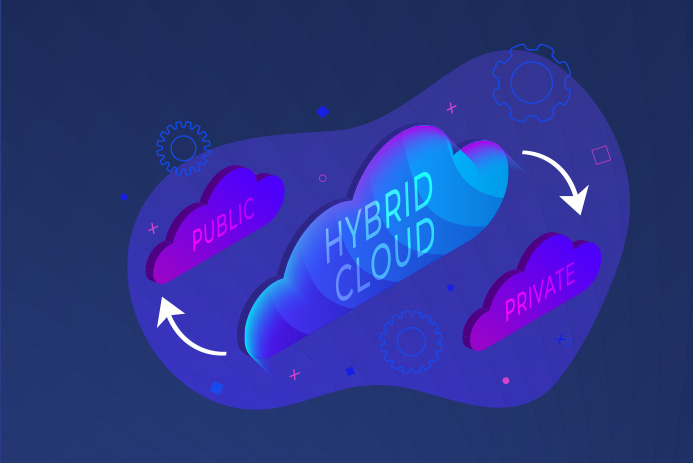
For the last decade or so, cloud computing has been the focus of CIO and IT decision makers’ conversations. The pandemic that began in 2020, worldwide, however, has been an inflection point for organizations, large and small, across sectors, fast-tracking adoption of digital and cloud-led technologies, ensuring only companies who adapted to this pace of digital transformation will survive. Remote working has seeped into the mainstream culture and more than a year later, work from home seems to be here to stay. In such an environment, business leaders need technology platforms and tools enabling businesses to operate efficiently without disruption.
Cloud technologies are at the heart of this change, as security conscious businesses look for newer and emerging avenues to accelerate their digital transformation, while securing prized and sensitive business information and workloads. As per IDC Worldwide Semiannual Public Cloud Services Tracker, India’s public cloud services market, including Infrastructure as a Service (IaaS), Platform as a Service (PaaS), and Software as a Service (SaaS), touched $1.6 billion (INR 11,680 crore) for the first half of 2020. Furthermore, it states that the overall India public cloud services market is likely to reach $7.4 billion by 2024 (INR 54,020 crore), growing at a CAGR of 22.2 percent for 2020-24.
The exponential rise in data, however, demands the computing and processing needs of cloud architecture be elastic for data deployment models. This is where a new model of cloud computing comes to the rescue: Hybrid cloud. Hybrid cloud is a computing environment that combines a dedicated Compute instance or private cloud hosted in service provider DC or at captive datacenter with a public cloud, allowing data and applications to be shared between them.
Hybrid model is here to stay
As per a recent survey by IBM Institute of Business Value (IBV), hybrid cloud adoption among Indian businesses is expected to grow by 49% with the average organisation using nearly six hybrid clouds. With the increased full hybrid, multi-cloud platform technology and operating model at scale, businesses can derive 2.5 times the value compared to a single platform, single cloud vendor approach. In a nutshell, when computing and processing demands increase beyond an on-premises datacenter’s capabilities, organisations can use the cloud services to complement its existing capabilities, instantly scale capacity up or down, avoid time and cost of purchasing, installing, maintaining new servers that they may not always need.
In the coming years, Indian enterprises that are ready to bet big with an appetite for risk, will see returns from the hybrid cloud infrastructure, which is secure, interoperable, open, and free from vendor lock-in. In fact, organisations are already achieving business transformation by leveraging hybrid, multi-cloud platform technology. According to Gartner, majority of the large and midsize organisations have adopted an approach to IT that’s build on hybrid multi-cloud i.e. on-premises cloud combined with more than one public cloud.
With market dynamics shifting, partly due to the ongoing pandemic crisis, customer experience will ultimately define the brand-consumer relationship. And with a hybrid cloud infrastructure, enterprises can mine unlimited, unstructured data and run business analytics on them, especially in the retail sector. For example, India’s online retailer Myntra has been using its cloud and AI data to analyse customer preferences during the last year or so. With this, Myntra has been able to help brands by providing insights on what consumers really want, in addition to helping them move stocks quickly during the lockdown.
From an organisation-employee perspective, what we are currently seeing is a culture where every action and decision is rooted in remote working. Organisations must keep employees, where they are, while keeping them safe. Therefore, tools such as work from anywhere cloud services such as Desktop-as-a-Service/Virtual desktop infrastructure and Network-as-a-Service became must have services amid COVID-19 crisis. They also enable enterprises to align their workloads, on-premises or on cloud that is in sync with latency issues, regulations, data sovereignty and legacy data systems. In other words, for companies looking to build on their digital strategy centered around maximizing existing on-premises investments, an effective multi-edge hybrid approach by keeping the business objective and operational efficiency same is more important than ever.
Colocation providers can help accelerate your Hybrid Cloud strategy
Today, companies no longer want to deal with maintaining and operating a captive data center due to heavy upgrading costs and security concerns. Migrating to highly scalable colocation data centers is emerging as a customer preference. Additionally, customers are not just looking for rack spaces but an end-to-end solution provider who can take care of all their IT needs such as cloud, network, security, etc.
As enterprises pivot to hybrid cloud architectures, data center service providers, particularly with colocation services, are now using innovative ways to integrate their platforms with hybrid models. Global data center operators are investing in developing an ecosystem of solutions that enable clients to assemble and deploy hybrid cloud solutions on top of their traditional infrastructure.
Sensing the underlying opportunities, most of the leading data center players are developing an architecture that can evolve over time and scale up in response to newer market needs. Today, they offer public cloud as well as provide seamless integration and migration services with the likes of AWS/AZURE/GOOGLE/ORACLE cloud. And with the help of innovative models like ‘Everything-as-a-Service’, these service providers are not only serving large enterprises and cloud operators with their robust infrastructure but also offering managed services to SMEs, SOHOs, and Start-ups.
In conclusion, for businesses looking to take back power in their own hands, by custom designing their own IT infrastructure, with a practical approach realigned with their past, present, and future in mind, it’s worth making an investment in the hybrid cloud architecture.
Opinion: How govt’s focused approach is making ‘Cloud Vision for India 2022’ a reality
Cloud is not just a lever for controlling costs, but also a huge catalyst or transformational agent for being the foundation for enabling quick adoption of emerging technologies such as AI and Blockchain.
India is an aspiring and incomparable nation when it comes to digital ambitions and scale. Landmark projects like Aadhaar, the Aarogya Setu app, or DigiLocker, are just some of the examples of India’s digital prowess.
Given the scale at which government departments operate, cloud is the perfect platform for accelerating e-governance initiatives. From a policy point of view, already a series of initiatives have been taken to ensure that India has a strategic advantage concerning the cloud.
The Government of India has announced GI Cloud (now called ‘Meghraj’) – an initiative to ensure optimum usage of IT spending by the government while simultaneously giving the impetus to improve the adoption of e-governance initiatives using the cloud. The Ministry of Electronics and Information Technology (MeitY) has created a reference architecture to guide government departments to build their cloud deployment architecture with recommended components and activities.
The National Digital Communications Policy 2018 envisions establishing India as a global hub for cloud computing, content hosting and delivery, and data communication systems and services. It aims to do this by enabling regulatory frameworks and incentives for promoting the establishment of international data centers, content delivery networks, and interconnect exchanges in India.
Similarly, the National Data Center Policy, which aims at making India a Global Data Center hub, promotes investment in the sector, propels digital economy growth, and enables provisioning of trusted hosting infrastructure to fulfil the growing demand.
The potential of the cloud
In India, cloud computing has ensured the success of national initiatives and schemes such as Swachh Bharat Mission, e-Hospital, National Scholarship, My-Gov and e-Transport. One of India’s most landmark initiatives, the Government e-Marketplace (GeM) uses a multi-cloud architecture to ensure scalability. Today, the GeM serves over 50,000 buyer organisations and has a listing of over 19 lakh products and more than 80,000 services.
NIC’s SaaS-based service, S3WaaS, has empowered district administrators to create, configure and deploy scalable and accessible websites without much effort and technical knowledge. Another successful example is DigiLocker, a cloud-based platform for the issuance, sharing, and verification of critical lifelong documents or certificates. With more than 57.13 million users and 4.27 billion issued documents, DigiLocker has proved to be one of the biggest success stories of cloud in the government.
Last year, understanding the critical importance of the cloud in providing the foundation for enabling the growth of emerging technologies such as AI, India’s national policy think-tank organisation, NITI Aayog, suggested the creation of an AI-based cloud computing platform called AIRAWAT (AI Research, Analytics and Knowledge Assimilation).
Similarly, the National Highway Authority of India (NHAI), announced last year that it had gone fully digital with the launch of a unique cloud-based and AI-powered big analytics platform. All project documents and correspondences related to NHAI will be stored in a cloud-based data lake, which is linked with GIS tagging and a unique project ID, so that project data can be retrieved easily from any location.
The Indian Railways has given the responsibility of deploying open source Hospital Management Information System (HMIS), an integrated clinical information system, for its 125 health facilities and 650 polyclinics across the country for improved hospital administration and patient healthcare, using a cloud platform.
Emerging use cases of cloud
With the cost of providing compute and storage capabilities coming down drastically, it makes much more sense for government departments to leverage the cloud. The other big reason is the quick pace of adoption for emerging technologies such as AI, ML, Big Data Analytics, or IoT.
In India, many states have proactively taken several pro-cloud initiatives. For example, the Government of Maharashtra in 2018, became the first state to unveil a public cloud policy. Looking at the benefits of cloud-based storage, the Government of Maharashtra mandated its departments to shift their data storage requirements to the cloud.
Similarly, in October 2020, the Government of Telangana announced that it was making it mandatory for all its departments to deploy their existingor new applications on the cloud except for those applications that contained sensitive or confidential data.
Another classic example is Smart Cities, wherein various state governments are leveraging cloud and other digital technologies to provide next generation services to citizens. Madhya Pradesh was the first state to launch India’s first cloud-based Common Integrated Data Centre, Disaster Recovery Centre and Integrated Control and Command Centre (ICCC).
The ICCC is enabling the Madhya Pradesh state administration to monitor and administer multiple city civic utilities and citizen services across seven cities in the state through a central cloud. Now, other states like Gujarat, Rajasthan, Andhra Pradesh, Telanagana, Tamil Nadu, Karnataka, and Uttar Pradesh are following the suit.
These examples highlight why the move to the cloud is now essential or critical for government departments. Due to the capacity constraints, there are instances where the state data center has faced challenges in scaling up and meeting the requirements in a time-bound manner, which has led to poor application downtime and poor user experience.
Key trends that government departments should look out for
Today, the Covid-19 pandemic has made it imperative for accelerating digital delivery of public services. This has put immense pressure on government departments to quickly roll out new platforms or initiatives. With support for emerging technologies such as AI, ML or Blockchain, the cloud is the perfect platform for testing out new innovations.
The cloud is also a proven platform for automation – a critical need in government departments today, as they grapple with challenges related to skilled manpower and scaling up to meet public demand for services. For example, AI-powered chatbots can answer common queries easily, while RPA can be used to automate routine tasks.
The pandemic has also made remote working a reality now. This is applicable to the government sector too, as it also needs to give government employees the same flexibility as given to employees from the private sector. The cloud is perfect for giving employees secure and reliable access to government applications and data.
The cloud allows government departments to acquire resources based on actual requirements, with the capability to increase or decrease computing resources as per demand. Globally, and in India too, government departments are increasingly feeling challenged in containing costs and providing the required infrastructure.
For instance, the state-owned Bank of Baroda has become the first public sector bank to consider Work from Home policy for a section of its employees. For Bank of Baroda to leverage staff resources better, the cloud will prove to be an excellent platform for creating flexibility without significant corresponding investments.
This flexibility opens up several possibilities – one can think of organisations such as Income Tax which receives huge load for filing returns in the last few days of the deadline given by the government. There are many such examples of departments across the government, which receive seasonal demand spikes. Another notable example is the dedicated web portal called Co-WIN (COVID -19 Vaccine Intelligence Network) which has been launched recently.
This is a complete cloud-based IT solution for planning, implementation, monitoring, and evaluation of the Covid-19 vaccination program in the country. While we keep hearing about technical glitches in the Co-WIN platform or the portal getting crashed (when millions of people recently rushed to register for the COVID vaccination), one cannot deny the fact that without the cloud, an initiative of this scale and size would be unimaginable.
As the above examples show, the cloud today is not just a lever for controlling costs, but also a huge catalyst or transformational agent for being the foundation for enabling quick adoption of emerging technologies such as AI and Blockchain. Today, the question for government departments is not why you should adopt the cloud, but when and how fast you can use the cloud to your advantage.
How cloud provides a robust foundation for emerging technologies like AI & ML?

As businesses thrive in today’s highly competitive and continuously evolving marketplace, innovation has become paramount for organisations across the spectrum of industry verticals. Changing customer expectations and the need for delivering top-notch customer experiences mandates organisations to reimagine business processes at every touch point.
Moreover, the Covid-19 pandemic has significantly transformed customer engagement, with digital platforms at the core. This omni-channel digital environment will continue to remain a crucial part of the post pandemic world. As customer interactions move to digital, a vast data pool is created from multiple touch points and at various stages of the customer journey. Future-ready organisations have realised the importance of this data to make informed decisions and enhance customer experience with personalised offerings.
In the backdrop of this disruption, organisations are increasingly looking at leveraging emerging technologies such as Artificial Intelligence (AI), Machine Learning (ML), Data Analytics and Internet of Things (IoT) to take customer experience to the next level. For instance, application of AI-driven analytics is enabling organisations to derive meaningful insights from the data collected through customer engagements on digital platforms, thereby allowing them to better understand customer needs and provide tailored offerings.
Let’s understand how the focus on emerging technologies is impacting cloud adoption.
Cloud at Core – Backbone to Emerging Technologies
It’s important to note that innovating with emerging technologies requires an agile, flexible and highly scalable IT infrastructure, especially with the amount of data that is generated. Legacy systems and traditional on-premise IT infrastructure lack scalability, agility and compute power to test and deploy modern use cases around emerging technologies. However, cloud comes to the rescue with its agility, hyper scalability, and compute power, thereby providing a robust infrastructure backbone and enabling IT teams to scale up and scale down as needed, run business applications, and ensure quick roll out.
Future-ready organisations, as part of their digital transformation journeys, have embraced cloud as the core of their IT initiatives. According to a Gartner report by 2024, more than 45% of IT spending on system infrastructure, infrastructure software, application software and business process outsourcing will shift from traditional solutions to cloud.
The report further acknowledges that emerging technologies such as AI, IoT, edge computing and advanced data analytics are seen as the next wave of disruption; and cloud serves as the foundation for these technologies’ use cases for businesses.
These trends clearly indicate that cloud delivers an ideal environment for business applications based on emerging technologies and how a cloud-first strategy is the first step towards a digital-centric business model.
Let’s look at how these emerging technologies will shape cloud adoption trends.
- Rise of Intelligent Businesses: The key to becoming an intelligent enterprise is data. Valuable insights derived from this data results into business intelligence and one of the biggest distinguishers of any organisation. In this direction, organisations need to run cutting-edge AI-ML based analytics over their data pool and garner insights. This is possible only on cloud as it provides immense storage and compute capabilities as and when required. Cloud enables end-to-end data analytics, from storage of data to generating actionable insights.
- Automated Environment: The need for automating business processes has been more prevalent in the last one year. As remote working became the new reality, organisations were pushed to adopt automation, which would ensure seamless operations even in times of disruption. This also opens doors to enhanced workforce productivity as automation of time-consuming manual processes and allows them to focus on more important areas and innovation. Cloud’s ability to automate itself and scale up and scale down depending on the workloads significantly reduces the burden on IT teams.
- Reimagining Cloud with AI: This novel technology is increasingly finding its place in digital transformation roadmaps of organisations. In order to fully enable an AI-driven business, it’s crucial that organisations make AI accessible to its entire workforce. Availability of AI toolsets on cloud allows employees to learn from the insights and make customer engagements more meaningful. Hence, a cloud infrastructure which is powered by AI will be among the primary considerations for organisations.
- Cloud Enabled Hyper Connectivity: With developments in the areas of autonomous vehicles, smart city infrastructure, 5G and IoT enabled intelligent Edge, the realms of cloud are expanding beyond mere availability. Cloud is the platform that makes reality of a hyper-connected world possible as it forms the foundation where different technologies connect and talk to each other. Smart cities’ integrated command and control centres leverage the power of cloud enabled dashboards to monitor and analyse data coming from a vast network of IoT devices deployed across cities. As 5G becomes a reality, there will be an influx of new datasets which will reside and get analysed on cloud. Similarly, as more and more people get connected on IoT devices, organisations will have to prepare their cloud infrastructure with the greater computation capabilities.
Innovations Bringing Cloud at the Center
In a post-Pandemic world, organisations will continue to innovate as part of their digital transformation roadmap and emerging technologies will continue to define their efforts. In line with this direction, IT leaders will focus on building a cloud infrastructure that equips their business with the tools and capabilities needed to bring the best out of technologies such as AI, ML, 5G, data analytics, and IoT among others.
Another Gartner predicts that the rapid pace of innovation in cloud infrastructure and platform services (CIPS) makes cloud the de facto platform for new digital services and existing traditional workloads alike, which is why 40% or all enterprise workloads will be deployed in CIPS by 2023, up from only 20% in 2020.
As observed above, with more and more workloads moving to cloud platforms and everything transitioning to as-a-service, cloud adoption will be redefined by its capabilities to perform intelligent tasks and serve as a one-stop platform where all technologies connect with each other seamlessly and enable a truly modern digital experience for all stakeholders.
India Enterprise Cloud Survey 2020
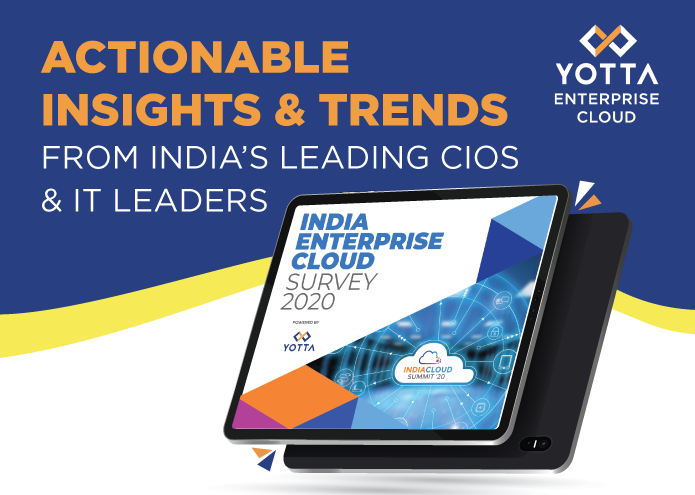
The first edition of the India Enterprise Cloud Survey provides the latest trends and insights of Indian Enterprises journey on cloud adoption and usage. While the cloud has taken center stage today, it has been around for quite some time now. The COVID crisis has fast-tracked this and has been a serious reminder to design IT systems in a way that allows for agility, resilience, and efficiency amid disruption and fast reformation of organisational boundaries.
The external VUCA environment has been demanding an IT platform that supports businesses to innovate amid disruption, which has been relatively gradual. COVID has undoubtedly changed the pace. This research report provides exciting insights by leading CIOs and IT Heads of large and mid-sized enterprises across multiple industries.
Key Highlights of the research –
- Cloud is mainstream today, catalysed in a big way by COVID as 77% of the enterprises plan to implement their enterprise cloud strategy over the next 12 to 18 months
- 63% of the Indian enterprise see cloud as the key mode of infrastructure hosting in 2022 as compared to 37% in 2020
- India Cloud Spending to grow at 15 to 17% in 2021, twice the rate of 7 to 9% at which the overall IT spending by enterprises is estimated to grow
The India Enterprise Cloud Survey
The India Enterprise Cloud Survey reveals insights on cloud computing adoption by leading CIOs & IT Leaders across Industry.
A cloud-first approach to data protection

The year 2020 saw a spike in cybercrimes across the world. Rising unemployment forced many to turn to criminal activities. Cyberattacks increased exponentially, especially business email compromise (BEC) attacks like phishing, spear phishing, and whaling – and ransomware attacks. These attacks have resulted in data and financial losses. With most employees working from home, the threat of data theft and data exfiltration looms high.
Today, the risk of storing data on-premise or on endpoints is higher than ever. That’s why organisations are taking a cloud-first approach to data protection. This article discusses the inadequacies of on-premise, legacy infrastructure for data protection and explains why more organisations are adopting modern cloud architectures.
Threat vectors looming large
According to a report by the Group-IB, there were more than 500 successful ransomware attacks in over 45 countries between late 2019 and H1 2020, which means at least one ransomware attack occurring every day, somewhere in the world. By Group-IB’s conservative estimates, the total financial damage from ransomware operations amounted to over $1 billion ($1,005,186,000), but the actual damage is likely to be much higher.
Similarly, in the final week of the US Elections, healthcare institutions and hospitals in the US were impacted by Ryuk ransomware. The affected institutions could not access their systems and had to resort to pen and paper operations. Life was at risk as necessary surgeries and medical treatments were postponed; patient medical records were inaccessible. Healthcare is a regulated sector and hackers know healthcare data’s value: this includes X-ray scans, medical scans, diagnostic reports, medical prescriptions, ECG reports, and lab test reports.
Today, employees across industries work remotely and log in to enterprise servers to access data. In this scenario, data exfiltration is becoming a massive challenge for organisations. A study by IBM Security says the cost of a data breach has risen 12% over the past five years and now costs $3.92 million on an average.
The crux of the issue is that data exfiltration and data theft can severely tarnish an organisation’s reputation, erode its share price, breach customer and shareholder trust, and even result in customer churn. Stringent regulatory standards and acts like HIPAA, GDPR, CCPA, Brazilian LGPD impose stiff fines and penalties that have historically made companies bankrupt or put them in the red.
Indian companies doing business with organizations in the US, Europe or elsewhere, will need to comply with the regulations defined by those nations, at an industry level. And if customer data is breached, they will be liable to pay the penalties imposed by those regulatory bodies.
India’s forthcoming Personal Data Protection Bill 2019 (which is close to being passed into law) is expected to impose similar fines as GDPR. The bill aims to protect the privacy of individuals relating to the flow and usage of their personal data.
Legacy infrastructure may not be able to comply with new regulations being introduced in an increasingly digital world. In fact, legacy could up the risk for data loss, and hence, organisations must move away from legacy infrastructure and take a cloud-first approach to data protection.
Legacy infrastructure is expensive, insecure
An organisation needs scale to succeed in today’s highly competitive business environment. Adding new customers, introducing new products and services, and timely response to market demand requires agility – to support all these the infrastructure should be able to scale up on demand.
Scaling infrastructure on-premise requires colossal investments and the TCO may not be viable in the long term. The shortage of in-house skills is another challenge. CIOs are under tremendous pressure to deliver value. The only way to scale is to embrace disruptive technologies like Cloud, Big Data Analytics, Artificial Intelligence, Machine Learning, and Blockchain.
Traditional data protection tools offered by legacy infrastructure are inadequate to protect data in distributed environments, where employees work outside the perimeter, and to secure it from sophisticated attacks like ransomware.
At the same time, the introduction of new services and innovation by enterprises results in an exponential increase in data that gets generated from multiple sources like customers, partners, employees, supply chains, and other places. And much of this data is unstructured, which poses additional data governance and management challenges. Industry regulations mandate that this data be stored for a certain period, and copies of it need to be maintained.
Some governments insist that data must be stored on servers in their country (data residency). For instance, the Indian Personal Data Protection Bill will regulate how entities process personal data and create a framework for organisational and technical measures in processing of data, laying down norms for social media intermediary, cross-border transfer, accountability of entities processing personal data, remedies for unauthorised and harmful processing.
In such a scenario, it would be expensive for an organisation to store its growing data on-premise, as legacy infrastructure is inadequate to protect this data and comply with new data protection laws. Cloud environments are more suitable as cloud service providers ensure compliance.
For all these reasons, businesses want to break free from the shackles of captive data centers and embrace a cloud-first approach for rising data protection needs. To do that, they are moving away from the investment-heavy and legacy approach to a cloud-first approach for data storage and protection.
A cloud-first approach
Forrester predicts that 80 percent of organisations are extremely likely to adopt a cloud data protection solution, as more and more businesses are going in for cloud-first strategies. This is due to critical data loss with on-premises infrastructure, lack of security and scalability, and increased spending in legacy hardware and software altogether.
As enterprises face increasingly stringent compliance regulation, cloud data protection solutions help deliver enhanced privacy capabilities for them to keep pace with all of today’s dynamic business demands and needs.
For instance, enterprises scale up their operations globally, their infrastructure can extend to multiple clouds. This results in server sprawl and siloed data, posing additional data management solutions. This is where, they need to adopt Cloud Data Protection and Management solutions that can manage and protect these sprawling environments. These cloud solutions can also secure an increasingly remote workforce and bypass stalled supply chains and traditional data centers’ limitations considering the unprecedented pandemic situation.
The cloud also offers robust resiliency and business continuity – with backup and recovery tools. Storage-as-a-Service provides a flexible, scalable, and reliable storage environment based on various storage technologies like file, block, and object — with guaranteed SLAs. Furthermore, it allows end-users to subscribe to an appropriate combination of storage policies for availability, durability and security of data that can meet various expectations on data resiliency and retention.
Backup & Recovery as a service offers an end-to-end flexible, scalable, and reliable backup and recovery environment for all kinds of physical, virtual, file system, databases, and application data. This solution further extends the richness of backup capability by using agents to interface with and do data transfer or image-based method with a combination of full and incremental backups. This combination provides an extremely high level of protection against data loss as well as simplified recovery.
Today, organisations understand the value of cloud data protection solutions, which is much more secure than traditional hardware-based architectures. They are adopting platforms to protect data where it is being created — in the cloud — from anywhere with on-demand scalability (object storage), robust compliance capabilities, and industry-leading security standards.
While cloud migration efforts have been underway for several years, it has been dramatically accelerated this year. A remote workforce, growing ransomware threats, and questions about data governance have significantly accelerated the demand for a cloud-first approach to data protection.