










Is edge computing better for the future or the cloud? Answers EVP & CIO, Yotta Infrastructure

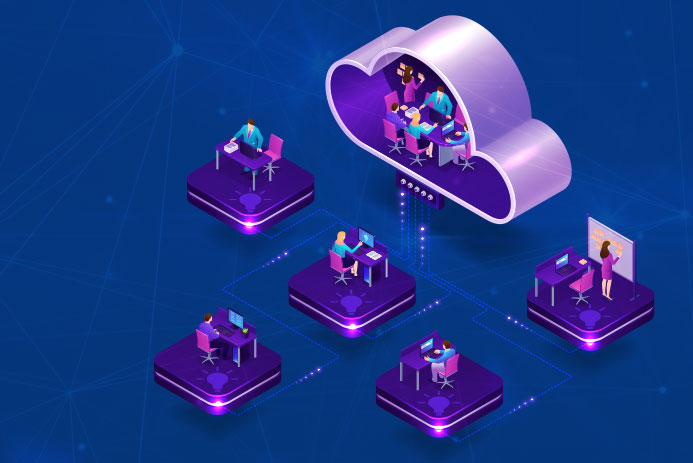
At times, considered as a conflicting concept to an IT infrastructure, edge computing and cloud computing effectively complement each other’s functions. Even though they function in different ways, utilising one does not prevent the use of the other.

Cloud computing is a more common term than Edge and has been used by businesses for a long time. Businesses have favoured it due to the flexibility it provides to manage a workload on a dedicated platform in a virtual environment. However, the time it takes to communicate a task from the primary server to the client is noticeably huge when compared to edge computing. Hence, the former requires more bandwidth if connected to IoT devices.

Benefits of Cloud computing
The primary role of cloud evolves from that of an infrastructure utility to serve as a platform for the next generation of organisational innovation and evolution. Cloud computing not only allows companies to scale their operations but also provides them with the best-suited service model depending on specific requirements such as PaaS, IaaS or SaaS.

While the organisations have deployment models to choose from such as Public, Private, and Hybrid clouds, they can keep a check on the capital and operating expenses by using cloud computing. By adopting cloud strategies, enterprises have seen significant improvement in efficiency, reduction of costs, and decreased downtimes. With the recent disruption and large-scale lockdown measures due to COVID-19, the mobility, security, and scalability of cloud data platforms further highlighted its value to the businesses. The current pandemic has pushed companies to migrate to cloud environments to deal with the lockdown crisis and promote their geographically scattered teams with regular data access, sharing, and collaboration.

The relevance of Edge Computing
While cloud computing has its benefits, for improved performance and meeting more efficient computational needs, businesses are inclined towards using edge technologies. It provides a distributed communication path that works on a decentralised IT infrastructure. When transferring large quantities of data, it is essential to optimise data and complete the process in milliseconds.

Edge computing allows organisations to process, analyse, and perform necessary tasks locally on the data collected. This brings analysis closer to the data generation site eliminating intermediaries and makes it an affordable option for better asset performance. Edge computing makes it possible to utilise the full potential of the latest IoT devices which have data storage and processing power. A few areas where Edge computing has demonstrated incredible success are autonomous vehicles, streaming services, and smart homes. As new technologies like 5G networks, smart cities, and autonomous cars become common, they will integrate with, operate on, and be more dependent on edge computing resources.

Edge vs Cloud Computing
While edge computing and cloud computing are very different from each other, it is not advised to replace cloud computing with Edge. Both have different uses and purposes. Edge computing can be used for extreme latency operations and programming with varying times of run whereas cloud computing is suitable for programmes that require massive storage and provides a targeted platform. The former needs a robust and sophisticated plan for security with advanced authentication while it is easy to secure and control the latter along with remote access.

With the rise in the adoption of digital technologies, the data generated, as a result, continues to increase. And while processing these data, many organisations have started realising that there are shortfalls such as latency, cost and bandwidth in cloud computing. To help eliminate these drawbacks, enterprises are now gradually moving towards edge computing, an alternative approach to the cloud environment. Edge computing not only lowers the dependency on the cloud but simultaneously improves the speed of data processing as a result.

As IoT devices are becoming more widespread, businesses are in need to put in effect edge computing architectures to leverage the potential of this technology. Nowadays, companies are integrating edge capabilities with centralised cloud computing, and this integrated network infrastructure is called fog computing. Fog computing helps in enhancing efficiency as well as data computing competencies for cloud computing.

It is not possible to rely only on the Edge or on the cloud for your IT infrastructure but rather an amalgamation of the two that is best suited to the company’s operations. As these models become more mainstream, companies can strategise to find various hybrid structures to reduce costs and enhance their full potential.

Source: https://content.techgig.com/is-edge-computing-better-for-the-future-or-the-cloud-answers-evp-cio-yotta-infrastructure/articleshow/78874732.cms

HPC-powered AI to take manufacturing efficiencies to a new level

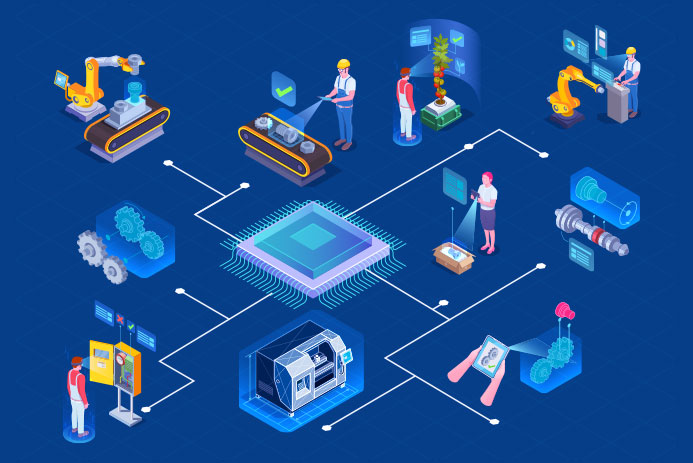
Today, enterprises are leveraging the self-learning power of Artificial Intelligence (AI) and parallel process systems of a High-Performance Computing (HPC) architecture to customise business processes and get more done in less time. In the current unprecedented scenario, industries across verticals had to fast-track digitisation and are testing HPC-enabled AI to synchronise data and build new products and services.

MarketWatch predicts that HPC-based AI revenues will grow 29.5% annually as enterprises continue to integrate AI in their operations. Moreover, with the growth of AI, Big Data, as well as the need for larger-scale traditional modelling and simulation jobs, HPC user base is getting expanded to include high growth sectors like automotive, manufacturing, healthcare, and BFSI among others. These verticals are adopting HPC technology to manage large data sets and scale-out their current applications.

The manufacturing companies, especially, can reap the benefits of HPC as they strive to enhance their operations – right from design process, supply chain, to delivery of products. A study by Hyperion Research indicates that each $1 invested in HPC in manufacturing, $83 in revenue is generated with $20 of profit.

Similarly, they are leveraging Artificial intelligence (AI) & Machine Learning (ML) to accelerate innovation, gain market insights and develop new products and services. Manufacturing organisations have been able to introduce AI into three aspects of their business, including operational procedures, production stage, and post-production. According to a report by Mckinsey’s Global Institute, manufacturing industry investing in AI are expected to make an 18% estimated annual revenue growth than all other industries analysed.

Optimising processes together with HPC & AI

As manufacturers aim to achieve optimal performance and quality output, their focus is to implement HPC-fuelled AI applications to proactively identify issues and enhance the entire product development process, thereby improving end-to-end supply chain management.

At the same time, M2M communication and telematics solutions in the manufacturing sector have increased the number of data points in the value chain. Usage of HPC drives sophisticated and fast data analyses to ensure accurate insights are derived from large data sets. Combining HPC with AI applications allows network systems to automate real-time adjustments in the value chain and reduce the breakdown time. This results in enhanced product quality, accelerate time-to-market, and make the production process more agile.

Substantial use of computer vision cameras in the inspection of machinery, adoption of the Industrial Internet of Things (IIoT), and use of big data in the manufacturing industry are some of the factors adding to the growth of the AI in the manufacturing market for predictive maintenance and machinery inspection application.

Enterprises in the manufacturing industry can use the power of AI with HPC capabilities to deploy predictive analytics. This will not only help them optimise their supply chain performance but also help design demand forecast models and use deep learning techniques to enhance product development. There will, thus, be a need for high-speed networking architecture and systems storage to roll out and power the AI-based programs.

On the other hand, the manufacturing companies are increasingly leveraging HPC systems with Computer-Aided Engineering (CAE) software for performing high-level modelling and simulation. And there is a significant inter-dependability between HPC-powered CAE and AI, where simulations generate huge sets of data and AI models apply data analytics repetitively for even higher quality simulations. By now it is evident that the integration of CAE and AI will accelerate product development and improve quality; however, the scalability required to address the Big Data and compute challenges can only be managed by an HPC infrastructure.

Cloud-enabled approach to HPC

More data means more modelling, and, therefore, a more intensive machine learning solution. It is also important to invest in an HPC-Cloud for faster delivery of results by AI/ML models. A cloud-enabled HPC will help companies scale up their computing capabilities, as many AI workloads run in the cloud today. HPC applications built on cloud, allows companies to innovate by incorporating AI and enhance operations. AI workflows require continuous access to data for training; however, it can be a task to do so on-premise.

Today, manufacturing companies can choose from hybrid and multi-cloud options to provide a continuous and smooth computing HPC environment for on-premise hardware and cloud resources.

The power of one 

The manufacturing industry stands to benefit most from the convergence of HPC & AI technologies. Instead of using AI and HPC as different technologies, the organisations in this sector is unifying the two clusters to reduce OPEX cost and optimise resources. Just to reiterate, the powerful combination of HPC and AI tools are helping manufacturing companies in high-quality product development, improvement of supply chain management capabilities, analysis of growing datasets, reduction in forecasting errors, and optimal IT performance.

By combining AI and HPC capabilities, the manufacturing sector has found multiple ways to deliver the right products and services, accelerate time to market, and drive efficiencies at each stage of development.

Source : https://www.dqindia.com/hpc-powered-artificial-intelligence-take-manufacturing-efficiencies-new-level/

Leveraging High Performance Computing to drive AI/ML workloads

The convergence of High-Performance Computing and Artificial Intelligence/Machine Learning (AI/ML) has ushered in a new era of computational capability and potential. AI and ML algorithms demand substantial computational power to train and execute complex models, and HPC systems are well-suited to meet these demands.

Elevating AI/ML With High-Performance Computing

High-Performance Computing (HPC) harnesses the power of numerous interconnected processors or nodes that operate in parallel, enabling the rapid execution of complex calculations and data-intensive tasks. These systems are renowned for their parallel processing capabilities, high-speed interconnects, and expansive memory, rendering them ideal for data-intensive tasks. HPC is the cornerstone for driving progress in the world of scientific research and industrial innovation.

AI and ML rely on data and necessitate extensive computations for model training and deployment. As AI/ML applications burgeon in complexity and magnitude, the requirement for computational resources escalates. HPC is the essential foundation for AI and ML, enabling rapid training of complex models, efficient processing of massive datasets, parallel computation for speed, scalability to adapt to changing workloads, and application in various fields, driving transformative advancements. HPC services offers the following advantages:

  • Parallel Processing: HPC clusters encompass numerous interconnected nodes, each equipped with multiple CPU cores and GPUs. This parallel architecture enables the distribution of AI/ML tasks across nodes, resulting in a substantial reduction in training times.
  • Ample Memory Capacity: AI/ML often grapple with extremely large datasets. HPC systems have generous memory capacity, empowering researchers to work with extensive data without the need for cumbersome data shuffling, a bottleneck in traditional computing environments.
  • Scalability: HPC clusters are profoundly scalable, enabling enterprises to adapt to evolving AI/ML workloads. As project demands surge, additional nodes can be seamlessly integrated into the cluster for optimal performance levels.

Use Cases of HPC in AI/ML

  • Medical Imaging: AI/ML is harnessed for the analysis of medical images in disease diagnosis. HPC expedites the training of deep learning models, enhancing the precision and speed of diagnosing conditions like cancer from MRI or CT scans.
  • Finance: In the financial sector, the synergy of HPC and AI/ML underpins high-frequency trading, risk assessment, and fraud detection. Real-time analysis and prediction necessitate the computational prowess of HPC.
  • Sensory Data Processing: Self-driving cars generate massive amounts of sensor data. HPC systems process this data in real-time, allowing autonomous vehicles to make split-second decisions for safe navigation.
  • Chatbots and Virtual Assistants: HPC enables the deployment of sophisticated chatbots and virtual assistants that can understand and generate human-like text responses, improving customer support and engagement.
  • Online Deep Learning Services: HPC solution supports online deep learning services, enabling tasks like image recognition, content identification, and voice recognition by providing the necessary computational power for accelerated model training and real-time inference.

Yotta HPCaaS – Your Gateway to Computational Excellence

In this landscape, Yotta HPCaaS offers a convenient solution, providing instant access to the HPC environment without hardware investments, complemented by round-the-clock support. Users benefit from virtual, private, and secured access to their infrastructure, fortified by essential security measures and the added assurance of a fail-safe power infrastructure ensuring 100% uptime. Yotta HPCaaS further supports SQL analytics for Big Data and advanced analytics, as well as AI/ML frameworks, augmenting its versatility and utility in the dynamic world of high-performance computing and AI/ML.

Evaluating SAP infrastructure provider? Consider these 5 things before signing up!

By its very definition, an Enterprise Resource Planning (ERP) system is at the core of a business. Whether you are looking to upgrade an existing SAP or planning a switch to SAP platform, ensuring a smooth implementation becomes a top priority by default. Yet a study by Gartner reveals that despite all the effort and financial resources companies invest in, an estimated 55% to 75% of all ERP projects fail to meet the expected objectives.

For a system that is so central to any business, the range of failed or partially successful ERP implementations is exceptionally high. This further highlights the need to select an appropriate SAP solution and a service provider that also offers an SAP-compliant infrastructure. To help you navigate through this complex journey, we have curated a list of five mission-critical aspects to be considered while evaluating a potential SAP service provider.

Tier IV SAP infrastructure

Tier IV SAP infrastructure

There is no point in having the most advanced ERP solution if an infrastructure breakdown due to cyclones, floods, fires or other calamities prevent you or your customers its access.  This has become even more important in a post-pandemic world because of the distributed workforce and the increasing shift towards the cloud.

The primary criterion has to be the infrastructure that a service provider uses to host the ERP solution and the resilience it offers. One way to gauge this is the Tier grading of the data centers that your SAP provider provides. The most current and advanced providers offer Tier IV certified data centers, which are designed for high levels of fault tolerance across systems and components. This allows the infrastructure to remain operational even under challenging conditions. In addition to this, ensure that your service provider has a low-latency network that can handle high-volume data and provide always-on connectivity along with the solutions like work area recovery, which can be offered on a pay-per-use model.

Reliable storage and access to data

Yotta SAP - Reliable storage and access to data

In the age of Industry 4.0, data is increasingly becoming the single-most valuable asset for businesses. With technologies such as the Internet of Things (IoT) and Artificial Intelligence (AI) becoming mainstream, the volume of data generated and its utilisation across business functions has grown exponentially in the last few years. Additionally, there’s an increasing trend towards using real-time data for automation and decision-making. Fulfilling these business needs requires a solution that offers reliable storage facilities and failsafe access to data at all times.

While evaluating potential partners, look for vendors that offer a comprehensive suite of data storage, protection and recovery solutions. Enterprises must look for storage systems that are always-on and provide nearly 100% access to data and hybrid systems that allow businesses to make most of the legacy and new data, both on-premise and the cloud. The efficacy of a new ERP platform can be measured in two ways – one, the SLAs across key metrics that are critical to your business needs, and two, its ability to reduce complexity and risk in critical operations.

Security against vulnerabilities

Yotta SAP - Security against vulnerabilities

The democratisation of technology has dramatically increased the number of people who are connected to and use an enterprise’s central system. This, in conjunction with the COVID-19 induced work-from-home phenomenon, has increased the exposure of businesses to security vulnerabilities due to the manifold increase in access points into the system. And based on initial reports, a lot of these changes are unlikely to be reversed.  Hence, if you are investing in an ERP for the future, be sure to invest in a secure platform.

The primary object of data security is to avoid unauthorised access to data, both from the outside and within. Hence, look for service providers that offer a multi-layered managed security environment that helps keep your data safe and maintain operations. It is also worthwhile to consider vendors who offer advanced solutions and tools to derive insights and intelligence that help your business stay ahead of potential threats.

Flexibility and scalability of use

Yotta SAP - Flexibility and scalability of use

One of the biggest challenges for organisations, particularly those that operate in a high-growth sector, is the ability of the ERP solution to scale-up or scale-down based on the business requirements. This becomes even more important during volatile periods like we are experiencing today. Here, the ability of your service provider to offer such flexibility gives your business a definite edge.

Some of the key parameters to assess the flexibility offered by a potential ERP vendor include:

  • Scalability in the use of cloud services to scale up or scale down the utilisation based on changing workloads
  • Ability to upgrade the available infrastructure or add new / integrate software capabilities to keep pace with the advances in technology
  • Ability to adapt and add functionalities in response to changing demands and trends in the business landscape

Transparency in pricing

Yotta SAP - Transparency in pricing

Implementing SAP can be quite a complex task, owing to the number of variables customers need to weigh while evaluating a potential solution. Then there is the implementation and migration cost. After all of this, comes an area that often goes unnoticed – operating cost – and this is also where several ERP solutions fail. Hidden costs and unplanned operating expenses often make the solution financially unviable. In such a scenario, it is extremely crucial to be financially prudent and pick a vendor that offers a transparent OPEX based pricing.

Following are some of the factors to keep in mind and traits to look out for:

  • While the first step is to figure and anticipate the number of users who will need access, it is essential to get a clear indication of the number of users the solution has been licensed for
  • Look for granular costing and a modular offering that allows you to pick-and-choose capabilities based on your needs, for example, cloud usage, data storage and disaster recovery, migration, and relocation among others
  • Evaluate the pricing in light of the infrastructure the service provider offers, for instance, an SAP solution hosted on a fault-tolerant infrastructure drastically improves reliability and almost eliminates the costs associated with system breakdowns

Bottom line

From faster and better computing to the amount of data we generate and consume as well as the widespread application of digital tools in various spheres, technology is evolving at a breakneck speed today. While this is what adds complexity to the decision-making process, particularly for core functions like ERP, it is also a strong call-to-action. And it cannot be denied that a robust ERP solution can help organisations enhance productivity across operations and functions, which allows them to stay in lockstep with the changing consumer demands.