











Oracle Cloud Infrastructure: Security In the Cloud

In cloud computing, businesses are constantly seeking ways to capitalise on its vast potential while ensuring the security of their data and applications. Enter Oracle Cloud Infrastructure (OCI), a platform that not only embraces the possibilities of cloud migration but also addresses the paramount concerns surrounding security.

Yotta, a trusted provider of Oracle solutions and managed services, offers businesses a pathway to maximising the potential of Oracle technologies. By consolidating essential components such as software, licenses, infrastructure, and deployment services, Yotta simplifies operations and drives transformative results across sectors

Yotta: Empowering Businesses with Oracle Solutions and Managed Services

Yotta enables businesses to unlock the full potential of Oracle with its holistic suite of solutions and managed services. Yotta brings everything you need under one roof, from software and licenses to infrastructure and deployment. This unified approach streamlines operations and delivers transformative results across your business.

Yotta’s solutions are designed to scale and adapt to your future needs, ensuring a smooth journey with simplified deployment. A dedicated team of technical, database, and application experts provides ongoing support, so you can focus on core business activities.  All this is delivered on a robust, SLA-backed infrastructure that guarantees peak performance.

  • Managed Services: With Yotta’s managed services, businesses can access support for designing and building database architecture, including critical activities such as operations, performance tuning, patching, security, and support, enhancing the efficiency and reliability of their database infrastructure. Yotta provides a wide range of services encompassing OCI such as provisioning and managing OCI infrastructure as per customer requirements.
  • Database Security: Yotta emphasises database security, reducing the risk of data breaches and simplifying regulatory compliance through encryption, key management, access controls, data masking, and activity monitoring solutions. Oracle Database security products include Oracle Data safe, Oracle Advance Security, Oracle Key vault, Oracle Database vault, to name a few. Yotta uses Oracle security solutions to evaluate security configuration and user risks, pinpointing areas for mitigation or elimination of these risks.
  • High Availability & Disaster Recovery: Yotta’s services include setting up Real application cluster and Dataguard for ensuring high availability and replicating data between multiple databases for disaster recovery purposes, ensuring secure data backup and restoration.

In addition to its cloud offerings, Yotta’s Oracle Migration Services ensure seamless data migration between on-premise data centers and various cloud environments, minimising the impact on business processes. Yotta provides cross-platform migration services for large databases, leveraging diverse Oracle native tools.

Exploring Security Features of Oracle Cloud Infrastructure

OCI offers a comprehensive set of features designed to protect data. Let’s explore these features in detail:

Encryption at Rest and in Transit: OCI employs advanced encryption techniques to safeguard data both at rest and in transit. Data stored in OCI’s cloud storage services is encrypted using industry-standard encryption algorithms. Additionally, data transferred between OCI services and external networks is encrypted to prevent interception and tampering, providing end-to-end security for data in motion.

OCI ensures data encryption at rest by default, whether stored in storage services like block, object, or file services, or in Oracle platform solutions like Database platform services or Analytics Cloud Service. Encryption extends to database backups for services like Oracle databases, with Oracle managing encryption keys. Customers can opt to manage their own keys, useful for unique keys across teams/projects and for access control. OCI Vault facilitates key management, allowing customers to create vaults and assign keys to OCI services.

Oracle aims to ensure comprehensive encryption, including data in transit. All control plane data within transit undergoes encryption using Transport Layer Security (TLS) 1.2 or higher alongside X.509 certificates. Moreover, data exchanged between different availability domains and regions is secured through MACsec encryption. MACsec (IEEE 802.1AE) functions at the layer 2 level, employing AES-GCM-128 to provide integrity and confidentiality for data in transit.

Identity and Access Management: OCI’s IAM provides the capability to regulate access to cloud resources. IAM Components consist of resources, users, groups, dynamic groups, network sources, compartments, tenancy, policies, home region, and federation. These elements manage access to Oracle Cloud Infrastructure resources. Policies specify resource access, and tenancy serves as the root compartment for all resources, while federation enables integration with identity providers.

OCI offers IAM capabilities to manage user access and permissions effectively. With IAM, businesses can define granular access controls, assign roles and privileges, and implement multi-factor authentication to verify user identities.

[Image Source: Oracle Blog]

Network Security: The average global cost of a data breach is around $4.45 million. Oracle Cloud Infrastructure prioritises security without compromising cost, offering various protective measures across data center, hardware, network, OS, storage, database, and application access. OCI provides comprehensive network security features to protect against external threats and unauthorised access.

Users accessing OCI from the field face security risks via public networks. To mitigate this, granting access via corporate VPN ensures secure connections. Utilising corporate VPN IP range as a network source allows defining policies for field user access. Virtual Cloud Networks enable businesses to create isolated network environments with customisable security rules, allowing fine-grained control over traffic flow and access to resources. Additionally, OCI offers Distributed Denial of Service (DDoS) protection to mitigate the impact of cyberattacks and ensure the availability of cloud services.

Security Monitoring and Logging: Continuous monitoring and logging are essential components of a robust security strategy, enabling businesses to detect and respond to security incidents in real-time. OCI offers integrated monitoring and logging services that provide visibility into user activities, resource utilisation, and security events. By analysing logs and audit trails, businesses can identify suspicious behavior, investigate security incidents, and enforce compliance with regulatory requirements.

OCI now provides flow logs across all commercial regions, enhancing user experience with granular filtering options. Flow logs aid in monitoring, troubleshooting, and security analysis, offering insights into network behavior. With a simplified interface and configuration controls, they ensure valuable data isn’t lost in the vast network traffic.

Secure Development Practices: OCI follows secure development practices to ensure the integrity and security of its cloud services. By implementing rigorous security testing, code reviews, and vulnerability assessments, OCI mitigates the risk of software vulnerabilities and exploits. Additionally, OCI regularly updates its services with security patches and fixes to address emerging threats and vulnerabilities, ensuring that businesses can rely on a secure and resilient cloud infrastructure.

In conclusion, Oracle Cloud Infrastructure offers a comprehensive suite of security features to protect your cloud environment, ensuring the confidentiality, integrity, and availability of your data and applications. With Yotta’s expertise and industry-leading infrastructure, businesses can harness the full potential of Oracle services while mitigating security risks and optimising costs.

Demystifying SAP S/4HANA: Understanding the Next-Gen ERP Platform
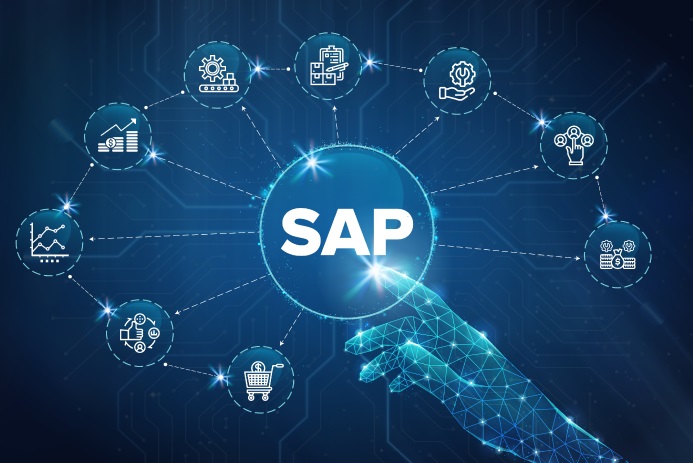
Having a robust Enterprise Resource Planning (ERP) system is no longer a luxury, it’s a necessity. An ERP streamlines critical processes like finance, inventory management, and customer relationship management. But with constant technological advancements, even established ERP systems need an upgrade. Enter S/4HANA, the next-generation ERP platform from SAP, designed to propel businesses into the future.

What is S/4HANA?

S/4HANA isn’t merely an update to SAP’s traditional ERP offering, SAP ECC. It’s a complete reimagining, built on the revolutionary HANA in-memory database. SAP S/4HANA is pre-configured to provide the most current industry standards and ongoing advancements. This software suite aids in overseeing financial, operational, and customer interactions for businesses. By consolidating essential processes and pertinent data, it creates a unified system for companies. It unlocks real-time processing, simplifies data models, and prioritises a user-friendly experience.

Here’s what sets S/4HANA apart from its predecessor:

  • Real-Time Processing: Gone are the days of waiting for reports or lagging data. S/4HANA processes information in real-time, giving you a constant pulse on your business.
  • Simplified Data Model: The complex and siloed data structures of ECC are replaced by a streamlined model in S/4HANA. This translates to faster access, improved data integrity, and easier analysis.
  • Enhanced User Experience: S/4HANA boasts a modern and intuitive interface, making it easier for users of all levels to navigate and utilize the system effectively.

Unlocking the Power of S/4HANA: A Multitude of Benefits

Implementing S/4HANA can significantly enhance your business operations. Here are some key advantages to consider:

  • Boosted Efficiency and Productivity: Real-time data access and streamlined processes empower your teams to work smarter and faster. Imagine a scenario where finance can access accurate inventory levels while processing a sales order, eliminating delays and discrepancies.
  • Data-Driven Decision Making: S/4HANA provides valuable insights from your data, allowing you to make informed choices that drive growth and profitability. Gain a holistic view of everything, from customer trends to production bottlenecks, and leverage that knowledge to optimize your operations.
  • Unmatched Agility and Scalability: The flexible architecture of S/4HANA allows you to adapt to ever-changing market conditions with ease. S/4HANA can seamlessly scale alongside your business.
  • Reduced IT Costs: The simplified data model and in-memory processing capabilities of S/4HANA can significantly decrease your hardware and software expenses. Say goodbye to clunky legacy systems and hello to a streamlined, cost-effective ERP solution.

Considerations Before Implementing S/4HANA

While S/4HANA offers a plethora of advantages, transitioning to a new platform requires careful planning. Here are some key factors to consider:

  • System Compatibility: Ensure your current systems are compatible with S/4HANA or have a well-defined migration plan in place. Incompatibility can lead to significant disruptions and delays.
  • Data Migration Strategy: Migrating your critical business data to S/4HANA requires a meticulous approach. Develop a comprehensive data migration strategy to ensure data accuracy and minimize downtime.
  • Change Management Process: A successful S/4HANA implementation hinges on user adoption. Implement a well-defined change management plan to train your employees, address concerns, and ensure a smooth transition.

The Future of ERP is Here: S/4HANA Paves the Way

S/4HANA isn’t just an upgrade; it’s a glimpse into the future of ERP. This next-generation platform leverages cutting-edge technologies like Artificial Intelligence (AI), Machine Learning (ML), and the Internet of Things (IoT) to take your business operations to the next level:

  • AI and Machine Learning: Imagine AI automating repetitive tasks, predicting trends, and identifying potential risks. S/4HANA integrates AI and ML capabilities to streamline workflows and unlock valuable insights.
  • The Internet of Things (IoT): By connecting machines and devices to S/4HANA, you can gain real-time insights into production processes, inventory levels, and asset performance. This data-driven approach allows for predictive maintenance, optimized resource allocation, and improved overall efficiency.

Demystified and Ready for Action!

While S/4HANA may seem complex at first glance, understanding its core functionalities and the value it brings empowers businesses of all sizes. By streamlining processes, providing real-time data insights, and fostering agility, S/4HANA can be the key to unlocking your organisation’s full potential.

Yotta’s SAP S/4HANA services offer a seamless transition to next-generation ERP solutions, empowering businesses to become digital, intelligent, and autonomous enterprises. From advisory and implementation to infrastructure management and support, Yotta provides end-to-end SAP capabilities tailored to major use cases. With transparent pricing, scalable solutions, and SAP-certified expertise, Yotta ensures efficient and cost-effective SAP transformations for businesses across industries.