












The rise of GPU-as-a-Service

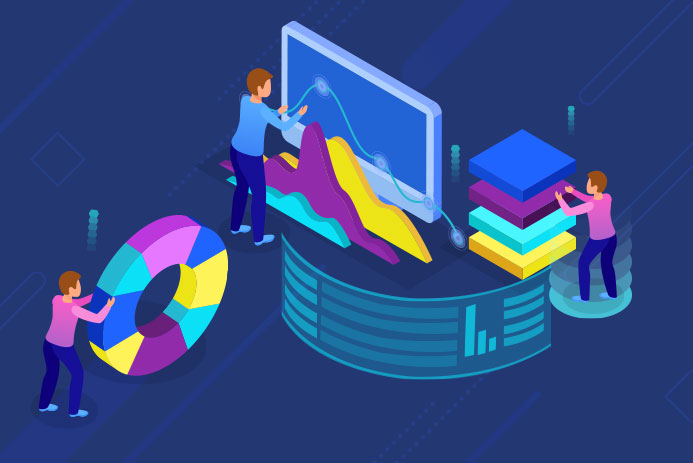
Product design, development, and data analysis are empowered by deep learning, AI and big data analytics. These require high-performing GPUs for scaling and speeding up the process, explains Nitin Jadhav, Head of Solution Engineering – Yotta Infrastructure.

Years ago, a graphic processor unit or GPU used to be a small part of the central processing unit or CPU. It was, as the name suggests used for making our PCs or computers graphic and video enabled.

With advancement, our content evolved into pictures, audio and video. It then follows that the role of GPU would become more critical in the general scheme of things. And it did. GPU was slowly and steadily making its way to becoming from something that was much in demand in the niche markets of gamers and VR/AR to something that had a more mass appeal.

GPUs are the new CPUs

Today we see more and more usage of 3D modelling and animation, leading to high demand for the advance high-performing computing capabilities of GPU solutions. We see animation studios now partnering with companies providing GPU solutions to enhance the quality of their animated feature films.

Also, the rapid adoption of the IoT and Industrial Internet of Things (IIoT) across sectors, for product design, development, and data analysis backed by deep learning, Artificial Intelligence (AI) and Big Data analytics require high-performing GPUs for scaling and speeding up the process.

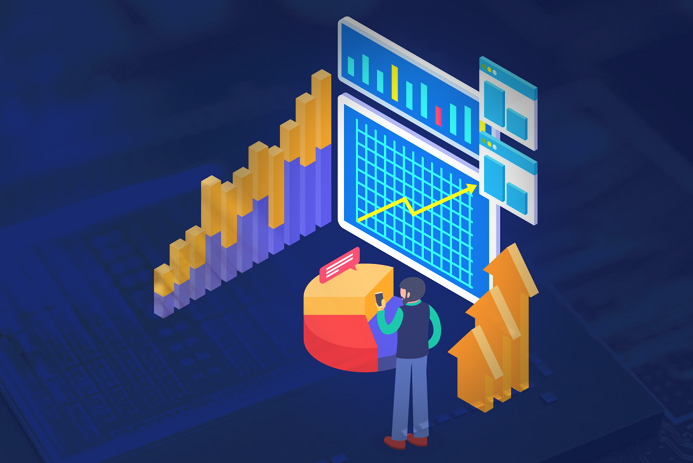
GPU can speed up machine learning and AI workloads in terms of magnitude, hours and days instead of weeks and months. Today, GPUs that can handle massively parallel processing which reduces the time to complete the task and in turn also reduces the total cost of ownership. For example, companies are using AI-powered by GPU to automate processes like employee approvals, payment processing, and sales discounting.

GPU on the cloud

It is a challenge for most enterprises to set up a GPU infrastructure on-premise. Also, it is tricky to understand and plan the demand for this infrastructure for its optimal usage. This is why GPU-as-a-Service (GPUaaS) came into being and is a no brainer for most businesses. GPUaaS is basically for on-demand, elastic provisioning of GPU infrastructure.

Low-cost implications, support from cloud service providers and on-demand scalability, are some of the key benefits of GPUaaS. The SaaS service model is expected to grow due to the large-scale adoption of cloud-based GPU computing solutions by end-users. The market players in the GPU market are increasingly focusing on delivering SaaS-based solutions to their customers.

GPUaaS – the future of smart working

GPUaaS can be used for tasks as diverse as training multilingual AI speech engines to detecting early signs of diabetes-induced blindness. The speed necessary for machine learning systems like this can only be accomplished with modern GPUaaS that offer a compelling alternative to traditional general-purpose processors with flexible pricing and no CAPEX.

GPU as a Service, can be used with a server model and also as a workstation. If you plan to run computationally intensive tasks, they can consume a lot of CPU power, offloading some of this work to a GPU can free up resources and improve performance output. Similarly, for workstations, the GPU can handle the toughest workloads while the CPU handles regular computing.

With the new technologies becoming more mainstream, GPUaaS will witness an extensive set of applications across industries soon.

GPUaaS – the road ahead

Companies operating in the GPUaaS market are also developing GPU specifically for deep learning and AI. Most product design, development, and data analysis are empowered and backed by deep learning, Artificial Intelligence (AI) and big data analytics these days. These require high-performing GPUs for scaling and speeding up the process.

The market for GPUaaS is already set to exceed US$ 7 billion by 2025; and the Asia-Pacific GPUaaS market is projected to register significant growth with a CAGR of over 40% between 2019 and 2025 according to a research report by Global Market Insights. The region is also a key contributor to the gaming market and is rapidly adopting cloud gaming, resulting in industry growth. Any enterprise looking for a processing activity which relies on highly fast, yet simple calculations are looking at GPUaaS very closely.

Smart cities and energy-efficient buildings will also require high-performing GPUs to run the real-time process seamlessly, along with the deployment of deep learning for predictive analytics. All this and more will lead to the growth of GPUaaS in the future.

Source : https://www.pcquest.com/rise-gpu-service/

Effective Cloud Strategy for your Business

A decade ago, cloud computing was for enterprises what AI and IOT are these days. Exciting meaningful but still not a part of their world. Today however, we can safely say that cloud computing has become a part of the mainstream enterprise technology world. Gartner predicts that by end of this year, 75 percent of organizations will have deployed a multi-cloud or hybrid cloud model. The discussions have now moved from does cloud make sense to our business to what kind of cloud environment is best for us. Cloud is no longer a buzzword but a need for most businesses, and at the same time transitioning to cloud is an expensive affair. In this article, I will highlight few of the things that as a business you should consider before making the move.

Different cloud environments 

There is no one size fits all in Cloud computing. Every cloud provider has a different setup in terms of physical infrastructure, technology infrastructure, functionality, pricing and policies and others. Private, where computing services are offered via dedicated resources over a computing infrastructure hosted on-premise or at service providers cloud but in the dedicated model. Public, where computing services offered by third-party providers over the public internet and hybrid where a mix of on-premises, private cloud and third-party, public cloud services are used.

Multi-cloud v. Hybrid-cloud environment

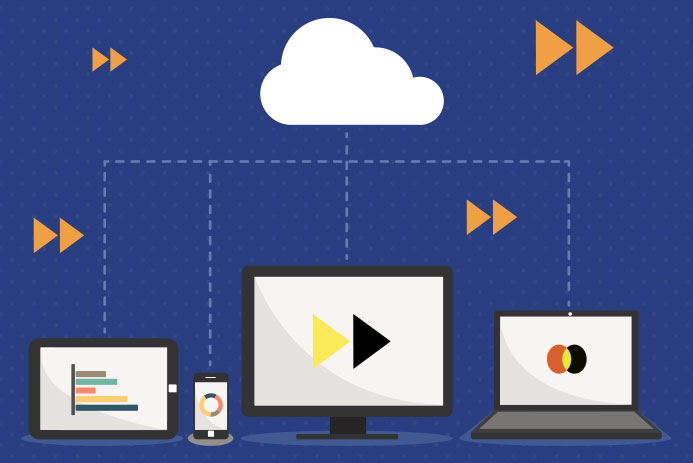
While public and private clouds are simple, there are multi-cloud and hybrid-cloud architectures. Although they sound similar, there is a major difference between them. In a multi-cloud setup, enterprises may use multiple public cloud from multiple cloud providers, whereas hybrid cloud solutions combine the advantages of public, private and multi-cloud to deliver the agility, elasticity, and cost-effectiveness to your organization.

It basically means that you are not putting all your eggs in one basket and hence, distributing the risk and getting the best environment for your application as per business and users need. For instance, a business that is spread across geographies and is using cloud services, finding one cloud infrastructure provider to meet all its demands and needs, is a big challenge. For such organizations, a multi-cloud architecture is best suited.

Drivers for a Multi-cloud environment

Another major reason for enterprises to adopt multi-cloud is avoiding vendor lock-in. This means that you will be working with more than one vendor in a multi-cloud setup. When a multi-cloud strategy is adopted by organizations, it provides them with more leverage than the cloud provider. The organization now has the option of transferring workloads between providers basis pricing or differing capabilities.

Other factors like cost savings, performance optimization, a lowered risk of DDoS attacks, as well as improved reliability, make hybrid-cloud a very attractive option for many businesses. Multi-cloud environment is one of the most flexible environments one can go in for.

Challenges of a Multi-cloud architecture

While multi-clouds seem extremely attractive there are some pitfalls to it as well. One of the biggest is the possibility of difficult integration across multiple cloud servers and vendors. Keeping track of all the stakeholders, applications and deployments with multiple vendors and platforms can be a thing of IT management nightmare.

Then there is the entire security angle to it. While the multi-cloud does limit the DDoS attack, it may leave an enterprise vulnerable to other attacks, if don’t plan the organization level security policies as per the individual cloud operators’ measures. So now an enterprise has to be not just aware of knowing each of its many cloud service providers’ security measures and then has to identify the steps needed to secure the gaps.

Strategize your way to a successful multi-cloud, the Yotta way

Before you jump into the multi-cloud bandwagon, it is a good idea to form a strategy. Solid strategies that will help you understand why exactly your business needs a multi-cloud setup. Is it because you want to reduce vendor dependency or is the focus risk mitigation? Questions about functionality, procurement or application portability on this kind of environment need to be addressed clearly before embarking upon this journey.

A clearly defined multi-cloud strategy will automatically lead itself into a successful venture. While there are challenges, there are solutions to overcome them as well, for instance, instead of learning and using new tools, with Yotta’s orchestration layer one can manage and deploy any cloud as per security posture/polices of the organization. Besides, Yotta can also help to move your workloads across clouds by taking the entire responsibility of the migration. If your enterprise is looking to shift to cloud computing or moving to a multi-cloud environment, schedule a free consultation with our cloud experts.

Moving workload to hybrid cloud for better data management

Hybrid Data Warehousing for Scalability

Data, as we know, is the most prized asset for a business. With increased touchpoints for businesses, the data that comes in is often stored in siloes across the organization. Due to this, data science teams are unable to optimally run their analytics tools or deploy algorithms to derive actionable insights from the data sets. Today, most organizations use a combination of cloud services along with on-premise infrastructure to manage critical data. With the data protection norms setting in, organizations will have to implement a cloud strategy that aligns with the governance and storage requirements of India’s Personal Data Protection Bill 2019. A hybrid approach to the cloud will thus help businesses meet both their security and scalability requirements by deploying a blend of private and public cloud services in their IT infrastructure.

With the rise in data, the computing and processing demands of the cloud architecture needs to be elastic for data deployment models. Hybrid cloud will allow organizations to meet the on-demand data requirements and derive insights in real-time to meet the business objectives. It would also allow for seamless data management by ensuring the portability of workloads among the on-premise infrastructure and public cloud.

Securing Data in the Cloud

A lurking challenge for cloud-environments is the security of critical data. In a hybrid cloud, enterprises can disintegrate confidential and less critical information for storage purposes. By doing this, they can effectively put in place a disaster recovery mechanism that can replicate data in real-time and create data copies on multiple sites. The security requirements of a hybrid cloud environment can be addressed by deploying a single unified security environment across the organizational network.

Advantages of Hybrid Cloud

As customer experience takes the center stage in business decisions, a hybrid cloud management solution offers the agility required to mine heaps of unstructured customer data and run business analytics on them. Some retail brands are using hyper scalable cloud solutions to manage information overload during heavy-traffic period and optimise their sites to provide a personalised experience in real-time. A hybrid approach makes it easier for enterprises to integrate multiple tools and reduce latency for seamless customer experience.

Indian companies are stepping up their dependency on hybrid cloud and working towards moving their traditional data into data lakes. Hybrid cloud solutions not only provide flexibility to run applications of various scale but also create self-service data platforms by modernizing the IT infrastructure. With hybrid cloud, enterprises can align their workloads, either on-premise or on cloud, that aligns with data security, governance and business requirements of the organization.

With major players setting up their data centers in India, the hybrid cloud model will provide a balanced IT model to deploy an optimal cloud migration strategy. Organizations will be able to select the best infrastructure for different applications by leveraging the elasticity of a hyper specialised arrangement. The year 2019 saw major global players coming together to harness their cloud capabilities and India’s maturing start-up and SME ecosystem only paves the way for a considerable shift to integrated cloud solutions.

Source: https://www.dqindia.com/moving-workload-hybrid-cloud-better-data-management