








Optimising Customer Relationship Management with SAP Business One

Customer relationships are the cornerstone of long-term success. Building and maintaining strong customer relationships is about providing quality products or services and offering exceptional experiences that meet their evolving needs. For small and medium-sized businesses (SMBs), achieving this level of personalisation and attention to detail is critical for fostering loyalty and driving sustainable growth.

To help SMBs optimise customer relationship management (CRM), SAP Business One, a comprehensive Enterprise Resource Planning (ERP) solution, offers an integrated approach. This platform provides tools that empower businesses to streamline their operations, gain deeper insights into customer behaviours, and deliver exceptional service.

Understanding SAP Business One

SAP Business One allows organisations to manage key business functions like finance, sales, customer relationship management, inventory, purchasing, and operations. This allows businesses to seamlessly monitor and control their processes, providing them with a 360-degree view of operations.

When it comes to CRM, SAP Business One offers a range of functionalities that help businesses build stronger customer relationships. It provides tools for managing contacts, tracking interactions, scheduling follow-ups, and analysing customer data. By centralising customer information and providing insights into customer behaviour, SAP Business One empowers businesses to tailor their services and communication for better engagement.

How SAP Business One Optimizes CRM

1. Centralised Customer Data for a 360-degree View

A key challenge businesses face is managing disparate customer data across various departments, which often leads to inefficiencies, miscommunication, and poor customer experiences. SAP Business One solves this by centralising all customer-related information into one database.

Customer profiles in SAP Business One include sales, service, marketing, and finance data. This means sales teams have access to not only contact information but also transaction history, service requests, and payment details. By accessing a unified customer profile, sales representatives can comprehensively understand each client’s needs, enabling them to engage in more personalised and relevant conversations.

Moreover, the centralised data enables seamless collaboration across departments. If a customer contacts the support team with an issue, the service agent can quickly review their purchase history and previous interactions, ensuring a prompt and informed response. This holistic view fosters better communication, strengthens relationships, and creates more satisfying experiences for customers.

2. Automated Sales and Marketing Campaigns

Effective CRM requires businesses to reach the right customers at the right time with the right message. SAP Business One facilitates this by automating sales and marketing activities. The system allows businesses to create and manage targeted marketing campaigns that are tailored to customer preferences and behaviours.

For instance, businesses can segment their customer base based on criteria like buying patterns, demographics, or engagement history. This allows for the creation of personalised marketing campaigns designed to attract specific customer segments. Whether it’s an email campaign promoting a new product or a loyalty offer for repeat buyers, SAP Business One automates the execution of these campaigns, ensuring they run smoothly and efficiently.

The system also provides analytics to measure the success of these campaigns, allowing businesses to fine-tune their strategies. By tracking customer responses and engagement, businesses can assess the effectiveness of their marketing efforts and adjust their approach accordingly.

3. Streamlined Sales Process for Increased Conversions

Sales teams play a crucial role in CRM, and SAP Business One provides them with tools to streamline the sales process and increase conversion rates. With features like lead management, opportunity tracking, and real-time access to customer data, sales representatives can work more efficiently and close deals faster.

Sales teams can track leads from initial contact through to conversion, ensuring that no opportunity slips through the cracks. The system automatically logs interactions and progress with each lead, providing clear visibility into the sales pipeline. Sales representatives can prioritise their efforts based on the likelihood of closing a deal, helping them focus on high-potential opportunities.

Moreover, SAP Business One enables businesses to create and manage quotations, track orders, and ensure that all relevant documentation is linked to the customer profile. This reduces manual effort and allows sales reps to deliver quicker responses and more accurate proposals.

4. Comprehensive Service Management for Improved Customer Support

Customer support is a pivotal aspect of CRM. SAP Business One includes a service management module that helps businesses track and manage service requests, ensuring that customer issues are resolved promptly and efficiently. This tool provides businesses with visibility into service contracts, repair orders, and warranty claims.

Support teams can quickly view the customer’s service history and provide contextually relevant assistance. For example, if a customer contacts the support team with a product issue, the support agent can immediately review any previous service requests or warranty information, accelerating problem resolution.

The service management module also enables businesses to manage service level agreements (SLAs) to ensure that all requests are addressed within the agreed timeframes. By maintaining a high standard of customer support, businesses can increase customer satisfaction and build trust.

5. Powerful Analytics and Reporting for Data-Driven Decision Making

Data-driven decision-making is essential for optimising CRM, and SAP Business One provides businesses with powerful analytics and reporting tools to gain actionable insights into customer behaviour. The system can generate real-time reports that track sales performance, service metrics, customer satisfaction, and more.

Businesses can identify trends in customer purchasing habits, uncover opportunities for cross-selling or upselling, and forecast demand for products and services. The ability to track customer satisfaction through feedback and survey tools also helps businesses monitor how well they are meeting customer expectations.

Businesses can make informed decisions to enhance their CRM strategies by leveraging these insights. For instance, if certain products receive positive customer feedback, businesses can create targeted campaigns to promote those items to similar customer segments.

6. Mobility for Remote Teams

With the increasing reliance on remote work and field operations, businesses need CRM solutions that are accessible from anywhere. SAP Business One’s mobile application allows sales representatives, service technicians, and customer support teams to access customer data and manage tasks on the go.

Mobile access to CRM tools ensures that employees can respond to customer inquiries, update records, and close sales, regardless of their location. This enhances operational flexibility and ensures that customer interactions remain smooth and uninterrupted.

Conclusion

Yotta provides an end-to-end SAP suite: Hosting, Licenses, Implementation, Consulting, and Support (AMS).

Incorporating real-time data access and advanced features like SAP HANA mobile apps into your CRM strategy can significantly enhance decision-making and streamline operations. With tools such as Enterprise Search, Cash Flow Forecasting, Available-to-Promise, Delivery Schedule Management, Intelligent Forecasting, and Sales Recommendations, businesses can better understand their operations, improve customer satisfaction, and maintain healthy liquidity.

These features enable companies to react to customer demands quickly, optimise their inventory, and predict future trends with greater accuracy. By integrating these capabilities into SAP Business One, businesses improve CRM efficiency and enhance overall productivity and profitability, ensuring that they stay ahead in a competitive marketplace.
Say Goodbye To Downtime With SAP Certified Solution from Yotta

In today’s always-on, digital-first business landscape, downtime is no longer an option. Enterprises that rely on SAP for their critical operations cannot afford system disruptions, as these can result in lost revenue, productivity setbacks, and damaged reputations. Yotta, a leader in IT infrastructure and cloud services, offers a cutting-edge, SAP-certified solution designed to eliminate downtime, maximise system performance, and enhance operational resilience.

The Business Challenge of Downtime
In the modern business environment, downtime translates directly into financial losses, missed opportunities, and operational inefficiencies. Companies running critical applications like SAP cannot afford prolonged outages, as they disrupt everything from supply chain management to customer relationship management (CRM), and from financial accounting to human capital management.

A recent study revealed that the average cost of IT downtime can be as high as Rs. 4.7 lacs per minute, depending on the size of the organisation. For businesses reliant on SAP, system disruptions can have even more severe implications, halting essential workflows and delaying decision-making processes.

This makes it crucial for organisations to deploy an infrastructure that guarantees high availability, optimal performance, and the ability to recover quickly in case of unforeseen disruptions. Yotta’s SAP-certified solution addresses these challenges by providing an environment where downtime is minimised, operational continuity is ensured, and performance is optimised.

Yotta’s SAP Certified Solution: Overview
Yotta’s SAP-certified solution offers an integrated platform designed to support mission-critical SAP applications with the highest standards of reliability, availability, and performance. The certification from SAP ensures that the solution meets SAP’s rigorous criteria for security, interoperability, and scalability, giving businesses confidence in its capabilities.

Key Features:

  • High-Availability Architecture: Yotta’s infrastructure is designed to provide near-zero downtime, ensuring 24/7 operations for your SAP systems.
  • Proactive Monitoring and AI-Driven Maintenance: Yotta leverages AI-driven monitoring systems to proactively identify potential risks and resolve issues before they lead to system failures.
  • Disaster Recovery and Backup: Built-in disaster recovery mechanisms ensure that data is backed up and that businesses can resume operations quickly after any disruption.
  • Flexible Cloud Integration: Seamlessly integrates with public, private, or hybrid cloud environments, offering businesses the flexibility to scale resources based on demand without compromising performance.

How Yotta Reduces Downtime
Downtime can arise from a variety of factors, including hardware failures, system overload, network issues, or software bugs. Yotta’s SAP-certified solution tackles these challenges through a comprehensive approach that combines architectural resilience, real-time monitoring, and advanced automation. Here’s how Yotta minimises downtime:

  • Resilience Through Redundancy
    Yotta’s infrastructure employs a high-availability architecture, which includes redundant hardware and failover mechanisms. This means that even if one component fails, another will take over immediately, minimizing service disruptions. Critical workloads are distributed across multiple nodes, ensuring that no single point of failure can halt operations.
  • Proactive Monitoring and Maintenance
    Yotta employs AI-driven monitoring systems that continuously analyse system performance, looking for early signs of potential issues. Whether it’s a spike in resource usage or a network latency issue, Yotta’s predictive analytics tools can alert administrators and even initiate automated responses to prevent downtime. This proactive maintenance ensures that minor issues don’t escalate into major outages.
  • Seamless Disaster Recovery
    In the event of a major disruption, such as a natural disaster or significant hardware failure, Yotta’s disaster recovery mechanisms kick in. The solution includes geographically dispersed backup sites that ensure your SAP environment can be restored quickly, minimizing downtime and data loss.
  • Scalable Cloud Infrastructure
    Yotta’s solution is cloud-agnostic, meaning it can easily integrate with public, private, or hybrid cloud platforms. This enables businesses to scale their SAP systems according to demand, ensuring that performance is maintained even during peak operational periods. By distributing workloads across the cloud, Yotta ensures that businesses can handle spikes in demand without experiencing system slowdowns or outages.

Business Benefits of Yotta’s SAP Certified Solution
Yotta’s SAP-certified solution provides several key benefits that directly address the needs of modern enterprises:

  • Cost Savings
    Reducing downtime directly translates into cost savings. By preventing outages and ensuring smooth operations, businesses can avoid the financial losses associated with downtime. Additionally, Yotta’s efficient resource management and cloud integration reduce IT overhead costs by allowing businesses to pay only for the resources they need.
  • Enhanced Business Continuity
    The solution’s high-availability design ensures that critical business operations remain uninterrupted. Whether it’s managing supply chains, processing customer orders, or generating financial reports, Yotta’s solution ensures that SAP systems remain operational, providing businesses with the confidence to operate continuously.
  • Optimised Performance
    Performance bottlenecks are a common issue in large SAP environments, particularly during periods of peak demand. Yotta’s solution optimises performance through dynamic resource allocation, ensuring that your SAP systems run efficiently and at maximum capacity, even during high-demand periods.
  • Scalability for Future Growth
    As businesses grow, their IT requirements increase. Yotta’s solution offers scalable infrastructure, allowing businesses to expand their SAP environment as needed without incurring downtime. This flexibility is crucial for businesses that are rapidly expanding or experiencing seasonal fluctuations in demand.

Yotta’s SAP-certified solution is trusted by businesses across industries for its reliability, scalability, and security.

SAP certification is more than just a seal of approval. It guarantees that Yotta’s solution has undergone rigorous testing and meets SAP’s stringent performance and security standards. This certification gives businesses peace of mind, knowing that their SAP services are supported by a robust, compliant, and fully optimized infrastructure.

Case Studies: Real-World Success

Case Study 1: Manufacturing Company
A global manufacturing company was experiencing frequent system downtimes due to overloaded legacy infrastructure. By migrating to Yotta’s SAP-certified solution, the company saw a 99.9% increase in system uptime and a 20% reduction in operational costs.

Case Study 2: Financial Services Firm
A financial services firm struggling with data security and disaster recovery implemented Yotta’s solution, gaining seamless cloud integration and high availability. The firm reported zero downtime during peak financial reporting periods, along with improved compliance with industry regulations.

Conclusion

Yotta’s SAP-certified solution is a game-changer for businesses that rely on SAP for their critical operations. By eliminating downtime, enhancing performance, and ensuring business continuity, Yotta enables organisations to focus on growth and innovation without worrying about system disruptions. Whether you’re looking to migrate to the cloud or optimize your existing infrastructure, Yotta’s solution offers the flexibility, reliability, and scalability that modern enterprises demand.

Don’t let downtime slow your business down. Contact Yotta today to learn how our SAP-certified solution can help you maximise uptime, reduce costs, and drive business success.

Demystifying SAP S/4HANA: Understanding the Next-Gen ERP Platform

Having a robust Enterprise Resource Planning (ERP) system is no longer a luxury, it’s a necessity. An ERP streamlines critical processes like finance, inventory management, and customer relationship management. But with constant technological advancements, even established ERP systems need an upgrade. Enter S/4HANA, the next-generation ERP platform from SAP, designed to propel businesses into the future.

What is S/4HANA?

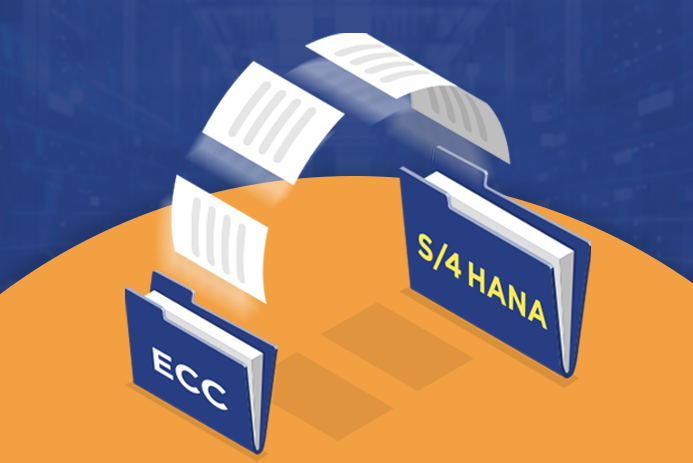
S/4HANA isn’t merely an update to SAP’s traditional ERP offering, SAP ECC. It’s a complete reimagining, built on the revolutionary HANA in-memory database. SAP S/4HANA is pre-configured to provide the most current industry standards and ongoing advancements. This software suite aids in overseeing financial, operational, and customer interactions for businesses. By consolidating essential processes and pertinent data, it creates a unified system for companies. It unlocks real-time processing, simplifies data models, and prioritises a user-friendly experience.

Here’s what sets S/4HANA apart from its predecessor:

  • Real-Time Processing: Gone are the days of waiting for reports or lagging data. S/4HANA processes information in real-time, giving you a constant pulse on your business.
  • Simplified Data Model: The complex and siloed data structures of ECC are replaced by a streamlined model in S/4HANA. This translates to faster access, improved data integrity, and easier analysis.
  • Enhanced User Experience: S/4HANA boasts a modern and intuitive interface, making it easier for users of all levels to navigate and utilize the system effectively.

Unlocking the Power of S/4HANA: A Multitude of Benefits

Implementing S/4HANA can significantly enhance your business operations. Here are some key advantages to consider:

  • Boosted Efficiency and Productivity: Real-time data access and streamlined processes empower your teams to work smarter and faster. Imagine a scenario where finance can access accurate inventory levels while processing a sales order, eliminating delays and discrepancies.
  • Data-Driven Decision Making: S/4HANA provides valuable insights from your data, allowing you to make informed choices that drive growth and profitability. Gain a holistic view of everything, from customer trends to production bottlenecks, and leverage that knowledge to optimize your operations.
  • Unmatched Agility and Scalability: The flexible architecture of S/4HANA allows you to adapt to ever-changing market conditions with ease. S/4HANA can seamlessly scale alongside your business.
  • Reduced IT Costs: The simplified data model and in-memory processing capabilities of S/4HANA can significantly decrease your hardware and software expenses. Say goodbye to clunky legacy systems and hello to a streamlined, cost-effective ERP solution.

Considerations Before Implementing S/4HANA

While S/4HANA offers a plethora of advantages, transitioning to a new platform requires careful planning. Here are some key factors to consider:

  • System Compatibility: Ensure your current systems are compatible with S/4HANA or have a well-defined migration plan in place. Incompatibility can lead to significant disruptions and delays.
  • Data Migration Strategy: Migrating your critical business data to S/4HANA requires a meticulous approach. Develop a comprehensive data migration strategy to ensure data accuracy and minimize downtime.
  • Change Management Process: A successful S/4HANA implementation hinges on user adoption. Implement a well-defined change management plan to train your employees, address concerns, and ensure a smooth transition.

The Future of ERP is Here: S/4HANA Paves the Way

S/4HANA isn’t just an upgrade; it’s a glimpse into the future of ERP. This next-generation platform leverages cutting-edge technologies like Artificial Intelligence (AI), Machine Learning (ML), and the Internet of Things (IoT) to take your business operations to the next level:

  • AI and Machine Learning: Imagine AI automating repetitive tasks, predicting trends, and identifying potential risks. S/4HANA integrates AI and ML capabilities to streamline workflows and unlock valuable insights.
  • The Internet of Things (IoT): By connecting machines and devices to S/4HANA, you can gain real-time insights into production processes, inventory levels, and asset performance. This data-driven approach allows for predictive maintenance, optimized resource allocation, and improved overall efficiency.

Demystified and Ready for Action!

While S/4HANA may seem complex at first glance, understanding its core functionalities and the value it brings empowers businesses of all sizes. By streamlining processes, providing real-time data insights, and fostering agility, S/4HANA can be the key to unlocking your organisation’s full potential.

Yotta’s SAP S/4HANA services offer a seamless transition to next-generation ERP solutions, empowering businesses to become digital, intelligent, and autonomous enterprises. From advisory and implementation to infrastructure management and support, Yotta provides end-to-end SAP capabilities tailored to major use cases. With transparent pricing, scalable solutions, and SAP-certified expertise, Yotta ensures efficient and cost-effective SAP transformations for businesses across industries.

Enhancing Efficiency By Integrating ChatGPT With SAP Systems

Organisations are constantly in pursuit of innovative solutions that streamline operations and deliver unparalleled customer experiences. The convergence of cutting-edge technologies often holds the key to achieving these objectives, and one such transformative integration is between ChatGPT and SAP systems.

Integrating ChatGPT with SAP Systems

By combining ChatGPT’s language generation capabilities with the data management prowess of SAP, companies can unlock a treasure trove of advantages that reshape their modus operandi.

1. Enhanced Support: ChatGPT can adeptly address a myriad of queries, delivering immediate resolutions. This not only eases the load on teams but also ensures users receive prompt, accurate assistance, enhancing overall satisfaction.

Through seamless integration of ChatGPT with SAP SuccessFactors, businesses gain the ability to offer comparable AI-driven assistance to their internal users, thus optimising the handling of HR-related queries like leave requests and benefit inquiries. The AI system not only comprehends the specifications for various positions but also assists in crafting comprehensive job descriptions.

2. Data-Driven Insights and Reporting: SAP services are renowned for their prowess in data aggregation, processing, and presentation. By infusing ChatGPT, businesses can craft an intuitive interface for querying this data. The days of navigating intricate menus and generating exhaustive reports are replaced with the simplicity of asking ChatGPT for pertinent information. This real-time conversational approach streamlines decision-making processes and empowers stakeholders with instant insights.

Building upon this integration, incorporating SAP Analytics Cloud introduces the potential to generate complex data visualisations and interactive reports through natural language commands.

3. Fluid Workflows: Efficiency gains can be achieved by streamlining internal workflows. Tasks that traditionally necessitate manual approvals and authorisations can be automated through the symbiotic interaction between ChatGPT and SAP systems. Processes such as purchase order approvals and leave requests can be initiated and tracked via ChatGPT, minimising the time and effort dedicated to administrative tasks.

By incorporating SAP Ariba into this integration, ChatGPT can further facilitate procurement workflows, assisting in vendor communication, purchase requisitions, and invoice management, culminating in a seamless procurement ecosystem.

4. Empowering Knowledge Management: Large organisations often grapple with the challenge of knowledge management, especially as employees seek information from disparate sources. ChatGPT emerges as a unified knowledge repository, navigable through natural language queries. By leveraging the wealth of information stored in SAP systems, ChatGPT provides guidance, best practices, and answers to common questions.

The integration’s reach extends to SAP S/4HANA, enabling ChatGPT to furnish real-time insights into business processes, inventory levels, and financial data.

5. Optimising Supply Chain Dynamics: SAP systems are stalwarts in supply chain management, orchestrating the seamless movement of goods from production to delivery. By integrating ChatGPT, stakeholders can effortlessly engage with supply chain data using natural language. Conversations with ChatGPT unveil insights into inventory statuses, order progression, and delivery timelines.

Augmenting this integration with SAP Marketing Cloud empowers ChatGPT to analyse customer preferences and demand patterns, allowing businesses to adapt supply strategies dynamically.

6. Crafting Personalised Marketing: Integration with SAP’s sales and marketing modules equips businesses to create tailored recommendations and messages. ChatGPT analyses customer interactions and data to generate personalised product suggestions, promotional offers, and post-interaction communications.

This collaboration extends to SAP Marketing Cloud, where ChatGPT aids in fabricating personalised marketing content and campaigns driven by customer behaviours and trends.

Pioneering Future Business Efficiency

The fusion of ChatGPT with SAP solutions propels enterprises into a future where technology seamlessly amplifies business efficiency and customer gratification. This amalgamation of advanced language generation and comprehensive data management possesses the potential to metamorphose how organizations operate, interact, and innovate.

In summation, the integration of ChatGPT with SAP systems is brimming with potential, promising to optimise operations and deliver unparalleled experiences. This amalgamation of language comprehension and data management underscores the potency of technology in reshaping industries. As businesses forge ahead, harnessing this integration could be the key to not just survival but leadership in an ever-evolving business milieu.

Transforming Manufacturing Efficiency with SAP S/4HANA

India’s industrial landscape is undergoing its next phase of transformation, transitioning from traditional reliance on conventional machines to an era of intelligent systems with integrated technologies. Manufacturing enterprises are realising the value of harnessing data-driven insights to promote operational excellence and stay ahead of the curve. Utilising real-time data, intelligent analytics, and seamless integration, SAP S/4HANA, a cutting-edge ERP solution, has emerged as a game-changer, helping companies enhance their manufacturing analytics. In this blog, we will explore the transformative potential of SAP S/4HANA in driving actionable intelligence.

What Exactly Is SAP S/4HANA?

SAP S/4HANA is an intelligent Enterprise Resource Planning (ERP) suite that provides manufacturers with real-time analytics and streamlined processes. Built on the powerful SAP HANA platform, it combines in-memory computing, advanced analytics, and machine learning capabilities.

SAP S/4HANA, originally launched as SAP Simple Finance in 2014, expanded as a comprehensive ERP platform shortly, renamed SAP S/4HANA. It added logistical functionality in sourcing and procurement, manufacturing, supply chain, and asset management in 2016. Machine learning capabilities were integrated the following year for streamlined reconciliation and automated invoice assignments, followed by transportation management functionality. Predictive accounting was added to the SAP service in 2018, while subsequent updates incorporated AI, blockchain, and Internet of Things.

Benefits Of SAP S/4HANA For The Manufacturing Industry

  • Real-time Visibility: SAP S/4HANA provides real-time visibility of the entire manufacturing process. By integrating data from production systems, supply chain management, and IoT sensors, enterprises can gain a holistic view of their operations. This real-time visibility enables them to identify production bottlenecks and maintain inventory levels.
  • Optimised Supply Chain Management: SAP S/4HANA empowers manufacturers with advanced supply chain management capabilities. By integrating the complete supply chain, from sourcing to production to distribution, manufacturers can make data-driven decisions to ensure the timely availability of supplies, reduce stockouts, and simplify logistics. Real-time insights into inventory levels, demand fluctuations, and supplier performance enable manufacturers to shorten lead times and improve on-time deliveries.
  • Proactive Maintenance: Manufacturers can embrace the Internet of Things revolution thanks to SAP S/4HANA. They can get real-time data on machine performance, energy usage, and product quality with IoT sensors integrated into machines and manufacturing equipment. This IoT data is integrated with other operational data via SAP S/4HANA, enabling manufacturers to track the health of their equipment, spot anomalies, and carry out preventive maintenance.
  • Automation: SAP S/4HANA supports integration with robotic process automation (RPA) tools, allowing manufacturers to automate routine and rule-based processes. Manufacturers can increase productivity, lower error rates, and free up staff for higher-value tasks by automating order processing, data entry and invoice verification.

Accelerate S/4HANA Migration with Yotta

Yotta provides comprehensive SAP HANA hosting services, offering a dedicated infrastructure environment with optimised server hardware, storage, and networking resources. They manage the underlying infrastructure, ensuring high availability, scalability, and performance through maintenance, backups, monitoring, and capacity planning. Yotta assists in seamless data migration and integration to the latest S/4HANA or a newer version of SAP.

Security measures are implemented to protect the environment and ensure compliance with regulations. They also establish robust disaster recovery and backup strategies, including off-site data replication and failover solutions, to safeguard against data loss and system failures, ensuring uninterrupted business operations.

Leveraging SAP S/4HANA For Manufacturing Operations Success

For manufacturers, SAP S/4HANA has become a game-changing solution that enables them to increase productivity, acquire real-time visibility, and streamline supply chain management. They can make data-driven decisions and streamline their operations with SAP S/4HANA’s real-time data, advanced analytics, and integrated technologies.

The capacity to monitor equipment health and perform preventative maintenance is further improved by the integration of IoT sensors and machine learning capabilities. To accelerate the migration to SAP S/4HANA, partnering with a reliable hosting service provider like Yotta can ensure a seamless transition with optimised infrastructure, robust security measures, certified support services, and uninterrupted business operations.

Posted in SAP

How SAP Lets You Do More with Big Data

SAP is a leading provider of enterprise software solutions enabling businesses to augment maximum value and opportunities from their Big Data pool. Its comprehensive suite of cloud-based applications, services, and analytics capabilities allows organisations to capture, store, process, analyse and visualise large amounts of structured and unstructured data quickly, securely, and cost-effectively.

With SAP’s integrated end-to-end platform for managing Big Data workloads, companies can harness insights from their data more effectively while boosting operational efficiency. Additionally, businesses gain access to actionable intelligence that can be used to make better decisions in areas such as customer segmentation or supply chain optimisation. In this article, we will discuss how SAP makes it easier for businesses to do more with their Big Data.

Let’s get started.

What is Big Data and Data Lake?
Big Data refers to datasets that are too large or complex for regular computing systems. In contrast, a Data Lake is a type of system specifically designed for storing and managing Big Data. SAP has developed an end-to-end solution for managing and analysing Big Data that utilises both on-premise and cloud technologies.

SAP’s suite of solutions makes it easy to collect, store, manage, and analyse Big Data from multiple sources. The platform allows businesses to gain insights into customer trends and behaviours in order to drive smarter decision-making across the organisation. For example, they can leverage predictive analytics capabilities to anticipate customer needs before they arise or utilise sentiment analysis tools to gauge public opinion about products or services.

How Does Big Data Transform Businesses?
Big Data has enabled organisations to become more agile, efficient, and customer-centric than ever before. By leveraging the power of data science, businesses can utilise rich insights to drive decisions that help create a better customer experience. However, managing large amounts of structured and unstructured data is not easy. That’s where SAP steps in.

SAP provides solutions that take the complexity out of Big Data management with their suite of products. They enable organisations to better handle large amounts of structured and unstructured data by providing a unified platform that allows all types of data to be stored and accessed with ease. This gives businesses the ability to make use of Predictive Analytics, Natural Language Processing (NLP) and Machine Learning (ML) for informed decision-making.

In addition, SAP offers the tools to easily turn data into actionable insights with integrated visualisation capabilities that allow businesses to gain a better understanding of their customers’ needs and preferences. With powerful AI-driven analytics, organisations can build smarter processes for enhancing operational efficiency and customer engagement.

SAP’s Big Data solutions help companies not only better manage their data, but also use it in meaningful ways to drive business growth. With its suite of products, businesses can make decisions based on real-time insights, uncover new opportunities through predictive analysis and extract valuable information from the vast amounts of data available. All this is possible thanks to SAP’s unified platform that helps organisations make the most out of the Big Data revolution.

How are Enterprises Leveraging Big Data?
Big Data is revolutionising how companies manage and make decisions about their data. Enterprises are taking advantage of insights from Big Data to improve operations, drive better decision-making, and pave the way for innovation of new products and services.

SAP has developed a portfolio of technology solutions that enable enterprises to do more with Big Data. SAP HANA is an in-memory database platform designed to process large volumes of information quickly and efficiently. This enables customers to analyse data from multiple sources and discover valuable business insights in real-time.

The SAP BusinessObjects BI Suite offers advanced analytics capabilities for uncovering relationships between datasets using sophisticated algorithms for predictive modelling. Finally, the SAP IQ relational database system is specifically designed for data warehousing and business intelligence needs.

With Big Data and the right technology in place, companies can gain a competitive edge by leveraging enterprise data to drive growth and profitability.

How Does SAP Make it Possible to Leverage Big Data Analysis in an Easy Way?
World’s leading software provider, SAP provides comprehensive capabilities that make it easy to enrich insights from data. With SAP’s powerful tools, businesses can easily leverage the potential of Big Data Analytics efficiently.

At the core of SAP’s data analytics solution is its HANA platform – a high-speed database that enables businesses to process and analyse large amounts of data quickly. It can be used to quickly sift through structured and unstructured data in real-time.

HANA also provides access to data analytics tools, allowing businesses to gain valuable insights from their data without having to write complex codes.

Besides HANA, SAP also provides various other Big Data Analytics solutions. BusinessObjects allows enterprises to gain deep insights into customer behaviour and trends. Predictive Analytics solutions enable businesses to anticipate future outcomes and identify potential risks.

Serving as the one-stop solution provider for all things SAP, Yotta delivers comprehensive solutions to help organisations become Digital, Intelligent and Autonomous enterprises – with Big Data running at the center. Yotta’s Single-window services cover all major SAP use cases – from advisory and consulting to infrastructure, implementation, migration, and management and support. Yotta’s advisory/consulting services help businesses gain clarity on their business objectives, identify the most suitable tools for making them happen and build an optimal roadmap for their SAP and Big Data journey.

Posted in SAP

Elevate Your Enterprise Efficiencies with the
Right SAP AMS Partner

Increased outcomes and productivity remain top priorities for enterprises, and business process optimisation is a key step in this direction. Central to an enterprise’s application ecosystem, putting in place the right support framework for the SAP environment can’t be overlooked.

SAP Application Management Services (AMS) enable IT teams with the required toolsets to eliminate complexities and yield maximum value from their SAP applications while keeping costs in check, reducing risks and catering to emerging business needs.

When businesses operate in a dynamic environment, constant enhancement of their SAP landscape and its support framework becomes a key priority for IT departments to streamline business processes – and SAP AMS delivers just that.

Below outlined are the two key components of SAP AMS.

  • Helpdesk support: Offers 24/7 centralised helpdesk support through a multi-channel approach that includes web, email, phone and chat, equipping teams with better incident management capabilities.
  • System administration and monitoring: Delivers system configuration support and transport management for implementation and roll-out of new SAP projects, along with monitoring of SAP system performance and execution of routine maintenance.

SAP Basis – The base for achieving holistic management of SAP applications
Most enterprises commence their SAP journey with the implementation of ERP. However, as the scope of workflows widen, the addition of Customer Relationship Management (CRM), Supplier Relationship Management (SRM), Business Intelligence, etc, becomes inevitable. Amidst a growing application landscape, its administration becomes paramount to achieving greater visibility and unified control over business processes.

Serving as the core of an enterprise’s SAP landscape, SAP Business Application Software Integrated Solution, commonly known as SAP Basis, provides a unified administrative platform for managing SAP applications, facilitating optimum performance in all systems of the environment.

To enable interoperability and portability of SAP applications spread across systems and databases, SAP Basis helps deliver the core objective of smooth, consistent performance of SAP systems by equipping your teams with the required technical foundation, including middleware programs and tools. This is achieved through comprehensive capabilities that encapsulate maintenance and monitoring, upgrades, planning, user and system administration, among other tasks.

Here are some top ways how SAP Basis aids system administration.

  • Identification of resources for SAP deployment and upgrade
  • Future planning
  • Assigning responsibilities and tasks to the workforce
  • Review and configuration of transport requests
  • Managing system workloads and scheduling background tasks
  • Monitoring and optimising system performance
  • Managing backups and disaster recovery
  • Deploying best practices to drive greater efficiencies
  • Monitoring and analysing system logs and other administrative activities.

Driving bigger outcomes through the right SAP AMS partner
A reliable, certified SAP AMS partner can go a long way in your digitisation journey and save substantial investments in building a skilled resource pool for managing your SAP applications, leaving the job to the expertise of the service provider.

With 24/7 support backed by technical expertise and a consultative approach, a certified SAP AMS partner helps ensure the most efficient delivery of application services, maintain cost-effectiveness, and ensure flexible and seamless business operations while boosting productivity.

Strategic approach: An SAP AMS Partner with a mature understanding of your business and the digital landscape, knows what’s needed to derive the highest value from your SAP ecosystem. This puts them in a better position to align resources to future needs by taking a strategic approach rather than focusing the entire bandwidth on tactical tasks.

Greater flexibility: Agility and flexibility are uncompromisable for any business operating in a dynamic environment. Enterprises must remain on their toes to adapt their IT systems and respond to any situation or arising needs. Keeping pace with new solutions within your SAP environment through a capable SAP AMS partner significantly boosts your ability to respond to emerging business requirements.

Always-on, always available: When your business needs to operate round-the-clock, your systems can’t afford any interruptions. An SAP AMS partner ensures seamless operations with always-available 24/7 support, so your critical applications are always available to your teams and business. Further, supporting key functional and technical aspects demands the prowess of an experienced SAP service provider.

Tailored for your business: Big yields are gained when your technology partner understands your business as you do. Identifying your present and future business needs, partners can help you address them through the right set of AMS solutions, offered through right-sized delivery models that unlock the best possible value for your organisation.

Better RoI: Almost everything boils down to cost and Return on Investment, and rightfully so. Your investments in cutting-edge SAP applications generate the best returns when the entire environment functions at its full capacity and at all times. An AMS partner can help enterprises handle demands with greater agility, consistency and efficiency and derive maximum value from your SAP investments.

Yotta’s SAP AMS practice embodies all of the above benefits. It delivers them to businesses to help them unlock new levels of productivity and business success – regardless of the scale of business or industry. Yotta’s certified SAP team delivers operational and strategic objectives with superior technical expertise and industry knowledge.

Explore our SAP capabilities here.

Posted in SAP

Automating Business Processes with
SAP Business One

With the world moving towards completely imbibing technology as one of its key drivers, advanced technology systems and automation have become imperative for businesses worldwide. Many companies have embraced tools that would help them seamlessly embark on digital transformation and eliminate the current bottlenecks that hinder their growth.

When we talk about digitisation or digital transformation, it is important to understand that neither it is a one-off task nor can businesses achieve it overnight. While the task is steep, it should not deter them from shifting from their stale insights driven decision-making via legacy systems to modern, agile, and beefier solutions.

Automation has been one of the key drivers in enabling a business to adapt to the vociferously changing ecosystem and one of the primary enablers of automation has been SAP Business One.

SAP Business One – Your automation partner
Every business has a plethora of tasks that are inadvertent in ensuring the smooth functioning of operations. While these tasks may be laborious and time-consuming, they are an integral part and hold importance in determining business success.

SAP Business One has been instrumental in reshaping the future of how we perceive work across sectors. It is convenient for SMEs and MSMEs and has lent them additional leeway for managing their business smoothly.

SAP Business One comes with functional modules that integrate across departments, such as reporting, finance, purchase, sales, and customer relationship, allowing the company to store and manage data centrally. In addition, it has enabled smooth data and information flow across departments, removing the traditional silos that were abundant due to legacy systems.

Automation trends
Listed below are key emerging trends for organisations adopting SAP Business One for automating their operations:

  • The impetus to hybrid cloud will increase, and so will the focus on integrating cloud-based solutions to enterprise ERP
  • The demand for SAP Business One will increase, owing to the growth in SMEs and MSMEs and their move towards achieving automation
  • There will be a reinforced focus on achieving complete visibility in the company’s operations and gaining granular control.

Why do organisations need SAP Business One for automating their business processes?
Automation has been one of the needs of modern businesses for smooth and efficient day-to-day operations and management. Here are the set of questions that can propel you to understand if automation is what your business needs to level up your processes.

  • Is your software too cluttered for your workforce and hampering their day-to-day performance?
  • Is your current ERP system the reason behind multiple performance and operational bottlenecks?
  • Are you struggling to maintain inventory count across locations?
  • Is the idea of dealing with the software propelling your workforce to perform monotonous tasks manually?
  • Do you have real-time information pertaining to your business functions and invoices?
  • Does your workforce feel the existing ERP is unintuitive and difficult to handle?

SAP Business One Benefits
Here are some of the key functions where enterprises can enable effortless business automation with SAP Business One.

Management & Administration: SAP Business One enables enterprises with increased visibility, control and efficiencies by eliminating manual intervention in key areas of management and administration tasks.

Accounting & Finance: Provides the ability to gain complete insights into transactions across areas such as journal entries, financial reports, budget management, incoming and outgoing payments, account reconciliation and more, with high degree of automation.

Purchasing & Operations: With SAP Business One at the fore, businesses can undertake intelligent invoice scanning that enables them to feed the necessary data directly into the ERP through automated processing. It further allows local purchase orders to be used for automatic sales order creation, which eliminates the need for manual interpretation and overlooking.

Marketing & Sales: Seamlessly tread through and manage campaigns, opportunities and pipeline. Moreover, SAP Business One’s intelligent processing allows automatic activity creation for business partners such as logistics providers, sellers, and more.  With its Proof of Delivery Note Upload in Outbound Delivery and Invoice feature, SAP Business One adds a security layer and also automatically integrates outbound delivery status with the relevant invoice.

Inventory & Distribution: Keeping count of inventory, especially across multiple locations, can be a mind-numbing task. SAP Business One simplifies this with automated visibility on inventory availability and management across locations. It provides deep-dive into multiple day-to-day aspects including product and price management, goods issues and receipts, etc.

Projects & Resources: Data-driven insights help enterprises in better decision-making when it comes to project handling, reporting, resource capacity planning, stage dependencies and more. It enables enterprises with the ability to extract structured information from unstructured documents and integrate them with transactional data automatically.

Data collected by business document extraction is automatically enriched and integrated with your existing structured master data and transactional data, thereby aiding business partner identification.

Embark your SAP Business One journey with Yotta
When businesses are able to plan and have the right resources at play, SAP Business One can become the backbone of any organisation. It helps in ensuring that data remains centralised and available for sharing business insights across departments seamlessly.

With Yotta’s Single-window SAP Services, your business transformation becomes easier. We provide SAP advisory service, upgrade and migration, implementation, infrastructure management, and BASIS & AMS Support for optimised results.

Click here to explore Yotta’s Single-window SAP Services.

Posted in SAP

Four Benefits of SAP ECC to S/4HANA migration

Application modernisation is a critical element of any effort to optimise business processes. With the cloud becoming ingrained into enterprise IT infrastructure, business applications must be realigned to achieve optimum performance. The lifeblood of your business, ERP, cannot be left behind in your application modernisation journey. Having served enterprises and streamlined their resource management for years, SAP ERP Central Component (ECC) has had a long track record of performance, but with digital evolution taking precedence, it’s time enterprises refresh their SAP environment to gain more capabilities and yield greater outcomes.

Currently, in its sunset phase, support for SAP ECC will discontinue in 2027, but your business needs can’t wait until then. No new advancements are happening in this previous generation of ERP applications as SAP is phasing out ECC and moving its customers to S/4HANA. Realising the needs of the new-generation business environment and users with focus on agility, flexibility, simplicity and optimisation, a substantial base of enterprises has already completed the S/4HANA migration journey or are in various phases of completion.

The primary and biggest differentiator of S/4HANA is in-memory processing, which allows it to process huge volumes of real-time data at the database level. In addition, its inbuilt capabilities further help enterprises reduce the total cost of ownership (TCO), increase application performance and enable new applications to run in a real-time environment.

Key differentiators:

  • Simplified data structure: SAP S/4HANA’s in-memory computing capabilities ensure that data remains in the main RAM, enabling faster data processing vis-à-vis other database types that fetch data from the hard disk.
  • New-age technologies: The new generation of SAP environment is delivered with Artificial Intelligence, Machine Learning and embedded real-time predictive analytics, conversational UI, and other capabilities that provide access to a whole new world of Big Data and the Internet of Things (IoT).
  • Mobility: Amidst a fast-paced business environment, your employees need easy access to critical data and resources from anywhere, on any device. Mobility is one of the major ways how S/4HANA better equips your workforce, allowing them access to the ERP application from their mobile devices in a secure way.
  • Intuitive front-end with Fiori apps: SAP S/4HANA offers better personalisation tools for front-end users to deliver superior and simplified user experiences.
  • Forward and backward adaptability: It enables easy, seamless integration with your existing SAP applications portfolio. While improving the business processes, it delivers a competitive advantage by simplifying your ERP setup.
SAP ECC to S/4HANA migration Key differentiators

Here’s how enterprises can reap a host of business benefits by migrating to SAP S/4HANA.

Power to do more with your data

SAP S/4HANA allows businesses to harness the maximum potential of their data. With its ability to process and analyse large data sets in real-time, your business can be assured of rich insights to help you make data-driven decisions. Furthermore, in a marketplace defined by customer experience, an ERP environment that allows your teams to make sense of data seamlessly helps deliver personalised experiences to your end consumers. Equipped with ML and advanced analytics, SAP S/4HANA leverages data at the granular level to provide meaningful insights.

Greater flexibility and integration

With S/4HANA’s compatibility with a range of databases and ability to integrate seamlessly with the existing IT infrastructure and applications, enterprises gain more flexibility to run analytics without phasing out existing components of your ERP environment. It allows your teams to equip legacy systems with new analytical capabilities, thus holistically revamping your systems.

Freedom to scale when needed

Markets are dynamic, and customer needs evolve rapidly. Your digital environment must respond and adapt to these changes quickly. As your business grows, so do your IT needs. SAP S/4HANA gives you the freedom to scale your ERP environment within predictable timelines to ensure that your business remains unaffected. The solution also offers inbuilt storage optimisation through dynamic tiering, which keeps frequently accessed data in memory. At the same time, seldom-used data is moved automatically to disk when storage space runs low. In addition, its columnar storage and high-efficiency compression substantially reduce your data footprint.

Enabling innovation

Emerging technologies are making bigger inroads into enterprises’ digital strategies. Businesses today are constantly innovating to keep pace with the changing digital landscape. Enabling you to do just that, S/4HANA gives your business a competitive edge with the ability to deploy AI, ML and a plethora of new workloads within no time without affecting the performance of existing applications.

The future is HANA

As mentioned at the start of this blog, ECC will become obsolete in 2027, and customers will need to make the transition sooner or later. The sooner businesses start running on SAP HANA, the more they stand to gain in an ever-changing competitive marketplace. Therefore, the decision should be considered with a structured migration approach. Holistic planning, thus, becomes critical to ensure your business gets the best from your SAP S/4HANA deployment and leveraging the expertise of an SAP-certified partner helps achieve it seamlessly.

Key SAP S/4HANA innovations at a glance

  • Analytics took a big turn, adapting to the new era of visual representations with the use of AI and ML techniques with ease in each business use case
  • Another game-changer is Process Orchestration (PO), which made hopping and connecting any technology and platform with SAP a real-time possibility
  • CFO solutions, Universal Journal and Digital Board room, add an extra mile into the real arena of Finance Analytics
  • Material Requirement Planning (MRP LIVE), Financial Supply Chain Management (FSCM) and Production Planning and Detailed Scheduling (PPDS) have added the right mix of information analytics that make SAP more productive and conducive to business needs.

Click here to learn how your business can make this transition with Yotta

Posted in SAP

Five ways MSMEs can transform sales and marketing with SAP Business One

Like most businesses, MSMEs today operate in a dynamic, volatile and hypercompetitive market. And for businesses with a small base, the slightest change in external factors can have a disproportionate impact. So, while digitalisation and technology have a major role to play in helping them tap opportunities, particularly in times like these, it has to be done to address specific business challenges.

That is what SAP Business One does. As a comprehensive and customisable solution that connects various business functions, it provides a singular view and enables various functionalities specifically designed for small and medium scale businesses. To understand it better, let’s look at some of the critical sales and marketing challenges that SAP Business One helps address.

Balancing the backend of sales, inventory and production

While the sales and marketing functions are placed front and centre of a business, the overall success depends on many other functions coming together. It becomes particularly challenging in uncertain times when demand can vary month-on-month and the supply of inputs and raw materials.

SAP Business One helps consolidate and connect various functions that allow better visibility, analysis and ability to forecast. From a sales perspective, understanding the seasonality and monthly trends in orders can help better plan material and inventory to avoid a pile-up and wastage in the case of perishable goods. It also allows businesses to derive optimum returns on marketing spends.

Empowering the sales and marketing function while scaling-up

Different businesses grow differently at various stages of their journey. It can range from increasing the consumer base to expanding the product line or spreading to other markets. While the challenges vary, what doesn’t is the need to decentralise decision-making and to empower the sales and marketing function while scaling up.

SAP Business One helps businesses track and manage sales funnels efficiently and throughout the customer purchase journey. Depending on the scale and nature of operations, it can be used for various functions – from mapping contacts for populating the top of the sales funnel to automating and analysing marketing campaigns.

Customer acquisition and retention is becoming harder

In a hypercompetitive world like today’s, consumers are spoilt for choice. While more so in the B2C segment with the advent of e-commerce powered platforms, the competition is equally stiff in the B2B segment. This fundamental shift has made customer acquisition and retention that much harder.

SAP Business One enables organisations to harness customer data to deliver personalised offerings and a superior post-purchase experience. So, for a fledgling D2C enterprise that depends on periodic renewals or repurchases from its consumers, automating the processes to nudge customers and to offer customised offers can improve customer engagement and chances of a repeat purchase.

Unstructured reporting leaves data underleveraged

For small enterprises, data collection is often basic at the start of their journey due to an unstructured approach and the lack of access to a user-friendly tool to use it. This leaves precious data unused or underleveraged – data, that can be used to track patterns, which proprietors can use to make better-informed decisions.

SAP Business One offers comprehensive analytical capabilities and an integrated reporting and dashboard interface. Businesses can set benchmarks across key parameters, and when used in conjunction with intuitive tools and interactive analysis, it can be used to derive actionable insights from data. More importantly, access to information can be managed effectively and securely to avoid misuse of data.

Managing a remote and distributed sales and marketing team

Given the changes due to the pandemic, a hybrid of an onsite and offsite style of working is here to stay, wherein managing a distributed sales and marketing function can be particularly challenging. One way to overcome this is by empowering team members with the right tools and enabling access to data that helps them think independently and work smartly.

Customer acquisition and retention is becoming harder

SAP Business One offers a seamless virtual platform that provides a comprehensive and single view as well as access to information to whoever needs it and wherever they need it. For example, for the marketing function of a multi-city retail operation, access to and analysis of real-time shop floor data can facilitate a two-way engagement between core teams and shop managers to gather and share insights that help improve operational efficiencies like merchandising and customer engagement.

SAP Business One has been designed to partner with businesses through their growth journey, even through times like now. Three features make it well suited for MSMEs:

  • Flexible: A modular design allows you to pick and choose add-ons; the ability to tailor it for your unique requirements at a given time lends it a lot of flexibility
  • Omnipresent: Access information and functionalities wherever you and your associates need it – cloud, on-premise, and mobile
  • Affordable: Structured and designed to lower the total cost of ownership while offering a single, comprehensive and scalable solution

The value that SAP Business One brings goes beyond the technology, features and benefits it offers. In addition to the functional and operational capabilities for the sales and marketing function, SAP Business One helps medium and small businesses be more responsive and agile, which is the key to surviving today and thriving tomorrow. Enabling businesses with greater capabilities, Yotta helps them with end-to-end SAP deployments in a highly scalable, reliable and cost-efficient way – from SAP advisory/consulting to implementation, SAP infrastructure, SAP migration to SAP management and support. This is supported by Yotta’s industry-renowned Tier IV infrastructure core and SAP-certified solutions expertise.

Posted in SAP