











Tag: cloud services

Evaluating Cloud Security Measures: Key Considerations for Professionals

Key Metrics for Assessing the Performance of Cloud Management Solutions in Business Operations

How Yotta Power Cloud Revolutionises Hybrid Cloud Computing

The demand for robust, flexible, and secure IT infrastructures has never been higher. Traditional data centers and legacy systems are increasingly being replaced by cloud solutions that offer scalability, cost-efficiency, and enhanced performance. Yotta Power Cloud, a cutting-edge platform built in collaboration with IBM Power, is designed to revolutionise the way enterprises manage their critical workloads and emerging technologies.
Yotta Power Cloud elevates hybrid cloud computing by unifying private cloud and on-premises infrastructure with a seamless public cloud environment. This combination creates a flexible and powerful IT ecosystem capable of meeting the growing demands of modern businesses.
The Power of IBM Power in Yotta Power Cloud
One of the key reasons Yotta Power Cloud stands out is its collaboration with IBM Power. IBM has long been recognised as a leader in the enterprise IT space, known for its innovative and reliable solutions. The IBM Power Systems—specifically the IBM P-Series—are trusted by businesses around the globe for their unmatched performance, reliability, and security. Yotta Power Cloud delivers a robust, enterprise-ready cloud infrastructure designed to handle both today’s and tomorrow’s workloads.
Here are some of the core benefits that Yotta Power Cloud provides:
- Unmatched Reliability and Uptime: IBM Power is built to provide industry-leading server reliability and uptime. According to IBM, 93% of IBM Power customers report up to 6x better system reliability and availability. For enterprises that rely on mission-critical applications, this level of reliability is a game-changer. Downtime is costly, and with Yotta’s proven infrastructure, businesses can ensure their operations remain seamless and uninterrupted, even during high-demand periods.
- Enterprise-Ready Cloud Integration: IBM Power easily integrates with private or hybrid cloud environments, making it an ideal choice for businesses seeking to build or migrate their workloads to the cloud. Whether you are looking to extend your on-premise infrastructure to the cloud or fully transition to a hybrid cloud model, Yotta Power Cloud offers a flexible and customizable solution that adapts to your specific needs. This integration ensures a smooth and efficient transition with minimal disruption to business operations.
- Cutting-Edge Technology: Yotta Power Cloud leverages the most advanced processor technologies available today. Powered by IBM Power’s state-of-the-art I/O subsystem technology, including next-gen NVIDIA NVLink, PCIe Gen4, and OpenCAPI, this cloud platform is built for high-performance computing. These technologies allow for faster data processing, more efficient workload management, and seamless scaling, making it an ideal solution for businesses looking to harness the full potential of AI, machine learning, and other data-intensive applications.
- Proactive Security and Threat Detection: In an age where cybersecurity threats are increasingly sophisticated, businesses need infrastructure that can not only detect attacks but also respond quickly. Yotta Power Cloud provides enhanced security features that protect your enterprise from breaches. One standout feature is its ability to detect and thwart attacks immediately or within just 10 minutes of a breach. This proactive approach gives businesses a much larger response window to mitigate potential damage, protecting both sensitive data and business continuity.
Supporting Emerging Technologies
As businesses increasingly turn to technologies like AI, machine learning, and big data analytics to stay competitive, they need a cloud infrastructure that can keep pace. Yotta Power Cloud is designed to support these emerging technologies by providing the high-performance computing power, advanced storage, and security needed to handle massive data volumes and complex workloads.
The platform’s ability to seamlessly integrate with AI and ML frameworks ensures that businesses can easily deploy, scale, and manage their AI models in the cloud. Whether you are training deep learning models or running big data analytics, Yotta Power Cloud provides the resources and flexibility needed to accelerate innovation and unlock valuable insights from your data.
Conclusion
The future of cloud computing is hybrid, and Yotta Power Cloud is at the forefront of this revolution. By combining the best of IBM Power’s cutting-edge technology with the flexibility and scalability of hybrid cloud computing, Yotta Power Cloud offers a solution that is not only powerful but also future-proof. With unparalleled reliability, proactive security, and support for emerging technologies, Yotta Power Cloud is the perfect platform for businesses looking to take advantage of the latest IBM p-series machines, without the hefty CapEx associated with it,
For enterprises that want to embrace the future of cloud computing, Yotta Power Cloud offers a flexible, cost-efficient, and secure solution that will accelerate their digital transformation journey.
Need of Sovereign Cloud in India

“Over the past year, the Indian government has drafted and introduced multiple policy instruments which dictate that certain types of data must be stored in servers located physically within the territory of India. These localization gambits have triggered virulent debate among corporations, civil society actors, foreign stakeholders, business guilds, politicians, and governments” – The Internet Society of India.
The vision outlined by the Government of India for establishing digital data sovereignty is approaching its final stages. This implies the practice of storing and securing data, ensuring its residency aligns with regulations. This also involves confining the geographic location where citizens’ data is stored and processed within the governing laws of the country.
Challenges with Public Cloud Providers on Data Sovereignty
Cloud migration in India is growing rapidly, but there are critical challenges that need to be re-examined by various governments and enterprises-
- Legal and Regulatory Compliance: Public cloud providers often operate across various jurisdictions, making it challenging to ensure compliance with diverse and evolving data protection and privacy regulations in different regions.
- Data Localisation Concerns: Countries, including India, are moving towards implementing strict regulations that mandate certain data to reside within their borders. Public cloud services may encounter challenges in meeting these residency requirements, potentially resulting in legal and regulatory issues.
- Security and Privacy Risks: Entrusting sensitive data to third-party public cloud providers may raise security and privacy concerns. Organisations must carefully assess the provider’s security measures and data handling practices.
- Limited Control: Users of public cloud services may have limited control over the physical location of their data and the infrastructure supporting it. This lack of control can be a barrier for organisations with specific data residency or sovereignty requirements.
- Data Access and Retrieval Challenges: Depending on the location of the public cloud data center, there may be challenges related to data access speed and latency, impacting performance for users located in different regions.
- Vendor Lock-In: Organisations may face challenges if they decide to switch cloud providers due to contractual and technical complexities. This can result in dependencies on a specific provider, limiting flexibility.
- Inconsistent Security Standards: Different public cloud providers may have varying security standards and practices, making it difficult for organisations to maintain a consistent level of security and compliance across multiple cloud environments.
- Political and Geopolitical Risks: Changes in political or geopolitical landscapes can impact the regulatory environment and potentially affect the data sovereignty landscape, adding uncertainty for organisations relying on public cloud services.
Navigating Regulatory Landscapes
To adhere to this approach, India currently has existing policies that address localisation requirements based on the type of data, particularly in sectors such as banking, telecom, and health. These include:
- RBI Notification on ‘Storage of Payment System Data’, the FDI Policy 2017
- The Unified Access License, and the Companies Act, 2013 and its Rules
- The IRDAI (Outsourcing of Activities by Indian Insurers) Regulations, 2017
- National M2M Roadmap
- Digital Personal Data Protection (DPDP) Act, 2023
- MEITY – Cloud Policy
These policies largely covered the key components such as enabling innovation, improvement in cyber security and data locational and enhancing national security, protecting against foreign surveillance, and defining strategy towards data sovereignty and localisation. And, considering the Geo-political challenges which the country faces, data localisation and sovereignty are going to be a critical component for policymakers.
The Ministry of Electronics and Information Technology (MeitY) has already established the National Government Cloud with empanelled service providers to ensure that sensitive data, including government and defense-related information, is stored locally. This initiative is to be considered as the initial step toward data localisation.
Some international examples of data and consumer protection rules include The US CLOUD Act (2028) China’s Cyber Security Act (2017) and the famous UK and EU GDPR (2018). There are a few industry-specific laws that cover the data localisation principles such as HIPAA, PCI DSS, BaFin, FISMA, GAIA-X, EBA, etc.
Need of Sovereign Cloud Framework
To overcome the globally dominated digital transformation strategies and to ensure data sovereignty and security, the innovation and development of sovereign cloud frameworks become a critical aspect of national technological strategies.
This technology framework should have the capability to provide:
- Data Localisation
- Government Compliances
- Customisation Capabilities
Summary
In summary, to align with the national vision, Government and Private organisations should adopt the Data Location Approach in the cloud computing ecosystem to safeguard critical national data which will serve as a key enabler for economic growth and innovation. Yotta, as a cloud service provider, aligns with this vision by offering cloud services to the government and enterprises. These services are developed in India, hosted in India, and adhere to data location and sovereignty principles.
Embracing the Potential of Cloud Computing

Opinion: How govt’s focused approach is making ‘Cloud Vision for India 2022’ a reality
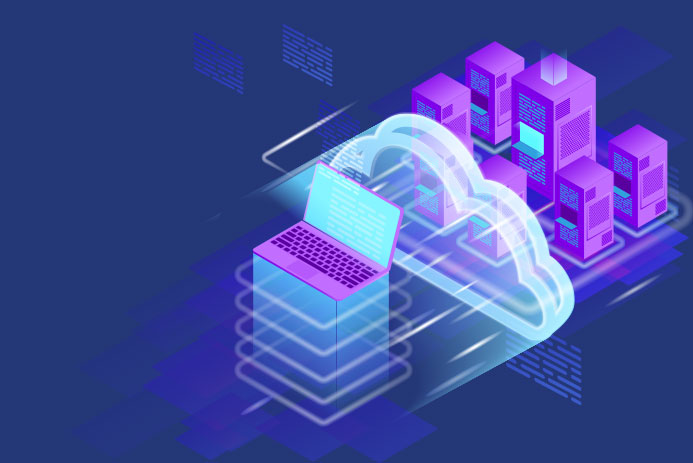
Cloud is not just a lever for controlling costs, but also a huge catalyst or transformational agent for being the foundation for enabling quick adoption of emerging technologies such as AI and Blockchain.
India is an aspiring and incomparable nation when it comes to digital ambitions and scale. Landmark projects like Aadhaar, the Aarogya Setu app, or DigiLocker, are just some of the examples of India’s digital prowess.
Given the scale at which government departments operate, cloud is the perfect platform for accelerating e-governance initiatives. From a policy point of view, already a series of initiatives have been taken to ensure that India has a strategic advantage concerning the cloud.
The Government of India has announced GI Cloud (now called ‘Meghraj’) – an initiative to ensure optimum usage of IT spending by the government while simultaneously giving the impetus to improve the adoption of e-governance initiatives using the cloud. The Ministry of Electronics and Information Technology (MeitY) has created a reference architecture to guide government departments to build their cloud deployment architecture with recommended components and activities.
The National Digital Communications Policy 2018 envisions establishing India as a global hub for cloud computing, content hosting and delivery, and data communication systems and services. It aims to do this by enabling regulatory frameworks and incentives for promoting the establishment of international data centers, content delivery networks, and interconnect exchanges in India.
Similarly, the National Data Center Policy, which aims at making India a Global Data Center hub, promotes investment in the sector, propels digital economy growth, and enables provisioning of trusted hosting infrastructure to fulfil the growing demand.
The potential of the cloud
In India, cloud computing has ensured the success of national initiatives and schemes such as Swachh Bharat Mission, e-Hospital, National Scholarship, My-Gov and e-Transport. One of India’s most landmark initiatives, the Government e-Marketplace (GeM) uses a multi-cloud architecture to ensure scalability. Today, the GeM serves over 50,000 buyer organisations and has a listing of over 19 lakh products and more than 80,000 services.
NIC’s SaaS-based service, S3WaaS, has empowered district administrators to create, configure and deploy scalable and accessible websites without much effort and technical knowledge. Another successful example is DigiLocker, a cloud-based platform for the issuance, sharing, and verification of critical lifelong documents or certificates. With more than 57.13 million users and 4.27 billion issued documents, DigiLocker has proved to be one of the biggest success stories of cloud in the government.
Last year, understanding the critical importance of the cloud in providing the foundation for enabling the growth of emerging technologies such as AI, India’s national policy think-tank organisation, NITI Aayog, suggested the creation of an AI-based cloud computing platform called AIRAWAT (AI Research, Analytics and Knowledge Assimilation).
Similarly, the National Highway Authority of India (NHAI), announced last year that it had gone fully digital with the launch of a unique cloud-based and AI-powered big analytics platform. All project documents and correspondences related to NHAI will be stored in a cloud-based data lake, which is linked with GIS tagging and a unique project ID, so that project data can be retrieved easily from any location.
The Indian Railways has given the responsibility of deploying open source Hospital Management Information System (HMIS), an integrated clinical information system, for its 125 health facilities and 650 polyclinics across the country for improved hospital administration and patient healthcare, using a cloud platform.
Emerging use cases of cloud
With the cost of providing compute and storage capabilities coming down drastically, it makes much more sense for government departments to leverage the cloud. The other big reason is the quick pace of adoption for emerging technologies such as AI, ML, Big Data Analytics, or IoT.
In India, many states have proactively taken several pro-cloud initiatives. For example, the Government of Maharashtra in 2018, became the first state to unveil a public cloud policy. Looking at the benefits of cloud-based storage, the Government of Maharashtra mandated its departments to shift their data storage requirements to the cloud.
Similarly, in October 2020, the Government of Telangana announced that it was making it mandatory for all its departments to deploy their existingor new applications on the cloud except for those applications that contained sensitive or confidential data.
Another classic example is Smart Cities, wherein various state governments are leveraging cloud and other digital technologies to provide next generation services to citizens. Madhya Pradesh was the first state to launch India’s first cloud-based Common Integrated Data Centre, Disaster Recovery Centre and Integrated Control and Command Centre (ICCC).
The ICCC is enabling the Madhya Pradesh state administration to monitor and administer multiple city civic utilities and citizen services across seven cities in the state through a central cloud. Now, other states like Gujarat, Rajasthan, Andhra Pradesh, Telanagana, Tamil Nadu, Karnataka, and Uttar Pradesh are following the suit.
These examples highlight why the move to the cloud is now essential or critical for government departments. Due to the capacity constraints, there are instances where the state data center has faced challenges in scaling up and meeting the requirements in a time-bound manner, which has led to poor application downtime and poor user experience.
Key trends that government departments should look out for
Today, the Covid-19 pandemic has made it imperative for accelerating digital delivery of public services. This has put immense pressure on government departments to quickly roll out new platforms or initiatives. With support for emerging technologies such as AI, ML or Blockchain, the cloud is the perfect platform for testing out new innovations.
The cloud is also a proven platform for automation – a critical need in government departments today, as they grapple with challenges related to skilled manpower and scaling up to meet public demand for services. For example, AI-powered chatbots can answer common queries easily, while RPA can be used to automate routine tasks.
The pandemic has also made remote working a reality now. This is applicable to the government sector too, as it also needs to give government employees the same flexibility as given to employees from the private sector. The cloud is perfect for giving employees secure and reliable access to government applications and data.
The cloud allows government departments to acquire resources based on actual requirements, with the capability to increase or decrease computing resources as per demand. Globally, and in India too, government departments are increasingly feeling challenged in containing costs and providing the required infrastructure.
For instance, the state-owned Bank of Baroda has become the first public sector bank to consider Work from Home policy for a section of its employees. For Bank of Baroda to leverage staff resources better, the cloud will prove to be an excellent platform for creating flexibility without significant corresponding investments.
This flexibility opens up several possibilities – one can think of organisations such as Income Tax which receives huge load for filing returns in the last few days of the deadline given by the government. There are many such examples of departments across the government, which receive seasonal demand spikes. Another notable example is the dedicated web portal called Co-WIN (COVID -19 Vaccine Intelligence Network) which has been launched recently.
This is a complete cloud-based IT solution for planning, implementation, monitoring, and evaluation of the Covid-19 vaccination program in the country. While we keep hearing about technical glitches in the Co-WIN platform or the portal getting crashed (when millions of people recently rushed to register for the COVID vaccination), one cannot deny the fact that without the cloud, an initiative of this scale and size would be unimaginable.
As the above examples show, the cloud today is not just a lever for controlling costs, but also a huge catalyst or transformational agent for being the foundation for enabling quick adoption of emerging technologies such as AI and Blockchain. Today, the question for government departments is not why you should adopt the cloud, but when and how fast you can use the cloud to your advantage.
How cloud provides a robust foundation for emerging technologies like AI & ML?
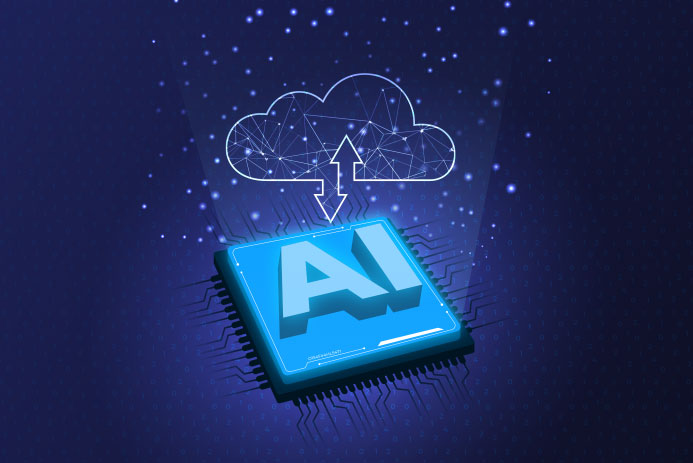
As businesses thrive in today’s highly competitive and continuously evolving marketplace, innovation has become paramount for organisations across the spectrum of industry verticals. Changing customer expectations and the need for delivering top-notch customer experiences mandates organisations to reimagine business processes at every touch point.
Moreover, the Covid-19 pandemic has significantly transformed customer engagement, with digital platforms at the core. This omni-channel digital environment will continue to remain a crucial part of the post pandemic world. As customer interactions move to digital, a vast data pool is created from multiple touch points and at various stages of the customer journey. Future-ready organisations have realised the importance of this data to make informed decisions and enhance customer experience with personalised offerings.
In the backdrop of this disruption, organisations are increasingly looking at leveraging emerging technologies such as Artificial Intelligence (AI), Machine Learning (ML), Data Analytics and Internet of Things (IoT) to take customer experience to the next level. For instance, application of AI-driven analytics is enabling organisations to derive meaningful insights from the data collected through customer engagements on digital platforms, thereby allowing them to better understand customer needs and provide tailored offerings.
Let’s understand how the focus on emerging technologies is impacting cloud adoption.
Cloud at Core – Backbone to Emerging Technologies
It’s important to note that innovating with emerging technologies requires an agile, flexible and highly scalable IT infrastructure, especially with the amount of data that is generated. Legacy systems and traditional on-premise IT infrastructure lack scalability, agility and compute power to test and deploy modern use cases around emerging technologies. However, cloud comes to the rescue with its agility, hyper scalability, and compute power, thereby providing a robust infrastructure backbone and enabling IT teams to scale up and scale down as needed, run business applications, and ensure quick roll out.
Future-ready organisations, as part of their digital transformation journeys, have embraced cloud as the core of their IT initiatives. According to a Gartner report by 2024, more than 45% of IT spending on system infrastructure, infrastructure software, application software and business process outsourcing will shift from traditional solutions to cloud.
The report further acknowledges that emerging technologies such as AI, IoT, edge computing and advanced data analytics are seen as the next wave of disruption; and cloud serves as the foundation for these technologies’ use cases for businesses.
These trends clearly indicate that cloud delivers an ideal environment for business applications based on emerging technologies and how a cloud-first strategy is the first step towards a digital-centric business model.
Let’s look at how these emerging technologies will shape cloud adoption trends.
- Rise of Intelligent Businesses: The key to becoming an intelligent enterprise is data. Valuable insights derived from this data results into business intelligence and one of the biggest distinguishers of any organisation. In this direction, organisations need to run cutting-edge AI-ML based analytics over their data pool and garner insights. This is possible only on cloud as it provides immense storage and compute capabilities as and when required. Cloud enables end-to-end data analytics, from storage of data to generating actionable insights.
- Automated Environment: The need for automating business processes has been more prevalent in the last one year. As remote working became the new reality, organisations were pushed to adopt automation, which would ensure seamless operations even in times of disruption. This also opens doors to enhanced workforce productivity as automation of time-consuming manual processes and allows them to focus on more important areas and innovation. Cloud’s ability to automate itself and scale up and scale down depending on the workloads significantly reduces the burden on IT teams.
- Reimagining Cloud with AI: This novel technology is increasingly finding its place in digital transformation roadmaps of organisations. In order to fully enable an AI-driven business, it’s crucial that organisations make AI accessible to its entire workforce. Availability of AI toolsets on cloud allows employees to learn from the insights and make customer engagements more meaningful. Hence, a cloud infrastructure which is powered by AI will be among the primary considerations for organisations.
- Cloud Enabled Hyper Connectivity: With developments in the areas of autonomous vehicles, smart city infrastructure, 5G and IoT enabled intelligent Edge, the realms of cloud are expanding beyond mere availability. Cloud is the platform that makes reality of a hyper-connected world possible as it forms the foundation where different technologies connect and talk to each other. Smart cities’ integrated command and control centres leverage the power of cloud enabled dashboards to monitor and analyse data coming from a vast network of IoT devices deployed across cities. As 5G becomes a reality, there will be an influx of new datasets which will reside and get analysed on cloud. Similarly, as more and more people get connected on IoT devices, organisations will have to prepare their cloud infrastructure with the greater computation capabilities.
Innovations Bringing Cloud at the Center
In a post-Pandemic world, organisations will continue to innovate as part of their digital transformation roadmap and emerging technologies will continue to define their efforts. In line with this direction, IT leaders will focus on building a cloud infrastructure that equips their business with the tools and capabilities needed to bring the best out of technologies such as AI, ML, 5G, data analytics, and IoT among others.
Another Gartner predicts that the rapid pace of innovation in cloud infrastructure and platform services (CIPS) makes cloud the de facto platform for new digital services and existing traditional workloads alike, which is why 40% or all enterprise workloads will be deployed in CIPS by 2023, up from only 20% in 2020.
As observed above, with more and more workloads moving to cloud platforms and everything transitioning to as-a-service, cloud adoption will be redefined by its capabilities to perform intelligent tasks and serve as a one-stop platform where all technologies connect with each other seamlessly and enable a truly modern digital experience for all stakeholders.