










How Cloud ERP is redefining Enterprise Success?

Business process transformation is one of the major ways how cloud technology is aiding digitisation. Realising the pivotal role of the cloud in their business operations, organisations have increasingly embraced it as a preferred platform for running various applications. The enterprise world has witnessed unprecedented digital disruption in recent times, and business environments have become more complex, however at the same time, there are also greater possibilities to streamline them.

Embracing growth-oriented IT best practices is imperative in today’s highly competitive marketplace and simplifying business processes is among the foremost steps in this direction. However, as businesses continue to grow, so do their resources and workloads. Therefore, an Enterprise Resource Planning (ERP) application becomes key to gaining visibility and control over all the key processes through a single pane of glass, leading to resources and process optimisation.

While ERP applications have been traditionally deployed on-premises, there are several challenges associated with it, such as:

  • Huge upfront capital investment and support and operational costs
  • Further costs and efforts on maintenance
  • Long hardware procurement and deployment timeline
  • Lack of scalability
  • Frequent downtimes, among others

We have seen how businesses leverage the cloud effectively for collaboration and business continuity. Growing migration from on-premise deployments and reliance on Software-as-a-Service (SaaS) based solutions have gained greater prominence post-pandemic. Primary drivers of this trend include resiliency building, cost and process optimisation, achieving agility and scalability, and catering to a distributed workforce.

Reimagining ERP with Cloud

Being central to core processes, ERP is no exception for the ‘cloudification’ of IT systems. According to Emergen Research, the global cloud ERP market size is slated to reach US$ 141.68 billion in 2028. The APAC market is expected to mark the fastest revenue growth rate due to the increasing implementation of cloud ERP solutions across various industries in the region, with India being a key market among other regional counterparts.

Let’s look at some of the major value propositions that Cloud ERP brings to the table.

  • Reliability: Cloud-hosted ERP as-a-service is operated and managed by third-party service providers with the required expertise, resources and infrastructure, thereby assuring greater uptime, support and updates. It provides a more reliable alternative to an on-premise system that requires dedicated skilled resources to manage the environment.
  • Scalability: Scaling the infrastructure on-premises can be a costly and complicated task for a business. In this environment, businesses often scale slower than the demands. In another instance, they might scale too fast and overspend on extraneous equipment, leading to costly maintenance. In contrast, ERP on Cloud enables enterprises with the freedom to scale up or scale down quickly with a pay-as-you-use model. As a result, cloud ERP eliminates scalability issues that hamper growth for new and smaller businesses.
  • Enhanced security: On-premise or cloud, security remains a major concern in both worlds. One of the greatest benefits of cloud ERP is the superior security it offers to businesses of all types and sizes. The robust security frameworks of the cloud strengthen your ERP instance’s security and safeguard critical data. While storing and retrieving classified company data, it becomes crucial that operations remain unaffected at all times. With cloud ERP, businesses don’t have to worry about data breaches because the system tracks all activities and fully encrypts the data.
  • Reduced Total Cost of Ownership (TCO): Offered on a subscription model, cloud ERP offers significant savings on operating costs as it eliminates recurring expenses and efforts of maintenance, hardware and software updates. Businesses don’t have to spend money on hardware and software hosted in their on-premise data centers. By outsourcing it to a service provider, enterprises can optimise TCO through lower fees for the initial solution and deployment while no longer having to bear the maintenance and upgrade costs.
  • Always-available Service Support: Cloud-based ERP services are run by vendors that ensure support is available 24×7. On-premise hosting typically requires the additional purchase of a support package. Whereas on a cloud model, businesses can access the required support round-the-clock, including software upgrades.

As enterprises continue to pursue their digital transformation endeavours, the cloud will play a central role in their IT environments. Going ahead with a cloud-first approach, enterprises will sustain their focus on achieving business outcomes through process transformation, cost and resource optimisation. With an array of benefits it brings, IT leaders will increasingly turn to cloud ERP to enable growth.


Posted in SAP

Unlocking the potential of Human Resources in your digitisation journey with SAP SuccessFactors

According to a recent study by Forrester, 78% of human resource managers believe that employee experience (EX) is likely to become the most critical factor in an organisation’s ability to deliver key business objectives. And yet, only 15% of employees expect an excellent experience from their employer. This gap in the perceived importance of employee experience from an organisational perspective and what the employees experience and expect from the organisation poses a significant risk.

However, as organisations undertake their digitisation journey, it also offers an opportunity to unlock the potential in the form of the HR function and from a people perspective by providing a superior experience. To do that, let us look at the key challenges faced by HR professionals, ways to address those and streamline the function, and how SAP SuccessFactors ticks all the right boxes towards achieving that goal.

Challenges faced by the HR function

  • Recruitment and hiring: Searching and attracting top talent has been a perennial challenge for HR professionals. And the challenge has further exacerbated in a hypercompetitive business environment. This has led to higher attrition at the lower and mid-levels, and the job market is becoming a ‘buyers’ market’. This has added multiple layers of complexities to the recruitment process.
  • Performance management: Assessment and classification of current employees are critical to individual employees as well as the organisation owing to the role it plays in shaping the business strategy and roadmap. As it does with the enterprise, performance management also needs agility and flexibility, and unlike the former, a once-a-year and top-down performance appraisal system requires a major upgrade.
  • Training and development: In the knowledge age, continuous learning and upskilling have become a prerequisite to retaining talent and keeping them relevant. However, given the pace of change, this has become an uphill struggle for HR professionals. Besides, identifying the skills gap from a business perspective and mapping it to the talent requires a high degree of personalisation and sophistication.
  • Leadership and succession planning: The definition of and the need for leadership and succession planning has changed significantly in recent years. Succession for senior positions requires a higher degree of foresight for leaders to remain relevant within the organisation and among customers and peers. And at a mid-management level, poor leadership has been directly linked to attrition and hollowing out at the foundation, which is detrimental to any organisation.

Streamlining the HR function with SAP SuccessFactors

  • Delivering an intuitive user experience: SAP SuccessFactors offers an interface design and user experience that has an intuitive and human-centric experience. With the Employee Experience Management module, enterprises can better understand employee needs and wants. In addition, it facilitates engagement and collaboration seamlessly, which allows employees to be more efficient across environments – home, office, hybrid or mobile.
  • Smarter decision-making with analytics: With a fully-integrated and synchronised data environment across functions in the enterprise, SAP SuccessFactors allows the use of advanced analytics on HR-related data. With the HR Analytics and Workforce Planning module, HR managers can derive insights to improve the effectiveness of HR processes. And using advanced technologies like artificial intelligence (AI) and machine learning (ML) can help visualise and predict various scenarios and map emerging trends, allowing for smarter decision-making.
  • Agile deployment and a steep learning curve: SAP has traditionally been known for the pace, ease and flexibility of deployment based on the specific needs of its customers. This holds true for SAP SuccessFactors as well. Moreover, SAP has a long track record of serving thousands of customers in multiple domains and overseeing tens of thousands of deployments across the world. This culmination of experience and learnings enables a steep learning curve, irrespective of whether they are a large, medium or small enterprise.
  • Aiding talent management: SAP SuccessFactors plays a strategic role in delivering business value through the HR function. The Recruiting and Onboarding solutions address the talent intake agenda from a talent management perspective. In addition, the Performance & Goals and Compensation modules improve employee productivity as well as reward and recognition of employees on an ongoing basis.
  • Nurturing a smart and future-ready talent pool: SAP SuccessFactors’ Learning can help enterprises deploy creative and innovative learning solutions. The learning management system allows employees to stay abreast of the latest developments and skills within a domain. This, combined with the Succession and Development solution, helps nurture and create a future-ready talent pool that is better aligned with business goals.
  • Staying in sync with changing workforce landscape: As a smart platform, the Human Experience Management (HXM) Suite enables workforce transformation by helping enterprises stay in sync with innovation and changes in the talent landscape. For example, diversity and inclusion, equal employment opportunities, health and mental well-being, and transparency in pay and performance management.
  • An integrated and extendable platform: SAP SuccessFactors’ modular structure and integration capabilities enable enterprises to scale-up usage and continuously build on existing enterprise IT investments. In addition to SAP S/4HANA, it can be integrated with the wider portfolio of SAP products and third-party systems. Such integration, flexibility and extendibility allow enterprises to focus on core business functions as against worrying about the IT infrastructure and platforms.

One of the biggest advantages that SAP SuccessFactors brings to the table is data sanctity and consolidation of all HR-related data once integrated with SAP S4 HANA. This helps provide a complete hire to retire process automation within an organisation. And the combination of these factors can deliver a superior employee experience across the board and help unlock value from HR.

As an SAP-certified partner, Yotta offers end-to-end capabilities – from consulting and advisory to migration and implementation, as well as application management and customer support. This, combined with our Tier IV certified constructed data center, ensure the highest uptime for mission-critical systems.

To know how Yotta can help digitise and streamline your HR functions, please get in touch with our SAP SuccessFactors consultant today.

Posted in SAP

Future-proofing the manufacturing sector with ERP in the age of Industry 4.0

The term Industry 4.0 has been quite a buzzword over the last couple of years. Used to describe the fourth industrial revolution, Industry 4.0 is the ultimate expression of the convergence between the physical and the digital worlds. Enabled by the internet and technology, it has the potential to transform the manufacturing sector. It leverages the power of data and analytics as well as automation facilitated by the democratisation of smart devices that can communicate with one another.

In many ways, Industry 4.0 is a natural progression from the third industrial revolution that was powered by electronics and information technology. As computing evolved through the 1980s and became accessible in the 1990s, organisations started realising the value of connecting disparate systems and functions. This integration led to the emergence of Enterprise Resource Planning (ERP) as a business-critical and strategic pillar for businesses.

Cut to 2021. The first two decades of the 21st Century have witnessed the meteoric rise of the internet and hardware advancement at a breakneck speed. This brings us to Industry 4.0, and the technology landscape of today looks nothing like what it did during the third industrial revolution. And while the fundamentals and strategic relevance of ERP remain unchanged, the technological innovation and changing business landscape have opened up new applications and avenues. However, for enterprises to tap new opportunities in the era of Industry 4.0, they also need to revisit their approach to ERP. What does this involve and what are the implications for traditional sectors like manufacturing?

  • Improve demand forecasting
    Economic uncertainty, fluctuating sales, and changing consumer preferences add multiple layers of complexities to the demand forecasting function. This has massive implications on the input procurement end where a single out-of-stock input can stall the entire batch, and overstocking can lead to increased input cost or high levels of wastage in the case of time-sensitive inputs. The ability of an ERP connected with a powerful analytics engine can use historical data to predict demand more accurately. This brings order to an otherwise chaotic and unpredictable function and lends it a high degree of flexibility and accuracy.
  • Optimise production process
    Current market conditions require manufacturers to be fast and responsive in terms of production and output. This calls for businesses to manage their production processes more effectively. A well-integrated ERP that connects various functions such as supply chain and inventory with a smart factory can go a long way in controlling the production schedule. Besides being responsive to market conditions, optimising the production process enables companies to implement new revenue models by tapping into emerging opportunities in a timely manner.
  • Enhance asset utilisation
    As machines and shop floors become smarter with sensors and machine-to-machine (M2M) communication capabilities, their ability to transmit data in real-time can give companies a unique edge. Connected to a centralised enterprise-wide system, operators can now monitor operations more effectively. This enables the deployment of automated issues detection and response mechanisms as well as predictive maintenance capabilities. Proactive management of potential equipment failure and timely maintenance minimises downtime and enhances asset utilisation.
  • Reduce production costs
    A drop in sales and demand has put a squeeze on the top line of businesses. As a result, the manufacturing function with a large share of capital and operational expenditure is under tremendous pressure to maximise savings and to do more with less. An ERP that runs across the value chain and a centralised database allow business leaders to monitor critical key performance indicators (KPIs) and derive insights to help reduce cost. Besides identifying wastage of money and resources, it can also rationalise input costs, all of which help reduce the production cost and contribute to the bottom line of an organisation.

At the end of the day, the success of a business or its ability to respond to an evolving operational landscape depends on the quality and pace of decision-making. With large variables to balance and external dependencies, this becomes even more critical for the manufacturing sector.

Upgrading the ERP for an Industry 4.0 environment helps organisations gain better and real-time visibility into the various operational aspects of their operations. This enables a more informed analysis and well-timed decision-making across the organisation and the value chain from the top floor to the shop floor, and from supply chain vendors to customers.

Posted in SAP

SAP Business One: Enabling MSMEs to Thrive in a Digital Economy

India is currently home to more than 6.3 crore Micro, Small and Medium Enterprises (MSMEs), generating employment for more than 11 crore people and contributing approximately 30% to the country’s GDP. So, it is no surprise that the MSME sector is often described as the backbone of the Indian economy.

However, like the rest of the world, the COVID-19 pandemic has had an adverse impact on every business. But, upon close observation, it can be found that the effect has been more severe among MSMEs as compared to large enterprises. This is mainly due to their small scale of operations, which makes them vulnerable, but it also could be an advantage as it allows them to be flexible and open to change and transformation.

As businesses embark on the path to recovery, we must understand the challenges faced by MSMEs. We also need to look at the role of technology in helping them navigate the emerging business landscape. More specifically, SAP Business One, which is being widely embraced as a leading solution for MSMEs.

New business landscape, new challenges

The evolution and democratisation of technology in the last decade have brought about significant business landscape changes. While we were already on the fast track to the Digital Age, the pandemic accelerated the pace and accentuated the nature of change. As a result, MSMEs find themselves in a new business landscape with contemporary business challenges.

  • Contracted access to capital and finance: Long payment cycles and a dip in revenues have weakened organisations’ financial health. However, despite a challenging economic climate, MSMEs need to infuse capital as they look to restart and rebuild.
  • Unpredictable disruptions in the supply chain: A significant fallout of COVID-19 has been the physical disruption in the supply chain, which has necessitated alternative vendors. At the same time, uncertain uptake has made it difficult for businesses to manage inventory and maintain delivery schedules.
  • Fluid consumer behaviour and demands: The change in business cycles and economic conditions has made consumer behaviour and demand quite fluid. This, combined with the changing buyer behaviour and the emergence of e-commerce, both in the consumer and the B2B segments, has made it challenging for businesses to gauge end-user expectations, which impact the overall business operation.

Benefits of deploying SAP Business One

Benefits of deploying SAP Business One

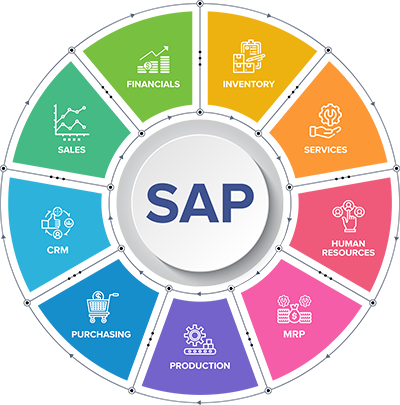
SAP Business One is a single-window ERP solution designed for MSMEs and integrates an array of functions needed to run a business. This includes accounting and financial reporting, procurement, inventory management, and sales and customer relationship management. Besides automating numerous processes, SAP Business One offers rich analytical capabilities that leverage available data to gain insights into the business.

  • Improve financial reporting and cash flow: Streamlining the finance processes allows companies to understand their financial posture better. Automation of accounting and banking processes have a direct impact on receivables and cash flow. Other improvements include better budgeting, monitoring and asset tracking as well as regulatory and taxation-related reporting.
  • Strengthen procurement and supply chain: Integration of the procurement function and supply chain enables better inventory planning and is crucial for smooth operational continuity. Additionally, end-to-end digitisation of processes – from vendor identification and requisition to receipts, stock keeping and payments management – can transform the function and make it more resilient.
  • Deliver superior customer experience: Unified control over and visibility of the complete customer lifecycle is key to delivering a superior customer experience. It allows businesses to understand customer needs better and track the entire process, from pre-sales and marketing to support and CRM.
  • Agile decision-making with data and analytics: One of the biggest benefits of SAP Business One is its ability to tap organisation-wide data to derive business intelligence. With automated and customisable reports and real-time visibility, leaders, as well as managers, can conduct granular analyses and take timely, data-driven decisions.

India’s MSME sector is emblematic of the country’s culture of entrepreneurship and the spirit of a new Digital India. Considering the recent trends, the MSME sector is expected to play a major role in the country’s economy. As the world enters a digital future, SAP Business One enables MSMEs to take a massive leap in their journey and tap new opportunities.

Posted in SAP

How can a SAP-certified partner make a difference to your SAP deployments?

As businesses undertake organisation-wide digital transformation efforts, the combination of SAP and the Cloud has emerged as a preferred solution. Additionally, the prevalent business environment has further accelerated this trend. As a result, companies need agile and scalable SAP deployments. For this, they are turning to third-party service providers who act as outsourced partners for offering end-to-end SAP solutions.

However, a cluttered marketplace and time pressure to greenlight deployments can complicate the process of choosing the right SAP partner. An effective workaround for this issue includes reliance on certifications issued by SAP for select service providers. Offered for solutions across their portfolio, these certifications are based on a robust framework and audit conducted by SAP. Among other advantages, the certified partners help customers unlock the maximum value from their SAP deployments.

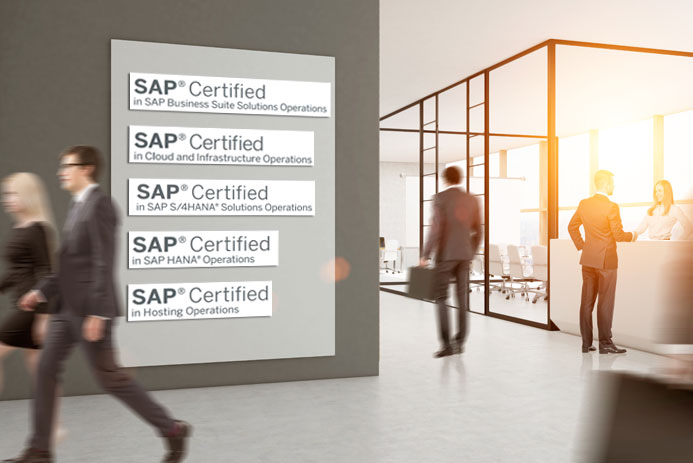
Key SAP certifications

  • Cloud and infrastructure operations: Focused on infrastructure and cloud services, this certification highlights a portfolio of offerings tailored for SAP customers. Cloud services from certified providers include on-demand infrastructure and cloud services for related SAP products.
  • Hosting operations: Offering customised hosting packages and operating and maintaining SAP applications, certified MSPs need to demonstrate experience and the relevant technical expertise pertaining to SAP administration skills.
  • SAP S/4 HANA solutions operations: This certification encompasses all processes related to the management of SAP S/4HANA solutions lifecycle, including maintenance, daily operation, and functional support.
  • SAP Business Suite solutions operations: This certification focuses on all processes related to the management of SAP Business Suite lifecycle, for example, SAP ERP, including maintenance, daily operation, and functional support.
  • SAP HANA operations: This certification testifies the highest level and quality of operational standards for solutions pertaining to SAP HANA business data platform.

Certification process

To obtain these certifications, service providers need to demonstrate operational capabilities that include quality and knowledge management, IT services management, and project management. SAP uses a robust framework that evaluates potential service providers to ensure they meet SAP’s exacting standards before issuing certificates.

  • Application: The process begins with the service provider’s application for initial certification. Based on the scope, SAP sends a quotation and upon confirmation from the partner, they begin the certification process.
  • Questions and answers: SAP sends a questionnaire to the service provider, followed by a Q&A session to address any queries that the service provider may have.
  • Return, review, and preparation: On receiving the completed questionnaire, SAP reviews it and prepares the audit. This is followed by an agreement on the next steps and schedule.
  • Onsite audit: Based on the scope and schedule, SAP conducts an onsite audit against the submitted documents. If required, SAP conducts a follow-up that may include an update or submission of additional documents from the service provider.
  • Completion: Based on the onsite audit report, SAP may conduct a call with the service provider to highlight the potential areas for improvement, if required. After successful completion of this process, SAP issues a certificate. Certified service providers are granted a status logo for two years. To maintain the validity, service providers need to conduct a certification audit upon expiration of the certification period.

Benefits of SAP certifications

SAP implementation is a critical function for any enterprise, and this makes it imperative for them to receive the highest level of service and availability. Hence, at the most basic level, certifications help service providers build trust and confidence among enterprise customers.

  • Expertise: In an age with limited budgets and access to specialised talent, IT functions are constrained. As a result, large turnkey projects such as SAP deployments suffer and become obsolete much faster. With stringent ITIL standards, training and knowledge management, certified outsourced partners are required to demonstrate and continuously upgrade their know-how. This provides enterprises with the much-needed expertise as well as operational and domain knowledge that they can trust with confidence.
  • Agility: In today’s environment where technology is evolving at a break-neck speed, it is challenging for internal IT functions to keep pace. Between additional IT investments and continuous training for staff, SAP deployments can get complicated. In such a scenario, certified MSPs help reduce delays and enable clients to derive the maximum value from their SAP deployments with speed and agility.
  • Reliability: Certified MSPs are required to follow stringent SLAs to deliver highest uptime under all conditions, this reduces disruption in business operations and downtime for critical functions. Additionally, proactive support and access to experts allow MSPs to deal with complications, making the SAP deployment responsive and reliable.
  • Flexibility: With data at its core and a bouquet of applications, SAP deployments require constant updates and hardware investment as businesses expand. In such a scenario, an organisation’s internal IT team can struggle to keep up. The need for additional resources or the lack thereof often leads to complications and delays, which makes SAP deployments expensive or ineffective. With outsourced operations offering on-demand services, organisations can scale up or scale down their infrastructure, thus affording them a high degree of flexibility.

Why Yotta?

Yotta has received five SAP certifications that include Cloud and Infrastructure OperationsHosting OperationsSAP Business Suite Solutions OperationsSAP HANA Operations, and SAP S/4HANA Solutions Operations. These certifications confirm that Yotta meets most of the requirements of SAP operations services. As discussed earlier in this article, these certifications offer several advantages for end-users, as compared to non-certified solution providers.

This, combined with our multi-domain experience, including Uptime Institute certified Tier IV data center and single-window SAP services, allows us to offer best-in-breed SAP solutions to meet your business needs. From SAP implementations to migration to complete Application managed services, our robust infrastructure and continued service and support enables us to deliver end-to-end SAP capabilities that are both, effective and reliable.

Posted in SAP

7 key factors to be considered for SAP upgrade

Over the last few years, we have witnessed democratisation of Enterprise Resource Planning (ERP) systems and the emergence of SAP. Businesses looking to scale-up their operations today are likely to have experienced an ERP or a similar system that connects disparate functions within the organisation. However, as customer preferences and market dynamics evolve over time, legacy ERP systems begin to lag, and so it comes as no surprise that a recent survey by Deloitte revealed that 64% of the CIOs are either rolling-out next-generation ERP solutions such as SAP or are modernising legacy systems.

Having said that, it is a known fact that deploying a new or rewiring an existing SAP system can be a mammoth task, both in terms of effort and financial resources. Hence, before undertaking an upgrade, CIOs need to have an absolute clarity of thought and purpose in light of the emerging technologies and business realities. Here’s a checklist to get you started:

Need-Gap Analysis: Elementary as it may sound, the performance evaluation of an SAP system often tends to  focus on technology and hardware. To get a  clear picture, it is equally important to perform an assessment with the objective of identifying the functional and business gaps that it is unable to fulfill effectively. For example, a legacy system that does not support smart manufacturing or digital channels of sales places the business at a distinct disadvantage in the digital world we operate in today.

IT Infrastructure: A large number of SAP users still rely on IT infrastructure located on-premise.  However, there are risk factors associated with on-premise infrastructure including physical damage due to fire, flooding or other natural calamities, or like a situation resulting from the ongoing pandemic. In any case, if users are unable to log-in to or access their data, the SAP and all the investment are rendered useless. When considering an upgrade, it is advisable do consider SAP on the cloud or at least co-location of your IT infrastructure to ensure business continuity and reduced IT infrastructure costs.

Technology Upgrade: The fast-paced technology landscape often renders legacy systems inoperable or incompatible with newer hardware or software before OEMs eventually discontinue those products. Additionally, application upgrades also offer definite business and technology benefits. While considering an SAP upgrade, it is therefore crucial to check for technology obsolescence, availability of upgrades and continued support across all systems and modules.

Scalability: As businesses grow, existing systems need to process and store higher volumes of data. Additionally, it also leads to a number of other changes including new methods of production and business models, all of which require a robust and flexible infrastructure. It is, therefore, recommended to select a system that offers scalability and can keep pace with the changing business needs while being financially viable.

Functionality: There are a number of functions and attributes in current businesses that were not as prominent or critical earlier – big data and analytics for example. Such functions are mission-critical to modern businesses and if your existing ERP system does not allow you to support such functions, it is time for a change.

Total Cost of Ownership (TCO): A primary factor to consider while deciding TCO includes the capital expenditure required for the new infrastructure as well as operational expenses such as license fees, ERP customisations, the training expenses to bring employees up to speed, the cost of maintenance, and ongoing support. While the objective should be to minimise the TCO, it should be done keeping in mind the potential benefits and the ROI.

Return on Investment (ROI): As with most business decisions, the choice of whether or not to upgrade an SAP system is also driven financially. While we have covered the TCO, a decision whether to modernise or not boils down to the kind and quantum of returns the upgrade would yield. And while calculating the ROI, efforts should also be made to quantify intangible benefits such as increased productivity and enhanced customer experience that add business value and contribute to the topline.

There is little doubt that the business landscape and the macroeconomic factors are changing faster than ever before. This is not only reshaping the markets but also influencing customer behavior and decision-making in many ways. And this is reflected in the increased jostle for customer’s attention and the hyper-competitive environment that businesses need to survive in today’s day and age.

In such a scenario, a state-of-the-art SAP solution could be a key differentiator and help organisations unlock latent business value that exists within the organisation and its ecosystem. The more integrated an organisation is – from sourcing inputs all the way to post-sale customer experience, the more agile and competitive it becomes. And that’s why it is critical to conduct periodic checks to evaluate if your existing SAP system is keeping pace with your business needs.

Posted in SAP

Evaluating SAP infrastructure provider? Consider these 5 things before signing up!

By its very definition, an Enterprise Resource Planning (ERP) system is at the core of a business. Whether you are looking to upgrade an existing SAP or planning a switch to SAP platform, ensuring a smooth implementation becomes a top priority by default. Yet a study by Gartner reveals that despite all the effort and financial resources companies invest in, an estimated 55% to 75% of all ERP projects fail to meet the expected objectives.

For a system that is so central to any business, the range of failed or partially successful ERP implementations is exceptionally high. This further highlights the need to select an appropriate SAP solution and a service provider that also offers an SAP-compliant infrastructure. To help you navigate through this complex journey, we have curated a list of five mission-critical aspects to be considered while evaluating a potential SAP service provider.

Tier IV SAP infrastructure

Tier IV SAP infrastructure

There is no point in having the most advanced ERP solution if an infrastructure breakdown due to cyclones, floods, fires or other calamities prevent you or your customers its access.  This has become even more important in a post-pandemic world because of the distributed workforce and the increasing shift towards the cloud.

The primary criterion has to be the infrastructure that a service provider uses to host the ERP solution and the resilience it offers. One way to gauge this is the Tier grading of the data centers that your SAP provider provides. The most current and advanced providers offer Tier IV certified data centers, which are designed for high levels of fault tolerance across systems and components. This allows the infrastructure to remain operational even under challenging conditions. In addition to this, ensure that your service provider has a low-latency network that can handle high-volume data and provide always-on connectivity along with the solutions like work area recovery, which can be offered on a pay-per-use model.

Reliable storage and access to data

Yotta SAP - Reliable storage and access to data

In the age of Industry 4.0, data is increasingly becoming the single-most valuable asset for businesses. With technologies such as the Internet of Things (IoT) and Artificial Intelligence (AI) becoming mainstream, the volume of data generated and its utilisation across business functions has grown exponentially in the last few years. Additionally, there’s an increasing trend towards using real-time data for automation and decision-making. Fulfilling these business needs requires a solution that offers reliable storage facilities and failsafe access to data at all times.

While evaluating potential partners, look for vendors that offer a comprehensive suite of data storage, protection and recovery solutions. Enterprises must look for storage systems that are always-on and provide nearly 100% access to data and hybrid systems that allow businesses to make most of the legacy and new data, both on-premise and the cloud. The efficacy of a new ERP platform can be measured in two ways – one, the SLAs across key metrics that are critical to your business needs, and two, its ability to reduce complexity and risk in critical operations.

Security against vulnerabilities

Yotta SAP - Security against vulnerabilities

The democratisation of technology has dramatically increased the number of people who are connected to and use an enterprise’s central system. This, in conjunction with the COVID-19 induced work-from-home phenomenon, has increased the exposure of businesses to security vulnerabilities due to the manifold increase in access points into the system. And based on initial reports, a lot of these changes are unlikely to be reversed.  Hence, if you are investing in an ERP for the future, be sure to invest in a secure platform.

The primary object of data security is to avoid unauthorised access to data, both from the outside and within. Hence, look for service providers that offer a multi-layered managed security environment that helps keep your data safe and maintain operations. It is also worthwhile to consider vendors who offer advanced solutions and tools to derive insights and intelligence that help your business stay ahead of potential threats.

Flexibility and scalability of use

Yotta SAP - Flexibility and scalability of use

One of the biggest challenges for organisations, particularly those that operate in a high-growth sector, is the ability of the ERP solution to scale-up or scale-down based on the business requirements. This becomes even more important during volatile periods like we are experiencing today. Here, the ability of your service provider to offer such flexibility gives your business a definite edge.

Some of the key parameters to assess the flexibility offered by a potential ERP vendor include:

  • Scalability in the use of cloud services to scale up or scale down the utilisation based on changing workloads
  • Ability to upgrade the available infrastructure or add new / integrate software capabilities to keep pace with the advances in technology
  • Ability to adapt and add functionalities in response to changing demands and trends in the business landscape

Transparency in pricing

Yotta SAP - Transparency in pricing

Implementing SAP can be quite a complex task, owing to the number of variables customers need to weigh while evaluating a potential solution. Then there is the implementation and migration cost. After all of this, comes an area that often goes unnoticed – operating cost – and this is also where several ERP solutions fail. Hidden costs and unplanned operating expenses often make the solution financially unviable. In such a scenario, it is extremely crucial to be financially prudent and pick a vendor that offers a transparent OPEX based pricing.

Following are some of the factors to keep in mind and traits to look out for:

  • While the first step is to figure and anticipate the number of users who will need access, it is essential to get a clear indication of the number of users the solution has been licensed for
  • Look for granular costing and a modular offering that allows you to pick-and-choose capabilities based on your needs, for example, cloud usage, data storage and disaster recovery, migration, and relocation among others
  • Evaluate the pricing in light of the infrastructure the service provider offers, for instance, an SAP solution hosted on a fault-tolerant infrastructure drastically improves reliability and almost eliminates the costs associated with system breakdowns

Bottom line

From faster and better computing to the amount of data we generate and consume as well as the widespread application of digital tools in various spheres, technology is evolving at a breakneck speed today. While this is what adds complexity to the decision-making process, particularly for core functions like ERP, it is also a strong call-to-action. And it cannot be denied that a robust ERP solution can help organisations enhance productivity across operations and functions, which allows them to stay in lockstep with the changing consumer demands.

How can an MSP Manage your SAP Better?

SAP adoption is on the rise. Data has become the key to businesses, and SAP is right in the middle of it all. But like most things in life, this too comes with its own set of challenges. Issues like managing all the tools in the SAP ecosystem, constantly upgrading the database, application, platform and more and then, of course, there is cost! So, what can one do to get an unencumbered, seamless, and low-cost SAP environment?

Get an SAP managed service provider (MSP), of course!

What is an Managed Service Provider for SAP?

An MSP is a company that supports services for SAP on an outsourced basis. This usually means delivering SAP infrastructure services on-cloud, data storage, backup and disaster recovery and the whole gamut of other IT related services for SAP. In any case, the point of an MSP is to take care of your SAP environment so that you are free to focus on your business.

Given the depth and width of the SAP solution set, there are many offerings that an SAP MSP provides. Some focus on technical or functional work or a combination of the two. While others offer software and UI development for SAP.

The biggest impact of an MSP

What is that one thing that an SAP MSP does that makes him a must-have for your company? It helps you save costs. It does, it really does. If you do not have a MSP on-board, you will end up managing various service providers that will take care of your support contract and you end up managing all the critical SAP tools on your own. This will require an entire team of professionals on your IT payroll.

Also, not only do all these service providers have their separate contracts to manage, the costs associated with the tools are hefty. We will not even go into the cost involved in the ongoing maintenance that is required.

Ensuring that all the products your team has in place are continuously up to date, licensing for example and best in breed to support your SAP environment like back up products, security products, monitoring tools, etc. is a major cost intensive and inducing task. The value of working with an MSP is access to all these industry-leading tools without the cost and headache of ongoing maintenance.

What to look for in an MSP for your SAP?

SAP Basis Support: While there are many aspects that one needs to look into an SAP MSP, one of the most important is to make sure that your MSP offers SAP Basis as a managed service. As the name suggests, SAP Basis is the foundational level of SAP support that ensures SAP landscapes run smooth and you get business continuity. SAP Basis is supercritical for an MSP to know and offer.

Pay-as-you-go Billing: Another thing to look for is a pay-as-you-use approach. Does the MSP offer SAP services on a pay-as-you-go model? With SAP cloud managed services, things like multiple commercial relationships for responsibilities like SAP maintenance, support and hosting are taken out your hand and handled by the MSP. At the same time, you get the added advantage of value-added services by the MSP.

AMS Support: The last but not the least is the AMS support than an MSP provides. AMS for SAP is a flexible structure that enable businesses to support their IT and business objectives. Look out for SAP MSPs that provide on-site, off-site and hybrid on-demand AMS support.

Yotta Advantage

At Yotta, we are not just an MSP but also your SAP consultation partners. We help optimize your SAP solution and build upon your existing SAP investment. We ensure that your SAP infrastructure is scalable with 99.999% up-time guarantee.

With our stringent SLA’s and support, rest assured that your business continuity would never be impacted. We also take complete accountability of all cloud service operations BASIS, OS, Backup, a local Helpdesk, and more as well as a comprehensive SAP AMS support.

Our SAP experts and support staff ensure that your critical applications are always performing optimally, the technical updates are on-time, and the 24X7x365 support is always on.

So now that you know why you need an MSP and more so Yotta as your MSP, also know that we can be your most agile partners. With our pay-as-you-go model, Tier IV infrastructure for SAP hosting and SAP supported compute, Yotta is the single window for all things related to SAP.

To know more about Yotta’s Single-window SAP services, Click Here

Contact our experts for a free consultation on your requirement services related to SAP

Posted in SAP