










Leveraging Interconnectivity Solutions to Enhance Access to Global Cloud Providers

Multi Cloud computing has transformed the way businesses operate, offering scalable resources, cost efficiency, and flexibility. Major global cloud providers have established extensive data centers worldwide to cater to the growing demand for cloud services. However, despite their vast infrastructure, connecting to these providers can sometimes be challenging. The quality of this connection can impact everything from application performance to data security.

What Are Interconnectivity Solutions?

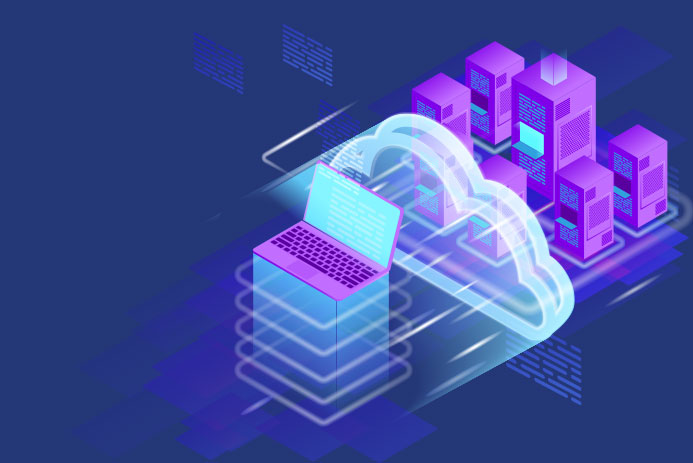
Interconnectivity solutions refer to various technologies and services designed to enhance the connectivity between different networks and systems. These solutions aim to provide direct, efficient, and reliable connections, often bypassing traditional internet pathways to reduce latency and improve performance.

  • Direct Connect Services: These services, offered by cloud providers, allow businesses to establish private connections between their on-premises infrastructure and cloud environments. Cloud Interconnect provide dedicated connections that bypass the public internet, ensuring better performance and security.
  • Network Exchanges: Internet Exchange Points (IXPs) and carrier-neutral data centers facilitate peering between Telco’s, networks, enabling faster and more reliable data transfer. These exchanges can significantly reduce latency and enhance overall network performance.
  • SD-WAN (Software-Defined Wide Area Network): SD-WAN technology provides a more flexible and cost-effective way to manage wide area networks. It allows businesses to optimize their cloud connections by dynamically routing traffic based on real-time network conditions.
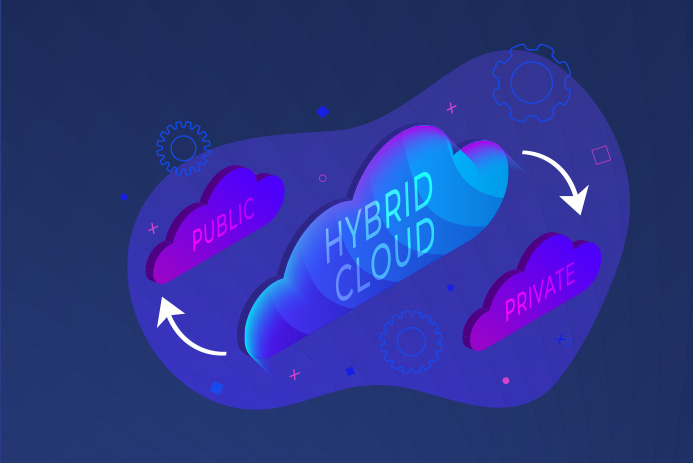
  • Hybrid Cloud Solutions: These multi cloud solutions combine on-premises infrastructure with cloud services, allowing businesses to leverage both environments, connectivity plays a very vital role in Hybrid / multi-cloud solutions.  Without robust connectivity there is no success for Hybrid / multi-cloud solutions.  Hybrid cloud strategies can benefit from interconnectivity solutions that link different cloud environments and on-premises systems.

Enhancing Access to Global Cloud Providers

Interconnectivity solutions play a critical role in overcoming several challenges associated with accessing global cloud providers:

  • Improved Performance: Traditional internet connections can be unpredictable, with fluctuating speeds and latency. Direct connect services and network exchanges provide more consistent performance by reducing the number of hops data needs to make. This is particularly beneficial for applications requiring real-time processing and low latency, such as live video streaming or financial transactions.
  • Ease of consumption: Hyperscale cloud providers offer their services over internet. Internet has its own challenges and limitations from enterprise point of view. Getting the private connectivity with hyperscale cloud provider is not only time consuming but it involves multiple service providers. Interconnectivity services solve this problem by combining all the required services in bucket and offer it as a single product.
  • Enhanced Security: Security is a major concern for businesses when transferring sensitive data to and from the cloud. Interconnectivity solutions like direct connections offer a private path that is less susceptible to cyber threats compared to public internet connections. Additionally, with Yotta ‘s Global Cloud Konnect, network exchanges and SD-WAN can provide enhanced security features such as encryption and traffic monitoring.
  • Scalability and Flexibility: As businesses grow, their connectivity needs evolve. Interconnectivity solutions offer scalable options that can easily adapt to changing requirements. For instance, SD-WAN allows businesses to add or remove network resources without significant disruptions, ensuring that their cloud connections remain efficient and cost-effective.
  • Cost Efficiency: While setting up direct connections and network exchanges may involve an initial investment, they can lead to cost savings in the long run. By reducing latency and optimising network traffic, businesses can lower their data transfer costs and improve their return on investment.
  • Global Reach: For multinational companies, accessing cloud services from various geographic locations is essential. Interconnectivity solutions facilitate global reach by enabling seamless connections across different regions. This ensures that businesses can access their cloud resources regardless of where their operations are based.

Real-World Applications and Benefits
To illustrate the impact of interconnectivity solutions, consider a multinational corporation with data centers in North America, Europe, and Asia. By leveraging direct connect services and network exchanges, this corporation can ensure that its global offices have reliable and fast access to its cloud resources. This setup not only enhances operational efficiency but also provides a better user experience for employees and customers worldwide. Similarly, a financial services firm relying on real-time trading applications can benefit from reduced latency and improved performance by using SD-WAN and direct connect solutions. This ensures that their transactions are processed quickly and securely, maintaining their competitive edge in the market.

Future Trends and Considerations
As cloud technology continues to evolve, interconnectivity solutions will become even more advanced. Emerging trends such as edge computing, which involves processing data closer to the source, will further highlight the need for efficient and reliable connectivity solutions. Businesses should stay informed about these trends and consider how they can integrate new technologies into their interconnectivity strategies. Moreover, the rise of hybrid and multi-cloud environments will necessitate even more sophisticated interconnectivity solutions. Businesses will need to manage connections across various cloud providers and on-premises systems, making it essential to choose solutions that offer flexibility and scalability.

Conclusion
Leveraging Yotta’s Global Cloud Konnect solutions is key to enhancing access to global cloud providers. By improving performance, security, scalability, and cost efficiency, these solutions enable businesses to fully harness the potential of cloud computing. It offers effortless connectivity to leading global cloud services like Microsoft Azure, AWS, Google Cloud, and Oracle Cloud through a unified link between your data center and the DE-CIX location.

Staying ahead of connectivity trends will be crucial for maintaining a competitive edge and ensuring seamless access to global cloud resources. Investing in the right interconnectivity solutions today can pave the way for a more connected and efficient future.


Need of Sovereign Cloud in India

“Over the past year, the Indian government has drafted and introduced multiple policy instruments which dictate that certain types of data must be stored in servers located physically within the territory of India. These localization gambits have triggered virulent debate among corporations, civil society actors, foreign stakeholders, business guilds, politicians, and governments” – The Internet Society of India.

The vision outlined by the Government of India for establishing digital data sovereignty is approaching its final stages. This implies the practice of storing and securing data, ensuring its residency aligns with regulations. This also involves confining the geographic location where citizens’ data is stored and processed within the governing laws of the country.

Challenges with Public Cloud Providers on Data Sovereignty

Cloud migration in India is growing rapidly, but there are critical challenges that need to be re-examined by various governments and enterprises-

  • Legal and Regulatory Compliance: Public cloud providers often operate across various jurisdictions, making it challenging to ensure compliance with diverse and evolving data protection and privacy regulations in different regions.
  • Data Localisation Concerns: Countries, including India, are moving towards implementing strict regulations that mandate certain data to reside within their borders. Public cloud services may encounter challenges in meeting these residency requirements, potentially resulting in legal and regulatory issues.
  • Security and Privacy Risks: Entrusting sensitive data to third-party public cloud providers may raise security and privacy concerns. Organisations must carefully assess the provider’s security measures and data handling practices.
  • Limited Control: Users of public cloud services may have limited control over the physical location of their data and the infrastructure supporting it. This lack of control can be a barrier for organisations with specific data residency or sovereignty requirements.
  • Data Access and Retrieval Challenges: Depending on the location of the public cloud data center, there may be challenges related to data access speed and latency, impacting performance for users located in different regions.
  • Vendor Lock-In: Organisations may face challenges if they decide to switch cloud providers due to contractual and technical complexities. This can result in dependencies on a specific provider, limiting flexibility.
  • Inconsistent Security Standards: Different public cloud providers may have varying security standards and practices, making it difficult for organisations to maintain a consistent level of security and compliance across multiple cloud environments.
  • Political and Geopolitical Risks: Changes in political or geopolitical landscapes can impact the regulatory environment and potentially affect the data sovereignty landscape, adding uncertainty for organisations relying on public cloud services.

Navigating Regulatory Landscapes

To adhere to this approach, India currently has existing policies that address localisation requirements based on the type of data, particularly in sectors such as banking, telecom, and health. These include:

  • RBI Notification on ‘Storage of Payment System Data’, the FDI Policy 2017
  • The Unified Access License, and the Companies Act, 2013 and its Rules
  • The IRDAI (Outsourcing of Activities by Indian Insurers) Regulations, 2017
  • National M2M Roadmap
  • Digital Personal Data Protection (DPDP) Act, 2023
  • MEITY – Cloud Policy

These policies largely covered the key components such as enabling innovation, improvement in cyber security and data locational and enhancing national security, protecting against foreign surveillance, and defining strategy towards data sovereignty and localisation. And, considering the Geo-political challenges which the country faces, data localisation and sovereignty are going to be a critical component for policymakers.

The Ministry of Electronics and Information Technology (MeitY) has already established the National Government Cloud with empanelled service providers to ensure that sensitive data, including government and defense-related information, is stored locally. This initiative is to be considered as the initial step toward data localisation.

Some international examples of data and consumer protection rules include The US CLOUD Act (2028) China’s Cyber Security Act (2017) and the famous UK and EU GDPR (2018). There are a few industry-specific laws that cover the data localisation principles such as HIPAA, PCI DSS, BaFin, FISMA, GAIA-X, EBA, etc.

Need of Sovereign Cloud Framework

To overcome the globally dominated digital transformation strategies and to ensure data sovereignty and security, the innovation and development of sovereign cloud frameworks become a critical aspect of national technological strategies.

This technology framework should have the capability to provide:

  • Data Localisation
  • Government Compliances
  • Customisation Capabilities

Summary

In summary, to align with the national vision, Government and Private organisations should adopt the Data Location Approach in the cloud computing ecosystem to safeguard critical national data which will serve as a key enabler for economic growth and innovation. Yotta, as a cloud service provider, aligns with this vision by offering cloud services to the government and enterprises. These services are developed in India, hosted in India, and adhere to data location and sovereignty principles.

Embracing the Potential of Cloud Computing

In today’s swiftly evolving digital realm, the concept of “Cloud Computing” has gained remarkable prominence. Despite its established presence for nearly two decades and the clear indications of its potential to enhance business efficiencies, reduce costs, and confer competitive advantages, a significant portion of the business community has yet to fully embrace it. According to a survey conducted by the International Data Group, 69% of businesses are already leveraging cloud technology in some capacity, while an additional 18% express intentions to integrate cloud-computing solutions in the future. But what precisely does cloud computing entail, and why has it emerged as a transformative force for both enterprises and individuals? This blog post delves into the foundational aspects of cloud services, uncovering the core principles and advantages that have thrust cloud computing into the forefront of contemporary technology.

Cloud Computing: Revolutionising Data Management

In the dynamic digital era, the term “cloud computing” has surged in significance, revolutionising how essential computing services like storage, processing power, networking, and software are delivered through the internet, commonly referred to as “the cloud.” This transformative shift eradicates the need for physical on-site infrastructure, affording users the seamless convenience of remote access to and on-demand utilisation of resources. Effectively creating a virtual domain, the cloud hosts data and applications on remote servers, enabling access from virtually anywhere with an internet connection. Fueled by the escalating data demands of our digitally evolved society, the mainstream adoption of “cloud computing” has become inevitable. As businesses contend with the complexities of upkeeping crucial information, programs, and systems on local servers, the appeal of this solution becomes increasingly apparent. Despite its longstanding presence since the internet’s inception, the widespread integration of this concept within businesses has gained considerable momentum only in recent times.

Seamless Accessibility and Data Storage

Cloud computing functions similarly to web-based email clients, granting users unfettered access to system features and files without the need for local storage. Many individuals unknowingly engage with cloud computing through everyday applications like Gmail, Google Drive, and social media platforms like Facebook and Instagram, all operating on cloud-based frameworks. Users rely on cloud-hosted servers for data storage, ensuring secure accessibility. While advantageous for personal use, these services hold even greater value for businesses, facilitating secure, efficient access to extensive data volumes through online network connections. In a connectivity-driven world, cloud computing revolutionises data management, fundamentally transforming how both individuals and organisations interact with and harness their digital resources.

Benefits of Cloud Computing:

  • Scalability and Flexibility: One of the primary advantages of cloud services is their scalability and flexibility. Businesses can easily adjust their computing resources up or down to match their requirements at any given time. This elasticity allows organisations to handle varying workloads and accommodate changes in demand without the need for significant upfront investments in hardware or infrastructure.
  • Cost-Efficiency: Cloud computing eliminates the need for businesses to invest heavily in purchasing and maintaining physical hardware. Instead, they can opt for a pay-as-you-go model, where they only pay for the computing resources they actually use. This cost-effective approach is particularly beneficial for startups and small businesses with limited budgets, as well as larger enterprises seeking to optimise their IT expenditures.
  • Accessibility: Cloud services provide the advantage of remote accessibility, enabling employees to access data, applications, and resources from virtually anywhere with an internet connection. This level of accessibility fosters collaboration among teams spread across different locations, leading to increased productivity and streamlined workflows.
  • Reliability and Redundancy: Reputable cloud providers often offer robust infrastructure with redundant systems and backup capabilities. This redundancy ensures data integrity and minimises the risk of downtime due to hardware failures or other technical issues. Cloud services often include built-in data backup and disaster recovery options, providing businesses with peace of mind regarding the safety of their critical information.
  • Innovation and Agility: Cloud computing empowers businesses to rapidly deploy new applications and services without the delays associated with procuring and setting up physical hardware. This agility allows organisations to seize market opportunities more quickly and experiment with new ideas, fostering innovation and a competitive edge. Moreover, the cloud’s infrastructure can support advanced technologies like artificial intelligence, machine learning, and big data analytics, enabling businesses to harness these tools without the need for extensive infrastructure investment.

To summarise, cloud computing has fundamentally transformed the way both businesses and individuals engage with technology, and Yotta proudly leads this groundbreaking technological shift. While cloud computing presents an array of advantages, Yotta prioritises the paramount task of addressing security apprehensions and fortifying data protection. Our robust security measures seamlessly complement the security protocols of businesses, ensuring an unparalleled level of safeguarding for sensitive information.

Yotta’s Enterprise Cloud Services, hosted within the world’s second-largest Tier IV datacenter-Yotta NM1, located in Navi Mumbai and Yotta D1 data center in Greater Noida equips businesses with a resilient, secure, and exceptionally cost-effective range of cloud services encompassing compute, storage, connectivity, and business continuity. Enriched with a comprehensive suite of features, it is accompanied by an impressive infrastructure uptime SLA of 99.99%. Our self-service portal empowers you with complete control, and the optional managed cloud services ensure round-the-clock assistance from certified cloud professionals.

The transition from traditional on-premises infrastructure to cloud services heralds a realm of new possibilities, unlocking dimensions of scalability, efficiency, and innovation. As technology perpetually evolves, embracing cloud computing transcends mere choice—it evolves into a strategic necessity for maintaining a competitive edge within the dynamic landscape of today’s digital world.

Why adopting Hybrid Cloud architecture is becoming a norm in the enterprise world

For the last decade or so, cloud computing has been the focus of CIO and IT decision makers’ conversations.  The pandemic that began in 2020, worldwide, however, has been an inflection point for organizations, large and small, across sectors, fast-tracking adoption of digital and cloud-led technologies, ensuring only companies who adapted to this pace of digital transformation will survive. Remote working has seeped into the mainstream culture and more than a year later, work from home seems to be here to stay. In such an environment, business leaders need technology platforms and tools enabling businesses to operate efficiently without disruption.

Cloud technologies are at the heart of this change, as security conscious businesses look for newer and emerging avenues to accelerate their digital transformation, while securing prized and sensitive business information and workloads. As per IDC Worldwide Semiannual Public Cloud Services Tracker, India’s public cloud services market, including Infrastructure as a Service (IaaS), Platform as a Service (PaaS), and Software as a Service (SaaS), touched $1.6 billion (INR 11,680 crore) for the first half of 2020. Furthermore, it states that the overall India public cloud services market is likely to reach $7.4 billion by 2024 (INR 54,020 crore), growing at a CAGR of 22.2 percent for 2020-24.

The exponential rise in data, however, demands the computing and processing needs of cloud architecture be elastic for data deployment models. This is where a new model of cloud computing comes to the rescue: Hybrid cloud. Hybrid cloud is a computing environment that combines a dedicated Compute instance or private cloud hosted in service provider DC or at captive datacenter with a public cloud, allowing data and applications to be shared between them.

Hybrid model is here to stay

As per a recent survey by IBM Institute of Business Value (IBV), hybrid cloud adoption among Indian businesses is expected to grow by 49% with the average organisation using nearly six hybrid clouds. With the increased full hybrid, multi-cloud platform technology and operating model at scale, businesses can derive 2.5 times the value compared to a single platform, single cloud vendor approach. In a nutshell, when computing and processing demands increase beyond an on-premises datacenter’s capabilities, organisations can use the cloud services to complement its existing capabilities, instantly scale capacity up or down, avoid time and cost of purchasing, installing, maintaining new servers that they may not always need.

In the coming years, Indian enterprises that are ready to bet big with an appetite for risk, will see returns from the hybrid cloud infrastructure, which is secure, interoperable, open, and free from vendor lock-in. In fact, organisations are already achieving business transformation by leveraging hybrid, multi-cloud platform technology. According to Gartner, majority of the large and midsize organisations have adopted an approach to IT that’s build on hybrid multi-cloud i.e. on-premises cloud combined with more than one public cloud.

With market dynamics shifting, partly due to the ongoing pandemic crisis, customer experience will ultimately define the brand-consumer relationship. And with a hybrid cloud infrastructure, enterprises can mine unlimited, unstructured data and run business analytics on them, especially in the retail sector. For example, India’s online retailer Myntra has been using its cloud and AI data to analyse customer preferences during the last year or so. With this, Myntra has been able to help brands by providing insights on what consumers really want, in addition to helping them move stocks quickly during the lockdown.

From an organisation-employee perspective, what we are currently seeing is a culture where every action and decision is rooted in remote working. Organisations must keep employees, where they are, while keeping them safe. Therefore, tools such as work from anywhere cloud services such as Desktop-as-a-Service/Virtual desktop infrastructure and Network-as-a-Service became must have services amid COVID-19 crisis. They also enable enterprises to align their workloads, on-premises or on cloud that is in sync with latency issues, regulations, data sovereignty and legacy data systems. In other words, for companies looking to build on their digital strategy centered around maximizing existing on-premises investments, an effective multi-edge hybrid approach by keeping the business objective and operational efficiency same is more important than ever.

Colocation providers can help accelerate your Hybrid Cloud strategy

Today, companies no longer want to deal with maintaining and operating a captive data center due to heavy upgrading costs and security concerns. Migrating to highly scalable colocation data centers is emerging as a customer preference.  Additionally, customers are not just looking for rack spaces but an end-to-end solution provider who can take care of all their IT needs such as cloud, network, security, etc.

As enterprises pivot to hybrid cloud architectures, data center service providers, particularly with colocation services, are now using innovative ways to integrate their platforms with hybrid models. Global data center operators are investing in developing an ecosystem of solutions that enable clients to assemble and deploy hybrid cloud solutions on top of their traditional infrastructure.

Sensing the underlying opportunities, most of the leading data center players are developing an architecture that can evolve over time and scale up in response to newer market needs. Today, they offer public cloud as well as provide seamless integration and migration services with the likes of AWS/AZURE/GOOGLE/ORACLE cloud. And with the help of innovative models like ‘Everything-as-a-Service’, these service providers are not only serving large enterprises and cloud operators with their robust infrastructure but also offering managed services to SMEs, SOHOs, and Start-ups.

In conclusion, for businesses looking to take back power in their own hands, by custom designing their own IT infrastructure, with a practical approach realigned with their past, present, and future in mind, it’s worth making an investment in the hybrid cloud architecture.

Opinion: How govt’s focused approach is making ‘Cloud Vision for India 2022’ a reality

Cloud is not just a lever for controlling costs, but also a huge catalyst or transformational agent for being the foundation for enabling quick adoption of emerging technologies such as AI and Blockchain.

India is an aspiring and incomparable nation when it comes to digital ambitions and scale. Landmark projects like Aadhaar, the Aarogya Setu app, or DigiLocker, are just some of the examples of India’s digital prowess.

Given the scale at which government departments operate, cloud is the perfect platform for accelerating e-governance initiatives. From a policy point of view, already a series of initiatives have been taken to ensure that India has a strategic advantage concerning the cloud.

The Government of India has announced GI Cloud (now called ‘Meghraj’) – an initiative to ensure optimum usage of IT spending by the government while simultaneously giving the impetus to improve the adoption of e-governance initiatives using the cloud. The Ministry of Electronics and Information Technology (MeitY) has created a reference architecture to guide government departments to build their cloud deployment architecture with recommended components and activities.

The National Digital Communications Policy 2018 envisions establishing India as a global hub for cloud computing, content hosting and delivery, and data communication systems and services. It aims to do this by enabling regulatory frameworks and incentives for promoting the establishment of international data centers, content delivery networks, and interconnect exchanges in India.

Similarly, the National Data Center Policy, which aims at making India a Global Data Center hub, promotes investment in the sector, propels digital economy growth, and enables provisioning of trusted hosting infrastructure to fulfil the growing demand.

The potential of the cloud

In India, cloud computing has ensured the success of national initiatives and schemes such as Swachh Bharat Mission, e-Hospital, National Scholarship, My-Gov and e-Transport. One of India’s most landmark initiatives, the Government e-Marketplace (GeM) uses a multi-cloud architecture to ensure scalability. Today, the GeM serves over 50,000 buyer organisations and has a listing of over 19 lakh products and more than 80,000 services.

NIC’s SaaS-based service, S3WaaS, has empowered district administrators to create, configure and deploy scalable and accessible websites without much effort and technical knowledge. Another successful example is DigiLocker, a cloud-based platform for the issuance, sharing, and verification of critical lifelong documents or certificates. With more than 57.13 million users and 4.27 billion issued documents, DigiLocker has proved to be one of the biggest success stories of cloud in the government.

Last year, understanding the critical importance of the cloud in providing the foundation for enabling the growth of emerging technologies such as AI, India’s national policy think-tank organisation, NITI Aayog, suggested the creation of an AI-based cloud computing platform called AIRAWAT (AI Research, Analytics and Knowledge Assimilation).

Similarly, the National Highway Authority of India (NHAI), announced last year that it had gone fully digital with the launch of a unique cloud-based and AI-powered big analytics platform. All project documents and correspondences related to NHAI will be stored in a cloud-based data lake, which is linked with GIS tagging and a unique project ID, so that project data can be retrieved easily from any location.

The Indian Railways has given the responsibility of deploying open source Hospital Management Information System (HMIS), an integrated clinical information system, for its 125 health facilities and 650 polyclinics across the country for improved hospital administration and patient healthcare, using a cloud platform.

Emerging use cases of cloud

With the cost of providing compute and storage capabilities coming down drastically, it makes much more sense for government departments to leverage the cloud. The other big reason is the quick pace of adoption for emerging technologies such as AI, ML, Big Data Analytics, or IoT.

In India, many states have proactively taken several pro-cloud initiatives. For example, the Government of Maharashtra in 2018, became the first state to unveil a public cloud policy. Looking at the benefits of cloud-based storage, the Government of Maharashtra mandated its departments to shift their data storage requirements to the cloud.

Similarly, in October 2020, the Government of Telangana announced that it was making it mandatory for all its departments to deploy their existingor new applications on the cloud except for those applications that contained sensitive or confidential data.

Another classic example is Smart Cities, wherein various state governments are leveraging cloud and other digital technologies to provide next generation services to citizens. Madhya Pradesh was the first state to launch India’s first cloud-based Common Integrated Data Centre, Disaster Recovery Centre and Integrated Control and Command Centre (ICCC).

The ICCC is enabling the Madhya Pradesh state administration to monitor and administer multiple city civic utilities and citizen services across seven cities in the state through a central cloud. Now, other states like Gujarat, Rajasthan, Andhra Pradesh, Telanagana, Tamil Nadu, Karnataka, and Uttar Pradesh are following the suit.

These examples highlight why the move to the cloud is now essential or critical for government departments. Due to the capacity constraints, there are instances where the state data center has faced challenges in scaling up and meeting the requirements in a time-bound manner, which has led to poor application downtime and poor user experience.

Key trends that government departments should look out for

Today, the Covid-19 pandemic has made it imperative for accelerating digital delivery of public services. This has put immense pressure on government departments to quickly roll out new platforms or initiatives. With support for emerging technologies such as AI, ML or Blockchain, the cloud is the perfect platform for testing out new innovations.

The cloud is also a proven platform for automation – a critical need in government departments today, as they grapple with challenges related to skilled manpower and scaling up to meet public demand for services. For example, AI-powered chatbots can answer common queries easily, while RPA can be used to automate routine tasks.

The pandemic has also made remote working a reality now. This is applicable to the government sector too, as it also needs to give government employees the same flexibility as given to employees from the private sector. The cloud is perfect for giving employees secure and reliable access to government applications and data.

The cloud allows government departments to acquire resources based on actual requirements, with the capability to increase or decrease computing resources as per demand. Globally, and in India too, government departments are increasingly feeling challenged in containing costs and providing the required infrastructure.

For instance, the state-owned Bank of Baroda has become the first public sector bank to consider Work from Home policy for a section of its employees. For Bank of Baroda to leverage staff resources better, the cloud will prove to be an excellent platform for creating flexibility without significant corresponding investments.

This flexibility opens up several possibilities – one can think of organisations such as Income Tax which receives huge load for filing returns in the last few days of the deadline given by the government. There are many such examples of departments across the government, which receive seasonal demand spikes. Another notable example is the dedicated web portal called Co-WIN (COVID -19 Vaccine Intelligence Network) which has been launched recently.

This is a complete cloud-based IT solution for planning, implementation, monitoring, and evaluation of the Covid-19 vaccination program in the country. While we keep hearing about technical glitches in the Co-WIN platform or the portal getting crashed (when millions of people recently rushed to register for the COVID vaccination), one cannot deny the fact that without the cloud, an initiative of this scale and size would be unimaginable.

As the above examples show, the cloud today is not just a lever for controlling costs, but also a huge catalyst or transformational agent for being the foundation for enabling quick adoption of emerging technologies such as AI and Blockchain. Today, the question for government departments is not why you should adopt the cloud, but when and how fast you can use the cloud to your advantage.