









A Comprehensive Guide to Oracle Database Migration: Advisory, Planning, Execution, and Support 

Migrating an Oracle Database is a significant process for organisations aiming to modernize infrastructure, improve performance, or transition to the cloud. Whether you’re upgrading versions or switching platforms, a structured approach is crucial for success. Successful migrations are not only about moving data but also about ensuring continuity, scalability, and optimal performance post-migration. A comprehensive approach enables organisations to take advantage of new functionalities while minimising disruptions to ongoing operations.  

This guide outlines the key phases of Oracle Database migration: Advisory, Planning, Execution, and Support, highlighting important considerations throughout the process. 

  1. Advisory Phase

This phase establishes the foundation for your migration project by assessing the current environment and understanding business requirements. 

  • Current Environment Assessment:  Evaluate the hardware, software, and network configurations of your existing database to understand its current state. This analysis provides a baseline for migration planning and identifies any infrastructure upgrades needed. 
  • Business Requirements:  Define your migration goals, whether they involve cost reduction, performance improvements, or enhanced security features. Clearly outlining these objectives will guide decision-making and ensure alignment with overall business priorities. 
  • Feasibility Study:  Consider the different migration options, such as moving to the cloud or maintaining an on-premises setup, while evaluating each for technical and financial feasibility. Factor in acceptable downtime and budget constraints to select the most practical migration approach for your organisation. 
  1. Planning Phase

In this phase, a detailed roadmap for migration is created to minimize risks and ensure smooth execution. 

  • Migration Strategy:  Develop a strategy that best fits your needs, such as a full database migration or a phased approach to minimize downtime. This tailored strategy will help streamline execution and align resources efficiently throughout the process. 
  • Data Mapping & Transformation:  Plan how data will be transferred, including any transformations or cleansing needed to ensure compatibility with the new environment. This step helps prevent data integrity issues and enables a smooth transition to the target system. 
  • Timeline & Resource Planning:  Set milestones to track progress, and assign team roles to clarify responsibilities. Clear timelines and role definitions keep the project organised and prevent resource bottlenecks. 
  • Risk Management:  Identify potential risks, from data loss to compatibility issues, and establish mitigation strategies, including backup and fallback plans. Proactive risk management minimizes unexpected disruptions and provides a safety net during migration. 
  1. Execution Phase

This is where the actual migration happens, requiring careful coordination and testing. 

  • Pre-Migration Testing:  Conduct comprehensive tests in a staging environment that mirrors the production setup, checking for data integrity and performance issues. This testing phase helps identify potential errors and prepares the team for a successful migration. 
  • Data Migration:  Execute the actual data transfer, using methods such as replication, Oracle Data Pump, or other tools suited to the project’s needs. Ensuring data is transferred accurately and securely is critical to maintaining operational continuity. 
  • Cross-Platform Migration:  Address any platform-specific challenges that arise, such as endian conversion or compatibility adjustments between different operating systems. Managing these technical nuances is essential for ensuring a seamless experience on the target platform. 
  • Post-Migration Testing: Perform extensive validation testing to confirm the success of the migration, checking for data accuracy, system performance, and application compatibility. This step verifies that the new environment meets all operational requirements before going live.  
  1. Support Phase

Post-migration support is vital to maintain database stability and optimize performance. 

  • Monitoring: Use tools like Oracle Enterprise Manager to continuously monitor database performance and system health.  
  • User Training:  Effective training programs can boost adoption rates and help users transition smoothly, reducing the volume of post-migration support tickets.. 
  • Ongoing Support:  Robust ongoing support includes technical assistance to resolve issues promptly, regular performance tuning to maintain optimal efficiency, and scheduled updates to apply security patches and new features. 
  1. Special Considerations for Cross-Platform and Cloud Migrations
  • Platform Compatibility:  Verify that the target platform can support all features of the source platform, including hardware configurations, software dependencies, and specific database functionalities. This step minimises functionality gaps and reduces post-migration adjustments. 
  • Cloud Migrations:  Account for critical cloud-specific factors such as network latency, data security, and regulatory compliance to maintain performance and meet legal standards. Consider data residency requirements and cloud provider certifications to ensure the environment aligns with your organisation’s security policies. 
  • Upgrading to the Latest Version:  Use tools like Oracle’s Database Upgrade Assistant (DBUA) to streamline the upgrade process when migrating to newer Oracle Database versions. These tools help automate compatibility checks and optimise performance on the upgraded system, reducing the risk of manual errors. 

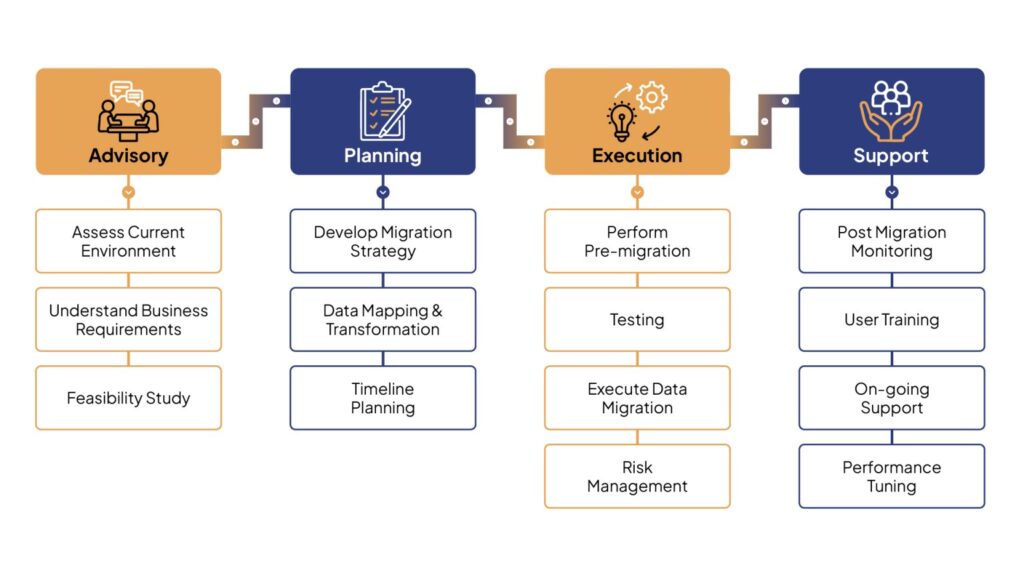
The following diagram illustrates the phases involved in Oracle Database migration: 

  1. Additional Tips for a Successful Migration
  • Communication: Keep stakeholders informed throughout the migration process. 
  • Backup and Recovery: Ensure robust backup and recovery plans. 
  • Performance Tuning: Focus on database optimization post-migration. 

Conclusion 

By following this structured approach, organizations can navigate Oracle Database migrations with confidence. Yotta’s Oracle Solutions & Managed Services offer expertise across each phase, ensuring a smooth transition to the cloud, platform switch, or version upgrade.  To make your Oracle Database migration seamless, Yotta’s Oracle Services provide end-to-end support, from advisory to execution and ongoing management. 

Exploring Multi Cloud Security: Best Practices for Protecting Your Data Across Cloud Platforms

Businesses are increasingly turning to multi-cloud computing strategies i.e. utilising services from multiple public cloud vendors. This approach offers significant advantages in optimising performance, cost, and flexibility. However, this flexibility comes with a cost: managing data security across diverse cloud environments presents a unique set of challenges.

Before looking at the best practices, let’s explore these challenges:

  1. Complexity of Management: Each cloud platform has its own security models, policies, and interfaces. Managing security effectively across all these platforms can be daunting.
  2. Data Privacy and Compliance: With data distributed across multiple jurisdictions, ensuring compliance with regulations becomes significantly more complex.
  3. Increased Attack Surface: Multiple cloud environments introduce more potential entry points for cyber attacks, expanding your attack surface.

Best Practices for Multi-Cloud Security

  • Unified Security Strategy – Developing a unified security strategy involves creating a comprehensive security policy that encompasses all cloud environments. A unified strategy ensures consistent security controls, regardless of the cloud provider, and facilitates easier management and monitoring.
  • Identity and Access Management (IAM) – IAM is critical in a multi-cloud environment. Implement strong authentication mechanisms such as multi-factor authentication (MFA) to ensure that only authorised users can access your data. Use centralised IAM solutions that integrate with all cloud platforms to provide a single point of control for user access.
  • Data Encryption – Encrypt data both at rest and in transit to protect it from unauthorized access. Each cloud provider offers its encryption tools, but using a unified encryption strategy ensures consistency. Additionally, manage your encryption keys securely, preferably using hardware security modules (HSMs) or cloud-native key management services.
  • Monitoring and Logging – Implement comprehensive monitoring and logging across all cloud platforms to detect and respond to security incidents promptly. Use centralized logging solutions that aggregate logs from all cloud environments. Tools like Security Information and Event Management (SIEM) systems can help correlate events from multiple sources, providing a holistic view of your security posture.
  • Regular Audits and Compliance Checks – Conduct regular audits and compliance checks to ensure adherence to security policies and regulatory requirements. Automated tools can help track compliance status and generate reports, making it easier to identify and address gaps. Ensure that your audit processes cover all cloud environments comprehensively.
  • Consistent Security Configuration – Use Infrastructure as Code (IaC) tools to automate the deployment of secure configurations. This approach minimises human error and ensures that security settings are uniformly applied across different environments.
  • Data Loss Prevention – Implement DLP strategies to prevent sensitive data from being exfiltrated or mishandled. Data Loss Prevention tools can identify, monitor, and protect sensitive data across multiple cloud environments. They can also enforce policies that prevent unauthorized data transfers.
  • Third-Party Risk Management – When using third-party services or integrating with third-party applications, assess their security posture to ensure they meet your security standards. Establish clear guidelines and contracts that define security responsibilities and expectations.

Adopting a multi-cloud strategy offers significant benefits but also introduces complex security challenges. By implementing these best practices, businesses can build a robust security framework that protects their data across diverse cloud environments.

Securing Your Multi-Cloud Environment with Yotta

Yotta’s Suraksha portfolio is a robust suite of cybersecurity solutions designed to strengthen your multi-cloud environment. Suraksha, meaning “protection” in Hindi, delivers a multi-layered, end-to-end approach to safeguard your data and applications from an ever-evolving threat landscape. It includes Cybersecurity Assessment Services, which provide a thorough analysis of your security posture and develop a tailored plan to address vulnerabilities.

The Identity & Access Management solution utilizes multi-factor authentication and role-based access control to ensure only authorised users can access data. Additionally, Suraksha’s Threat Management Services offer advanced threat intelligence, proactive vulnerability mitigation, swift incident detection and response, and a comprehensive cybersecurity approach that encompasses endpoint protection, network security, and continuous monitoring.

Yotta’s Global Cloud Konnect (GCK) simplifies secure multi-cloud management by offering a private direct connection, bypassing the public internet, between your data center and the DE-CIX point of presence at Yotta. This establishes a secure connection between your infrastructure and your preferred Cloud Service Providers (CSPs).

GCK leverages redundant fiber connectivity, extensive telco, and ISP presence to provide a private, direct connection that bypasses the internet, ensuring high bandwidth, low latency, and secure access to various cloud services. This approach not only eliminates the complexities and costs associated with maintaining multiple connections but also enhances performance and reliability by utilising Uptime Institute Gold certified Tier IV infrastructure. Whether enterprises are colocated at Yotta facilities or connecting from various Yotta connectivity sites, GCK ensures seamless, single-hop multi-cloud network connectivity to cloud services, enabling businesses to optimise their multi-cloud environments effectively and cost-efficiently.

The Role of ITSM in Digital Transformation

Businesses are constantly seeking means to improve efficiency, enhance customer experiences, and stay competitive. Digital transformation is at the heart of these efforts, enabling businesses to leverage technology to innovate and adapt. IT Service Management (ITSM) plays a crucial role in this transformation, serving as the backbone of an organisation’s IT infrastructure.

Understanding ITSM

IT Service Management (ITSM) focuses on the implementation and management of IT services that align with an organisation’s goals and objectives. It includes the processes and activities necessary to design, deliver, manage, and enhance IT services. As digital transformation accelerates, ITSM’s role becomes increasingly necessary for several reasons:

  • Efficiency and Automation: ITSM frameworks like ITIL (Information Technology Infrastructure Library) are crafted to streamline IT processes by automating routine tasks and integrating service management with business operations. This approach minimises manual intervention and errors. Automated service requests and proactive issue resolution further enhance agility, preventing costly bottlenecks and ensuring smooth operations across all departments. By addressing potential disruptions before they impact other services, ITSM helps maintain a consistent and uninterrupted workflow.
  • Enhanced Service Delivery: Effective ITSM ensures that IT services are delivered reliably and consistently. This consistency is crucial in the context of digital transformation, which frequently involves integrating new technologies and systems. Well-defined processes for incident management, problem management, and request fulfillment allow organisations to offer high-quality services that meet or exceed user expectations, fostering a flexible and responsive IT ecosystem.
  • Customer-Centric Approach: ITSM frameworks prioritise aligning IT services with the needs of end-users. This customer-centric approach involves understanding user requirements, addressing pain points, and continuously improving service delivery. By focusing on customer satisfaction and service quality, organizations can successfully drive their digital transformation initiatives and adapt to changing demands effectively.
  • Data-Driven Decision Making: ITSM provides valuable insights through comprehensive reporting and analytics. These insights enable organizations to make informed decisions about their IT infrastructure and services. By leveraging data, businesses can identify trends, predict potential issues, and optimize IT operations to better support their digital transformation goals.

 S-Cube by Yotta: Customising ITSM for Your Business Needs

While traditional ITSM solutions offer standardised approaches, they often fall short of meeting the unique requirements of individual organisations. This is where Yotta’s S-Cube comes into play. S-Cube is a cloud-based, full-stack platform designed to provide customised ITSM and helpdesk solutions tailored to your business needs.

  • Customisable ITSM Solutions: Unlike cookie-cutter platforms, S-Cube allows businesses to design workflows that resolve customer issues and tickets in a manner that suits their specific processes. The platform’s flexibility ensures that you can tailor ITSM applications to align with your organizational requirements without incurring excessive costs.
  • Actionable Insights and Interactive Reports: S-Cube provides interactive dashboards and customizable reports that offer actionable insights into IT service performance. These insights help organizations monitor, manage, and maintain their IT operations effectively, supporting informed decision-making and continuous improvement.
  • Efficient Ticket Management: With S-Cube, ticket logging is streamlined across multiple channels, including desktop, mobile, voice, and text. This enables quick, automated resolution of issues and ensures that tickets are managed efficiently through connected digital workflows.
  • Tailor-Made Helpdesk Management: S-Cube offers comprehensive helpdesk management features, including incident management, problem management, request management, knowledge management, workflow management, and AI-based chatbots. These features collectively enhance customer support, streamline workflows, and improve overall service delivery.
  • AI-Based Chatbot Integration: The platform includes context-based AI chatbots that accelerate IT service delivery by providing users with instant support and assistance. This integration enhances the efficiency of helpdesk operations and ensures that users receive timely responses to their queries.
  • Asset Management: As an add-on feature, S-Cube’s IT Asset Management module provides visibility and control over IT assets. It includes asset provisioning, purchase management, bar/QR code generation, and detailed reporting and analytics. This helps organizations track asset depreciation, manage costs, and optimize asset utilization.

Streamlining and Optimising IT Service Management

S-Cube by Yotta stands out as a powerful tool for organizations seeking to streamline and optimize their IT service management and asset management processes. With S-Cube, businesses can achieve seamless customer service, improve operational efficiency, and support their digital transformation initiatives effectively.

In summary, ITSM is a critical component of digital transformation, enabling organizations to manage and enhance their IT services in alignment with business goals. With S-Cube by Yotta, businesses can customize their ITSM solutions, automate processes, and gain valuable insights to drive success in an increasingly digital world.

Say Goodbye To Downtime With SAP Certified Solution from Yotta

In today’s always-on, digital-first business landscape, downtime is no longer an option. Enterprises that rely on SAP for their critical operations cannot afford system disruptions, as these can result in lost revenue, productivity setbacks, and damaged reputations. Yotta, a leader in IT infrastructure and cloud services, offers a cutting-edge, SAP-certified solution designed to eliminate downtime, maximise system performance, and enhance operational resilience.

The Business Challenge of Downtime
In the modern business environment, downtime translates directly into financial losses, missed opportunities, and operational inefficiencies. Companies running critical applications like SAP cannot afford prolonged outages, as they disrupt everything from supply chain management to customer relationship management (CRM), and from financial accounting to human capital management.

A recent study revealed that the average cost of IT downtime can be as high as Rs. 4.7 lacs per minute, depending on the size of the organisation. For businesses reliant on SAP, system disruptions can have even more severe implications, halting essential workflows and delaying decision-making processes.

This makes it crucial for organisations to deploy an infrastructure that guarantees high availability, optimal performance, and the ability to recover quickly in case of unforeseen disruptions. Yotta’s SAP-certified solution addresses these challenges by providing an environment where downtime is minimised, operational continuity is ensured, and performance is optimised.

Yotta’s SAP Certified Solution: Overview
Yotta’s SAP-certified solution offers an integrated platform designed to support mission-critical SAP applications with the highest standards of reliability, availability, and performance. The certification from SAP ensures that the solution meets SAP’s rigorous criteria for security, interoperability, and scalability, giving businesses confidence in its capabilities.

Key Features:

  • High-Availability Architecture: Yotta’s infrastructure is designed to provide near-zero downtime, ensuring 24/7 operations for your SAP systems.
  • Proactive Monitoring and AI-Driven Maintenance: Yotta leverages AI-driven monitoring systems to proactively identify potential risks and resolve issues before they lead to system failures.
  • Disaster Recovery and Backup: Built-in disaster recovery mechanisms ensure that data is backed up and that businesses can resume operations quickly after any disruption.
  • Flexible Cloud Integration: Seamlessly integrates with public, private, or hybrid cloud environments, offering businesses the flexibility to scale resources based on demand without compromising performance.

How Yotta Reduces Downtime
Downtime can arise from a variety of factors, including hardware failures, system overload, network issues, or software bugs. Yotta’s SAP-certified solution tackles these challenges through a comprehensive approach that combines architectural resilience, real-time monitoring, and advanced automation. Here’s how Yotta minimises downtime:

  • Resilience Through Redundancy
    Yotta’s infrastructure employs a high-availability architecture, which includes redundant hardware and failover mechanisms. This means that even if one component fails, another will take over immediately, minimizing service disruptions. Critical workloads are distributed across multiple nodes, ensuring that no single point of failure can halt operations.
  • Proactive Monitoring and Maintenance
    Yotta employs AI-driven monitoring systems that continuously analyse system performance, looking for early signs of potential issues. Whether it’s a spike in resource usage or a network latency issue, Yotta’s predictive analytics tools can alert administrators and even initiate automated responses to prevent downtime. This proactive maintenance ensures that minor issues don’t escalate into major outages.
  • Seamless Disaster Recovery
    In the event of a major disruption, such as a natural disaster or significant hardware failure, Yotta’s disaster recovery mechanisms kick in. The solution includes geographically dispersed backup sites that ensure your SAP environment can be restored quickly, minimizing downtime and data loss.
  • Scalable Cloud Infrastructure
    Yotta’s solution is cloud-agnostic, meaning it can easily integrate with public, private, or hybrid cloud platforms. This enables businesses to scale their SAP systems according to demand, ensuring that performance is maintained even during peak operational periods. By distributing workloads across the cloud, Yotta ensures that businesses can handle spikes in demand without experiencing system slowdowns or outages.

Business Benefits of Yotta’s SAP Certified Solution
Yotta’s SAP-certified solution provides several key benefits that directly address the needs of modern enterprises:

  • Cost Savings
    Reducing downtime directly translates into cost savings. By preventing outages and ensuring smooth operations, businesses can avoid the financial losses associated with downtime. Additionally, Yotta’s efficient resource management and cloud integration reduce IT overhead costs by allowing businesses to pay only for the resources they need.
  • Enhanced Business Continuity
    The solution’s high-availability design ensures that critical business operations remain uninterrupted. Whether it’s managing supply chains, processing customer orders, or generating financial reports, Yotta’s solution ensures that SAP systems remain operational, providing businesses with the confidence to operate continuously.
  • Optimised Performance
    Performance bottlenecks are a common issue in large SAP environments, particularly during periods of peak demand. Yotta’s solution optimises performance through dynamic resource allocation, ensuring that your SAP systems run efficiently and at maximum capacity, even during high-demand periods.
  • Scalability for Future Growth
    As businesses grow, their IT requirements increase. Yotta’s solution offers scalable infrastructure, allowing businesses to expand their SAP environment as needed without incurring downtime. This flexibility is crucial for businesses that are rapidly expanding or experiencing seasonal fluctuations in demand.

Yotta’s SAP-certified solution is trusted by businesses across industries for its reliability, scalability, and security.

SAP certification is more than just a seal of approval. It guarantees that Yotta’s solution has undergone rigorous testing and meets SAP’s stringent performance and security standards. This certification gives businesses peace of mind, knowing that their SAP services are supported by a robust, compliant, and fully optimized infrastructure.

Case Studies: Real-World Success

Case Study 1: Manufacturing Company
A global manufacturing company was experiencing frequent system downtimes due to overloaded legacy infrastructure. By migrating to Yotta’s SAP-certified solution, the company saw a 99.9% increase in system uptime and a 20% reduction in operational costs.

Case Study 2: Financial Services Firm
A financial services firm struggling with data security and disaster recovery implemented Yotta’s solution, gaining seamless cloud integration and high availability. The firm reported zero downtime during peak financial reporting periods, along with improved compliance with industry regulations.

Conclusion

Yotta’s SAP-certified solution is a game-changer for businesses that rely on SAP for their critical operations. By eliminating downtime, enhancing performance, and ensuring business continuity, Yotta enables organisations to focus on growth and innovation without worrying about system disruptions. Whether you’re looking to migrate to the cloud or optimize your existing infrastructure, Yotta’s solution offers the flexibility, reliability, and scalability that modern enterprises demand.

Don’t let downtime slow your business down. Contact Yotta today to learn how our SAP-certified solution can help you maximise uptime, reduce costs, and drive business success.

Leveraging Interconnectivity Solutions to Enhance Access to Global Cloud Providers

Multi Cloud computing has transformed the way businesses operate, offering scalable resources, cost efficiency, and flexibility. Major global cloud providers have established extensive data centers worldwide to cater to the growing demand for cloud services. However, despite their vast infrastructure, connecting to these providers can sometimes be challenging. The quality of this connection can impact everything from application performance to data security.

What Are Interconnectivity Solutions?

Interconnectivity solutions refer to various technologies and services designed to enhance the connectivity between different networks and systems. These solutions aim to provide direct, efficient, and reliable connections, often bypassing traditional internet pathways to reduce latency and improve performance.

  • Direct Connect Services: These services, offered by cloud providers, allow businesses to establish private connections between their on-premises infrastructure and cloud environments. Cloud Interconnect provide dedicated connections that bypass the public internet, ensuring better performance and security.
  • Network Exchanges: Internet Exchange Points (IXPs) and carrier-neutral data centers facilitate peering between Telco’s, networks, enabling faster and more reliable data transfer. These exchanges can significantly reduce latency and enhance overall network performance.
  • SD-WAN (Software-Defined Wide Area Network): SD-WAN technology provides a more flexible and cost-effective way to manage wide area networks. It allows businesses to optimize their cloud connections by dynamically routing traffic based on real-time network conditions.
  • Hybrid Cloud Solutions: These multi cloud solutions combine on-premises infrastructure with cloud services, allowing businesses to leverage both environments, connectivity plays a very vital role in Hybrid / multi-cloud solutions.  Without robust connectivity there is no success for Hybrid / multi-cloud solutions.  Hybrid cloud strategies can benefit from interconnectivity solutions that link different cloud environments and on-premises systems.

Enhancing Access to Global Cloud Providers

Interconnectivity solutions play a critical role in overcoming several challenges associated with accessing global cloud providers:

  • Improved Performance: Traditional internet connections can be unpredictable, with fluctuating speeds and latency. Direct connect services and network exchanges provide more consistent performance by reducing the number of hops data needs to make. This is particularly beneficial for applications requiring real-time processing and low latency, such as live video streaming or financial transactions.
  • Ease of consumption: Hyperscale cloud providers offer their services over internet. Internet has its own challenges and limitations from enterprise point of view. Getting the private connectivity with hyperscale cloud provider is not only time consuming but it involves multiple service providers. Interconnectivity services solve this problem by combining all the required services in bucket and offer it as a single product.
  • Enhanced Security: Security is a major concern for businesses when transferring sensitive data to and from the cloud. Interconnectivity solutions like direct connections offer a private path that is less susceptible to cyber threats compared to public internet connections. Additionally, with Yotta ‘s Global Cloud Konnect, network exchanges and SD-WAN can provide enhanced security features such as encryption and traffic monitoring.
  • Scalability and Flexibility: As businesses grow, their connectivity needs evolve. Interconnectivity solutions offer scalable options that can easily adapt to changing requirements. For instance, SD-WAN allows businesses to add or remove network resources without significant disruptions, ensuring that their cloud connections remain efficient and cost-effective.
  • Cost Efficiency: While setting up direct connections and network exchanges may involve an initial investment, they can lead to cost savings in the long run. By reducing latency and optimising network traffic, businesses can lower their data transfer costs and improve their return on investment.
  • Global Reach: For multinational companies, accessing cloud services from various geographic locations is essential. Interconnectivity solutions facilitate global reach by enabling seamless connections across different regions. This ensures that businesses can access their cloud resources regardless of where their operations are based.

Real-World Applications and Benefits
To illustrate the impact of interconnectivity solutions, consider a multinational corporation with data centers in North America, Europe, and Asia. By leveraging direct connect services and network exchanges, this corporation can ensure that its global offices have reliable and fast access to its cloud resources. This setup not only enhances operational efficiency but also provides a better user experience for employees and customers worldwide. Similarly, a financial services firm relying on real-time trading applications can benefit from reduced latency and improved performance by using SD-WAN and direct connect solutions. This ensures that their transactions are processed quickly and securely, maintaining their competitive edge in the market.

Future Trends and Considerations
As cloud technology continues to evolve, interconnectivity solutions will become even more advanced. Emerging trends such as edge computing, which involves processing data closer to the source, will further highlight the need for efficient and reliable connectivity solutions. Businesses should stay informed about these trends and consider how they can integrate new technologies into their interconnectivity strategies. Moreover, the rise of hybrid and multi-cloud environments will necessitate even more sophisticated interconnectivity solutions. Businesses will need to manage connections across various cloud providers and on-premises systems, making it essential to choose solutions that offer flexibility and scalability.

Conclusion
Leveraging Yotta’s Global Cloud Konnect solutions is key to enhancing access to global cloud providers. By improving performance, security, scalability, and cost efficiency, these solutions enable businesses to fully harness the potential of cloud computing. It offers effortless connectivity to leading global cloud services like Microsoft Azure, AWS, Google Cloud, and Oracle Cloud through a unified link between your data center and the DE-CIX location.

Staying ahead of connectivity trends will be crucial for maintaining a competitive edge and ensuring seamless access to global cloud resources. Investing in the right interconnectivity solutions today can pave the way for a more connected and efficient future.

Oracle KVM vs. VMware: In-Depth Feature Analysis and Market Growth Insights

Virtualisation is a cornerstone of modern IT infrastructure, enabling businesses to optimise resources, scale efficiently, and reduce costs. Although VMware is a major player in this space, Oracle KVM is fast catching up. This blog post compares their features, costs, market growth, and prospects, and explores why Oracle KVM may be particularly advantageous for Oracle database customers.

Feature Comparison

FeatureOracle KVMVMware
Hypervisor TypeXen-basedESXi (bare-metal)
Management ToolsOracle Linux Virtualization ManagervCenter Server
Supported Guest OSBroad range including Oracle Linux, Windows, SolarisWide range including Linux, Windows, Solaris
IntegrationTight integration with Oracle services and productsExtensive third-party integrations
High AvailabilityYesYes
Live MigrationYesYes (vMotion)
Storage ManagementOracle VM Storage ConnectvSAN, VMFS, NFS
NetworkingOracle VM Virtual NetworkingNSX
Hard PartitioningYesNo
Backup and RecoveryOracle Recovery Manager (RMAN)vSphere Data Protection, third-party tools
LicensingIncluded with Oracle productsSeparate licensing

Cost Comparison

AspectOracle KVMVMware
License CostIncluded with Oracle productsVaries; Higher costs, especially for vSphere Enterprise Plus
Support CostGenerally Lower, included with Oracle support contractsHigher Support costs, depending on service level
Initial Cost SetupLower, due to inclusion with OracleHigher, due to separate licensing
Total Cost of Ownership (TCO)Lower for Oracle-Heavy environmentsHigher especially with additional features

Growth Trajectory and Market Dynamics

Oracle KVM:

  • Market Growth: Oracle KVM has experienced steady growth, particularly in enterprises heavily utilising Oracle databases and applications. Its seamless integration with Oracle products makes it a compelling choice for such environments.
  • Future Prospects: The future of Oracle KVM is promising, with ongoing enhancements to support the new Oracle database and application features, aligning with Oracle’s cloud strategy.

VMware:

  • Market Growth: VMware remains a dominant player in the virtualisation market, known for its extensive feature set and robust ecosystem. It is preferred for large-scale and heterogeneous environments.
  • Future Prospects: VMware’s future is strong, driven by innovation in hybrid cloud, edge computing, and Kubernetes integration (via Tanzu).
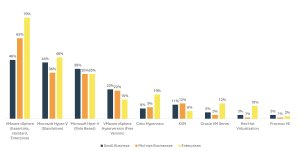
Oracle-KVM-vs-VMware-Feature-Comparison-chart

[Src: Spiceworks survey]

Why Choose Oracle KVM?

  • Tight Integration with Oracle Products: Oracle KVM provides optimised performance and easier management for Oracle-heavy environments due to its seamless integration with Oracle databases and applications.
  • Cost Efficiency: Inclusion with Oracle products mean lower licensing and support costs, resulting in a reduced total cost of ownership (TCO) for organizations invested in Oracle solutions.
  • Hard Partitioning: Oracle KVM supports hard partitioning, essential for Oracle database customers to comply with licensing policies. This feature allows precise allocation of CPU resources, potentially reducing licensing costs and improving performance.
  • Simplified Management: Oracle KVM Manager offers an intuitive interface for managing virtual environments, simplifying administrative tasks and reducing operational overhead.
  • Robust Security and Compliance: Oracle KVM aligns with Oracle’s security standards, ensuring enterprise data remains secure and compliant with industry regulations.

Hard Partitioning: A Key Benefit for Oracle Database Customers

Hard partitioning in Oracle KVM enables administrators to allocate specific CPU cores to virtual machines, which is beneficial for Oracle database customers because it:

  • Optimises Licensing Costs: Limits the number of CPU cores allocated to Oracle databases, helping to manage and potentially reduce licensing costs.
  • Improves Performance: Dedicated resources ensure consistent performance for critical Oracle database workloads, reducing the risk of resource contention.
  • Enhances Compliance: Helps organisations comply with Oracle’s licensing policies, avoiding potential legal and financial issues.

Conclusion

Both Oracle KVM and VMware offer robust virtualisation solutions, each with distinct advantages. Oracle KVM is particularly suited for enterprises reliant on Oracle databases and applications, providing cost efficiency, tight integration, and the benefit of hard partitioning. VMware remains a versatile choice for diverse and large-scale environments, with a comprehensive feature set and a strong market presence. Organisations should consider their specific needs, existing investments, and future growth plans when choosing between Oracle KVM and VMware. For Oracle-centric environments, Oracle KVM offers compelling benefits that align well with Oracle’s broader ecosystem and strategic direction.

Yotta’s suite of Oracle solutions empowers businesses to streamline operations and achieve transformative outcomes by eliminating complexities. With all Oracle services— from software and licenses to infrastructure—delivered under one roof, Yotta simplifies deployment and management, backed by dedicated technical support and robust infrastructure. The flexible, pay-as-you-go model ensures transparent pricing, while Yotta’s Oracle Service Portfolio covers everything from consulting and migration to database implementation and managed services, maximizing success across business functions.

Data Privacy in the Cloud Era: Key considerations for safeguarding sensitive information across cloud services

Cloud computing has transformed the IT landscape, allowing businesses to leverage remote servers for data storage, management, and processing. This shift has enabled companies to scale their operations dynamically, reduce capital expenditures, and improve overall efficiency. By offloading the responsibility of managing the infrastructure and software to cloud service providers, organisations can focus more on their core competencies and innovation. The flexibility and scalability offered by cloud solutions make them an attractive choice for businesses looking to stay competitive in a rapidly evolving digital landscape. However, the transition to cloud services also introduces new risks, particularly regarding data privacy and security. As data is stored off-site and accessed over the internet, it becomes vulnerable to cyber threats, unauthorised access, and potential breaches. Ensuring the confidentiality, integrity, and availability of sensitive information in the cloud is a critical challenge that requires robust security measures and vigilant oversight.

Key Considerations for Safeguarding Data Privacy

1. Data Encryption: Encrypting data is one of the most effective ways to protect sensitive information. Encryption ensures that data is unreadable to unauthorised users, both at rest and in transit. When selecting a cloud service provider, it is essential to verify that they offer comprehensive encryption options, including end-to-end encryption, which secures data from the point of origin to the destination.

2. Access Control and Identity Management: Proper access control mechanisms are crucial to ensure that only authorised personnel can access sensitive data. Implementing multi-factor authentication (MFA), role-based access control (RBAC), and robust identity management systems help in minimising the risk of unauthorised access. Additionally, regular audits and reviews of access permissions can further enhance data security. These systems often include features such as single sign-on (SSO), which simplifies the login process while maintaining security. Through a combination of advanced authentication methods, stringent access control policies, and regular reviews, businesses can significantly bolster their defences against unauthorised access and safeguard their sensitive information in the cloud environment.

3. Data Residency and Compliance: Understanding where your data is stored and processed is vital for compliance with data protection regulations, such as the General Data Protection Regulation (GDPR), the Sensitive Personal Data or Information (SPDI), the Health Insurance Portability and Accountability Act (HIPAA), ISO/IEC 27001 standard (ISO), and the Payment Card Industry Data Security Standard (PCI DSS). Different jurisdictions have varying requirements for data privacy, and it is essential to ensure that your cloud service provider complies with relevant regulations. Data residency policies can help in maintaining control over the geographic location of your data.

Ensuring that data remains within specified geographic boundaries can prevent legal complications and enhance data security. This includes understanding the data sovereignty laws in different regions, which dictate how data is governed and protected within those jurisdictions. Cloud service providers often offer features that allow organisations to specify the regions where their data can be stored, aiding in compliance with local regulations. Regularly reviewing and updating these policies in response to changes in legislation is crucial for ongoing compliance. Collaborating with legal experts and compliance officers can further ensure that your data management practices align with the latest regulatory requirements, mitigating the risk of non-compliance and associated penalties.

4. Regular Security Audits and Assessment: Conducting regular security audits and assessments is essential to identify and address potential vulnerabilities in your cloud infrastructure. Penetration testing, vulnerability scans, and compliance audits can help to ensure that your cloud services are secure and meet the necessary data protection standards. Working with third-party security experts can provide an unbiased evaluation of your cloud security posture. Additionally, continuous monitoring and automated tools can help detect and respond to threats in real-time, reducing the window of opportunity for attackers. Keeping audit logs, corelating and documenting findings from these assessments can aid in tracking improvements and maintaining a robust security framework.

5. Data Backup and Recovery: Having a robust data backup and recovery plan is critical to ensure data integrity and availability. Regularly backing up data and maintaining the copy at multiple locations and testing recovery procedures can help minimise the impact of data breaches or other security incidents. It is also important to ensure that backup data is encrypted and protected with the same level of security as the primary data.

6. Data Minimisation and Anonymisation: Implementing data minimisation principles by collecting only the data that is necessary for a specific purpose can significantly reduce the risk of data breaches and limit the impact of any potential exposure. By minimising the amount of data collected, stored, and processed, organisations can lower their risk profile and ensure compliance with various data protection regulations. Anonymising data whenever possible can further protect sensitive information. Anonymisation techniques, such as data masking, tokenisation, and pseudonymisation, can help ensure that personal data cannot be traced back to an individual, even if the data is compromised. Regularly reviewing and updating data minimisation practices, combined with robust anonymisation strategies, can provide an extra layer of security, protecting individuals’ privacy and reducing the potential for misuse of data. Furthermore, adopting these practices can enhance customer trust and demonstrate a commitment to data protection and privacy.

7. Employee Training and Awareness: Human error / intention is often a significant factor in data breaches. Regular training and awareness programs for employees can help foster a culture of data security within the organisation. Educating staff about phishing attacks, secure data handling practices, and the importance of following security protocols can significantly reduce the risk of data privacy incidents. Training should cover emerging threats and best practices, ensuring that employees stay up to date with the latest security trends. By promoting a proactive approach to cybersecurity, organisations can minimise vulnerabilities and create a robust defence against potential breaches. Encouraging open communication and providing resources for reporting suspicious activities can further enhance the effectiveness of these training initiatives.

8. Vendor Management and Security Policies: Cloud service providers and third-party vendors play a crucial role in your overall security posture. Ensuring that vendors adhere to strict security policies and regularly reviewing their security practices is essential for maintaining data privacy. Establishing clear security requirements and expectations in vendor contracts can help in mitigating risks associated with third-party services. Regularly conducting thorough due diligence and security assessments of vendors can uncover potential vulnerabilities and ensure compliance with your organisation’s security standards. By integrating vendors into your broader security strategy, you can create a more resilient and secure cloud environment, reducing the risk of data breaches originating from third-party services.

Conclusion:

At Yotta, we are committed to helping businesses protect their sensitive information and maintain compliance with data protection regulations. For data in rest, Yotta offers  robust security measures such as data encryption, access control, regular security audits, and comprehensive employee training, Our proactive approach to data privacy not only builds trust with customers but also ensures the long-term success of the organisation.

For data in transit from user / captive site to hyperscale cloud providers, Yotta offers the Global Cloud Konnect.  Global Cloud Konnect establishes a single, seamless, reliable, private connection to a host of leading global cloud service providers. Yotta Global Cloud Konnect ensures that your data remains secure across multiple cloud environments. It ensures that your data traffic gets the fastest transit path between your infrastructure and cloud platforms, ensuring reduced latency and improved performance. Further, it relieves your IT teams from the complexities of separate connections, boosts your business processes, and delivers services to your end customers more efficiently. With Yotta Global Cloud Konnect, you can embrace these key considerations to secure your multi-cloud services and safeguard your digital assets effectively.

Choosing the Right Oracle Database Edition for Financial Institutions: Standard vs. Enterprise

Selecting the right database solution is crucial for financial institutions, where data integrity, security, and performance are paramount. Oracle offers two major editions of its database software: Oracle Database Standard Edition and Oracle Database Enterprise Edition. In this blog, we will explore these editions in the context of RBI (Reserve Bank of India) policy and explain why Oracle Database Enterprise Edition is the recommended solution for financial institutions of all sizes.

Understanding Oracle Database Editions

Oracle Database Standard Edition is designed for labs, education and smaller to medium-sized businesses. It provides core database functionalities, offering a cost-effective solution for general database needs.

Oracle Database Enterprise Edition is tailored for large-scale enterprises and organizations with more demanding database requirements. It includes advanced features that enhance performance, security, scalability, and manageability.

RBI Policy and Financial Data Management

 The Reserve Bank of India (RBI) mandates strict compliance and data management standards for financial institutions. Key RBI guidelines include:

  • Data Security and Privacy: Ensuring customer data is protected against unauthorised access and breaches.
  • Compliance and Reporting: Maintaining accurate records and timely reporting to regulatory bodies.
  • Disaster Recovery: Implementing robust disaster recovery plans to ensure business continuity.

Following are the RBI Security guidelines:

  • Guidelines on Information security, Electronic banking, Technology risk management and cyber frauds (2011)
  • Cyber Security Framework in Banks (2016)
  • Basic Cyber Security Controls for Primary (Urban) Cooperative Banks (UCBs) (2018)
  • Comprehensive Cyber Security Framework for Primary (Urban) Cooperative Banks (UCBs) – A Graded Approach (2019)

Why Choose Oracle Database Enterprise Edition?

1. Advanced Security Features:

Oracle Database Enterprise Edition offers superior security mechanisms such as Transparent Data Encryption (TDE), Data Redaction, and Advanced Security options. These features are essential for complying with RBI’s stringent data security guidelines. For online Oracle database deployments, the Enterprise Edition’s advanced security capabilities ensure that sensitive financial data remains protected.

2. High Availability and Disaster Recovery:

Enterprise Edition includes Oracle Data Guard and Real Application Clusters (RAC), ensuring high availability and robust disaster recovery capabilities. These features are crucial for financial institutions that cannot afford downtime. Leveraging these capabilities through Oracle Cloud solutions further enhances reliability and resilience.

3. Performance Optimization:

With features like In-Memory Database, Partitioning, and Advanced Compression, Enterprise Edition significantly enhances performance, making it suitable for high-transaction environments typical of financial institutions. Oracle services in the Enterprise Edition ensure that performance is optimized for demanding financial applications.

4. Scalability:

Enterprise Edition can scale to meet the growing needs of a financial institution, handling large volumes of transactions and data efficiently. As financial institutions expand, the scalability offered by Oracle Cloud solutions supports future growth seamlessly.

5. Compliance and Auditing:

Comprehensive auditing capabilities and compliance features help financial institutions meet regulatory requirements effortlessly. Features like Audit Vault & Database Firewall (DAM solution) ensure that compliance and auditing are managed effectively.

Comparison Table: Oracle Standard Edition vs. Enterprise Edition

FeatureStandard EditionEnterprise Edition
Basic Database FunctionsYesYes
Advanced SecurityLimitedFull Suite (TDE, Data Redaction, etc.), DAM, Oracle Data Masking and Subsetting Pack, DB Vault
High AvailabilityBasic Failover SupportOracle Data Guard, RAC
Performance FeaturesBasic PerformanceIn-Memory Database, Partitioning, etc.
ScalabilityLimitedHigh scalability for large environments
Backup and RecoveryBasicAdvanced (RMAN, Flashback, etc.)
ManageabilityBasic toolsAdvanced management and automation tools
Compliance and AuditingBasic auditingComprehensive auditing and compliance (Audit Vault & Database Firewall – DAM solution)
CostEconomicalPremium, advanced features

Conclusion

For financial institutions, including small finance banks, cooperative banks, and mid to large-sized banks, Oracle Database Enterprise Edition is the recommended choice. Its advanced security features, high availability, performance optimization, scalability, and comprehensive compliance capabilities make it a superior option compared to the Standard Edition. While the Standard Edition provides essential functionalities at a lower cost, it lacks the advanced features necessary to meet the stringent requirements of the financial sector as mandated by RBI guidelines. By choosing Oracle Database Enterprise Edition, institutions can ensure reliable, secure, and efficient operations, while benefiting from the robust offerings of Oracle Cloud solutions and online Oracle database services.

Yotta’s Oracle Service Portfolio offers expert consulting to analyse and tailor Oracle solutions for diverse business needs. Yotta provides seamless upgrade, migration, and database implementation services, along with comprehensive IT infrastructure management for public, private, and hybrid cloud environments. Additionally, Yotta delivers high-quality managed services and Oracle Cloud Infrastructure solutions to enhance scalability, security, and agility for modern workloads.

Harnessing the Full Potential of Public Cloud with Yotta Power Cloud

In this rapidly evolving digital landscape, the shift towards cloud computing is undeniable. Businesses across the globe are migrating to public cloud environments and public cloud providers to leverage the flexibility, scalability, and cost-efficiency that these platforms offer. However, to truly maximise the potential of public cloud services, organisations need robust solutions that can enhance performance, security, and manageability. Enter Yotta Power Cloud – a game-changing solution designed to unlock the full spectrum of benefits in public cloud environments.

The Power of Yotta Power Cloud in Public Cloud Environments

Yotta, in collaboration with IBM Power, delivers a next-generation cloud infrastructure known as Yotta Power Cloud. This platform is designed to handle your enterprise’s critical workloads while also supporting emerging technologies. By unifying your private cloud and on-premise infrastructure with a seamless public cloud environment, Yotta Power Cloud creates a single, flexible, cost-efficient, and powerful IT infrastructure.

  1. Enhanced Performance and Scalability: One of the primary advantages of Yotta Power Cloud is its ability to significantly enhance the performance of applications and workloads. Combining the proven reliability of IBM Power with Yotta’s signature infrastructure and service delivery capabilities, Yotta ensures that your applications run seamlessly, even during peak traffic times. This scalability means that as your business grows, your cloud environment can effortlessly expand to meet new demands. According to the latest forecast from Gartner, the global public cloud services spending is projected to reach nearly $600 billion in 2023. With this, the businesses are increasingly seeking solutions that can offer not just scalability but also superior performance. Yotta Power Cloud provides just that, ensuring your critical applications perform optimally.
  2. Unmatched Security and Compliance: In an era where data breaches and cyber threats are rampant, security is a paramount concern for any business operating in the cloud. Yotta Power Cloud offers state-of-the-art security features, including advanced encryption, multi-factor authentication, and regular security audits. Moreover, it ensures compliance with global standards and regulations, providing peace of mind to enterprises dealing with sensitive data. As per a report by Cybersecurity Ventures, cybercrime is expected to cost the world $10.5 trillion annually by 2025. The robust security measures provided by Yotta Power Cloud are essential for protecting your business’s critical information and maintaining customer trust.
  3. Cost Efficiency and Resource Optimisation: Managing costs in a public cloud environment can be challenging, especially with the complexities of pay-as-you-go pricing models. Yotta Power Cloud provides comprehensive cost management tools that help businesses optimise resource usage and reduce unnecessary expenditure. By offering insights and recommendations, Yotta ensures that you get the most value out of your cloud investment.
  4. Seamless Integration and Interoperability: Yotta Power Cloud is designed to integrate seamlessly with existing IT infrastructures and other cloud services. This interoperability ensures that businesses can adopt a hybrid or multi-cloud strategy without facing compatibility issues. Whether you are using AWS, Azure, or Google Cloud, Yotta Power Cloud can easily complement your existing setup.
  5. Superior Support and Managed Services: Transitioning to and managing a public cloud environment can be complex. Yotta Power Cloud offers superior support and managed services to assist businesses at every step of their cloud journey. From migration assistance to ongoing management and optimisation, Yotta’s team of experts ensures that your cloud operations run smoothly and efficiently. With 24/7 customer support and managed services, businesses can focus on their core activities while Yotta Power Cloud takes care of their IT infrastructure needs.

The Optimal Environment for Critical Workloads

Yotta Power Cloud provides the perfect environment for workloads that are critical to your digital operations and business continuity. Whether you are dealing with large-scale data analytics, enterprise resource planning (ERP), or customer relationship management (CRM) systems, Yotta Power Cloud offers a robust and reliable platform to ensure optimal performance and uptime.

Suitable for a Wide Range of Use Cases

Yotta Power Cloud is versatile and suitable for a wide range of use cases, from supporting traditional enterprise applications to enabling the deployment of emerging technologies. Its flexibility and robustness make it an ideal choice for businesses looking to future-proof their IT infrastructure.

With enhanced performance, robust security, cost efficiency, seamless integration, and superior support, Yotta Power Cloud empowers businesses to unlock the full potential of their cloud investments. As the digital landscape continues to evolve, partnering with a reliable and innovative cloud service provider like Yotta will be crucial for staying ahead in the competitive market.

Explore the possibilities with Yotta Power Cloud to take your cloud strategy to the next level and transform your public cloud experience today.

Managing Hybrid Cloud Security: Strategies for Safeguarding Data in Mixed-Cloud Environments

Adopting hybrid cloud architectures has become a necessity for many organisations. By leveraging  cloud services along with the on-premises infrastructure, businesses can achieve scalability, flexibility, and cost-efficiency. However, this hybrid model also introduces a set of security challenges that must be addressed to safeguard sensitive data and ensure regulatory compliance.

Challenges in Hybrid Cloud Security

Hybrid cloud environments present unique security challenges that stem from their complexity and diversity.

  • Dispersed Infrastructure: Data and applications sprawl across various platforms and providers, creating a larger attack surface for vulnerabilities.
  • Fragmented Management: Securing diverse environments with different tools and policies can be cumbersome and inconsistent.
  • Data Visibility and Control: Maintaining consistent visibility and control over sensitive data across the hybrid cloud can be difficult.
  • Compliance Concerns: Meeting regulatory requirements becomes more intricate when data resides in both on-premises and cloud environments.

Building a Secure Hybrid Cloud Foundation

To effectively navigate these challenges, enterprises need a robust security strategy that includes:

  • Defence in Depth: Implement multiple layers of security controls, including access control, data encryption (in transit and at rest), vulnerability management, and continuous threat monitoring.
  • Data Governance: Establish clear policies and procedures for data classification, handling, and access control to ensure compliance with regulations.
  • Network Security: Secure the connections between on-premises and cloud infrastructure using private, direct connections or secure VPN solutions with strong encryption protocols. Segmenting the network can further isolate sensitive data and workloads.
  • Security Automation and Orchestration: Automate routine security tasks like vulnerability scanning, patching, and incident response to improve efficiency and reduce human error.

The Importance of Secure Connections

Securing the connections between on-premises infrastructure and cloud environments is critical for a strong hybrid cloud security posture. Traditional internet connections are not ideal for this purpose because:

  • Public Network Vulnerabilities: Data transferred over the public internet is susceptible to interception and man-in-the-middle attacks.
  • Performance and Latency Issues: Public internet connections can experience unpredictable performance and latency, impacting data transfer speeds and application performance.

Simplifying Hybrid Cloud Connectivity with Yotta’s Global Cloud Konnect

Enterprises can simplify the complexities of hybrid cloud connectivity through solutions like Yotta’s Global Cloud Konnect. Powered by DE-CIX DirectCLOUD, Global Cloud Konnect offers a streamlined approach to accessing leading cloud providers, including Microsoft Azure, AWS, Google Cloud, and Oracle Cloud. By establishing a single point of connection between a company’s data center and DE-CIX points of presence at Yotta, Global Cloud Konnect eliminates the need for multiple connections, reducing costs and simplifying management.

Global Cloud Konnect leverages redundant fiber connectivity and extensive telco and ISP presence to ensure high bandwidth, low-latency, and secure access to cloud services. This private direct connection not only enhances security but also improves performance, enabling companies to deliver services to end-users more efficiently. With the assurance of Uptime Institute Tier IV infrastructure, businesses can trust that their data is protected by world-class security measures.

Integrating Multi-Cloud Environments with Global Cloud Konnect

The simplicity and reliability of Global Cloud Konnect makes it an ideal solution for enterprises operating in multi-cloud environments. Whether colocated at Yotta facilities or with on-premise infrastructure, they can easily establish connections to DE-CIX nodes and access a wide range of cloud services with a single hop or through the closest Yotta connectivity site. This integration bridges the gap between global cloud platforms and on-premises infrastructure, enabling enterprises to utilise the full potential of hybrid cloud architectures while minimising security risks and operational complexities. Global Cloud Konnect supports multi-cloud computing by allowing companies to connect seamlessly to multiple cloud platforms

Conclusion

Navigating the complexities of hybrid cloud security requires a proactive and multi-layered approach. By implementing robust security controls, establishing secure multi-cloud connectivity and, and implementing innovative solutions like Yotta’s Global Cloud Konnect, organisations can safeguard their data and ensure compliance in mixed-cloud environments. With the right strategies and technologies in place, businesses can maximise the benefits of hybrid cloud architectures while effectively managing security risks and maintaining the trust of their customers and stakeholders.